



South Africa is too big and too varied to see in one trip, so the best places to visit depend on what you want from the holiday. For a first visit, most travellers start with Cape Town and the Winelands, add a safari in Kruger or the Eastern Cape, and finish on the coast. We are a Johannesburg publisher, and this guide sorts the main destinations by the kind of trip they suit, with the practical points that decide where you go and in what order.
Key Takeaways
- Cape Town is the natural base for a first trip: the official tourism board suggests at least two weeks to scratch the surface of the Western Cape alone.
- Safari does not mean Kruger only. The Eastern Cape has more than 60 state-owned reserves and over 30 private game farms.
- The Western Cape is warmest and driest from October to March, while the May to September winter window brings cheaper, quieter rates.
- Choose two or three bases rather than five. Distances are long, and driving between towns after dark is best avoided.
- Johannesburg is more than an airport stop: Soweto, the city’s museums and a ring of weekend escapes make a good start or end to a trip.
Table of Contents
- Cape Town and the Western Cape: the usual first stop
- The Cape Winelands: compact and varied
- Safari: Kruger, private reserves and the Eastern Cape
- The Garden Route and the coast
- Johannesburg and Soweto
- When to go
- Putting a trip together
- Our view: choose places for the experience, not the list
- For hotels, lodges and tourism boards
- FAQ
- Sources
Cape Town and the Western Cape: the usual first stop
Cape Town earns its place at the top of most itineraries because so much sits within easy reach. South Africa’s official tourism portal describes the city as a base for the Western Cape’s standout regions: the West Coast, the Garden Route, the Overberg, the Cederberg and the Karoo. It advises at least two weeks to scratch the surface.
Within the city itself, Cape Town Tourism picks out six headline attractions:
- Table Mountain, a World Heritage Site, reached by cable car or on foot.
- Cape Point, with a lighthouse built in 1859.
- Groot Constantia, the oldest wine estate, on more than 300 hectares.
- Robben Island, where Nelson Mandela was imprisoned, also a World Heritage Site.
- Kirstenbosch Botanical Garden, covering 528 hectares.
- The V&A Waterfront, with more than 450 retail outlets.
The South African government also lists Table Mountain among the official New Seven Wonders of Nature, and notes that a modern cableway takes visitors to the top.
A practical tip: book Robben Island and the cable car early in the day, and keep Cape Point for a separate morning. Trying to fit all six into two days leaves you looking at the inside of a car rather than at the view.
The Cape Winelands: compact and varied
The Winelands are a short drive from Cape Town, which makes them the easiest add-on in the country. The Cape Winelands District Municipality describes a region of distinct personalities: Stellenbosch has a long history in wine and academia, Langeberg is drier than Drakenstein, Breede Valley is home to the Karoo Botanical Gardens, and Witzenberg has one of South Africa’s highest zip lines.
For a first visit, Stellenbosch and the nearby valleys are the easy choice. You can walk between tasting rooms and restaurants, and you stay close to the airport. Groot Constantia, on the Cape Town side, lets you tour the cellars and taste the wines as a half-day trip without leaving the city.
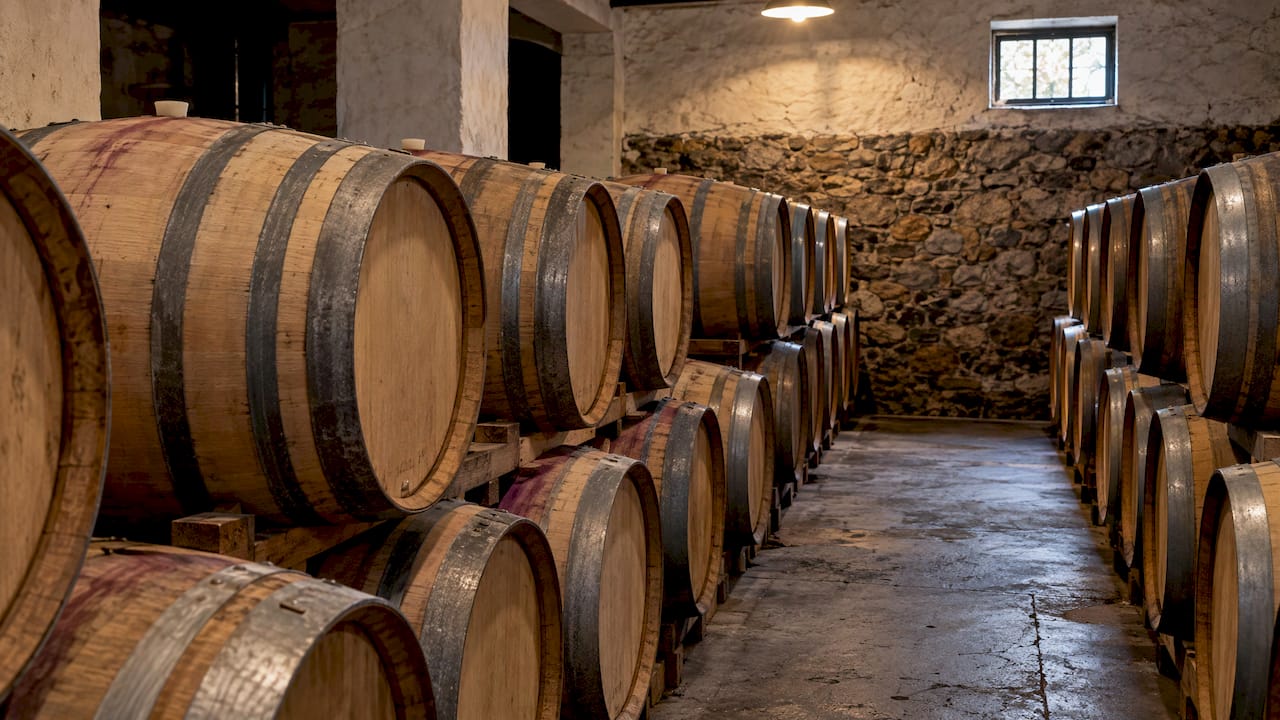
Two or three nights is enough for a first taste. If food is your main reason for travelling, base yourself here rather than in the city and take a day trip into Cape Town, not the other way round.
Safari: Kruger, private reserves and the Eastern Cape
Kruger National Park is the name most travellers know. The government’s tourism page notes that it holds 147 mammal species, including the Big Five. It is the classic self-drive and lodge-based safari, and the scale is part of the appeal.
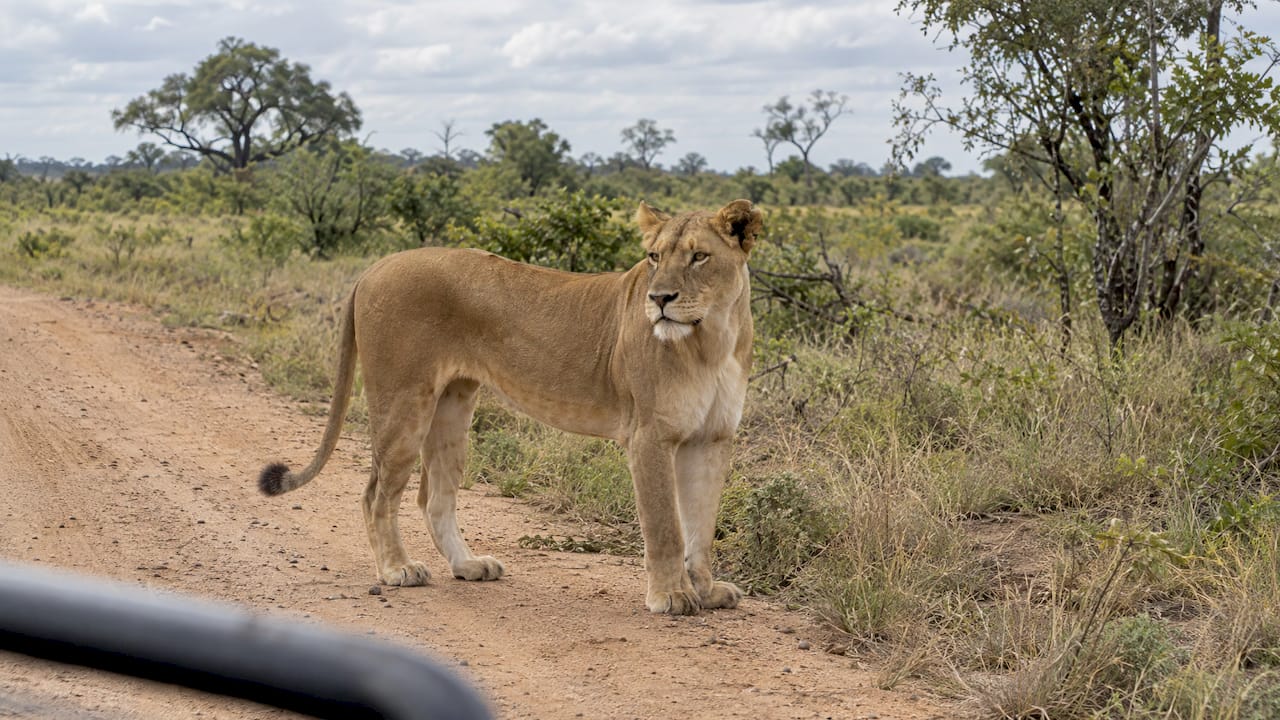
The Eastern Cape is the alternative worth knowing about. The same page says the province has more than 60 state-owned game reserves and over 30 private game farms, which together cover an area greater than Kruger. That makes it a strong choice if you want a safari that sits easily alongside a coastal trip, or if you would rather plan around a different region from the Kruger area.
A few points help you choose:
- Time available. Kruger and the Eastern Cape each reward at least three or four nights. A single night in a reserve rarely lets you settle into the rhythm of game drives.
- Travelling with children. Talk to your GP or a travel health clinic well before you go about malaria precautions for the region you choose. This is a medical question, and the right advice depends on the traveller, the season and the reserve.
- Your driving comfort. A self-drive is possible in several parks, but a lodge with guided drives takes care of the tracking and the navigation. Whichever you pick, plan arrivals for daylight.
If you are weighing up a safari from Johannesburg specifically, our piece on Johannesburg to Victoria Falls: fly or safari looks at one popular alternative for South Africans.
The Garden Route and the coast
The Garden Route runs east from the Western Cape along a stretch of forest, lagoons and beaches. Tsitsikamma National Park, listed by the government as the country’s first marine park with 50 km of coastline, is one of its anchors. It suits a road trip better than a single base, because the pleasure is in the stops.
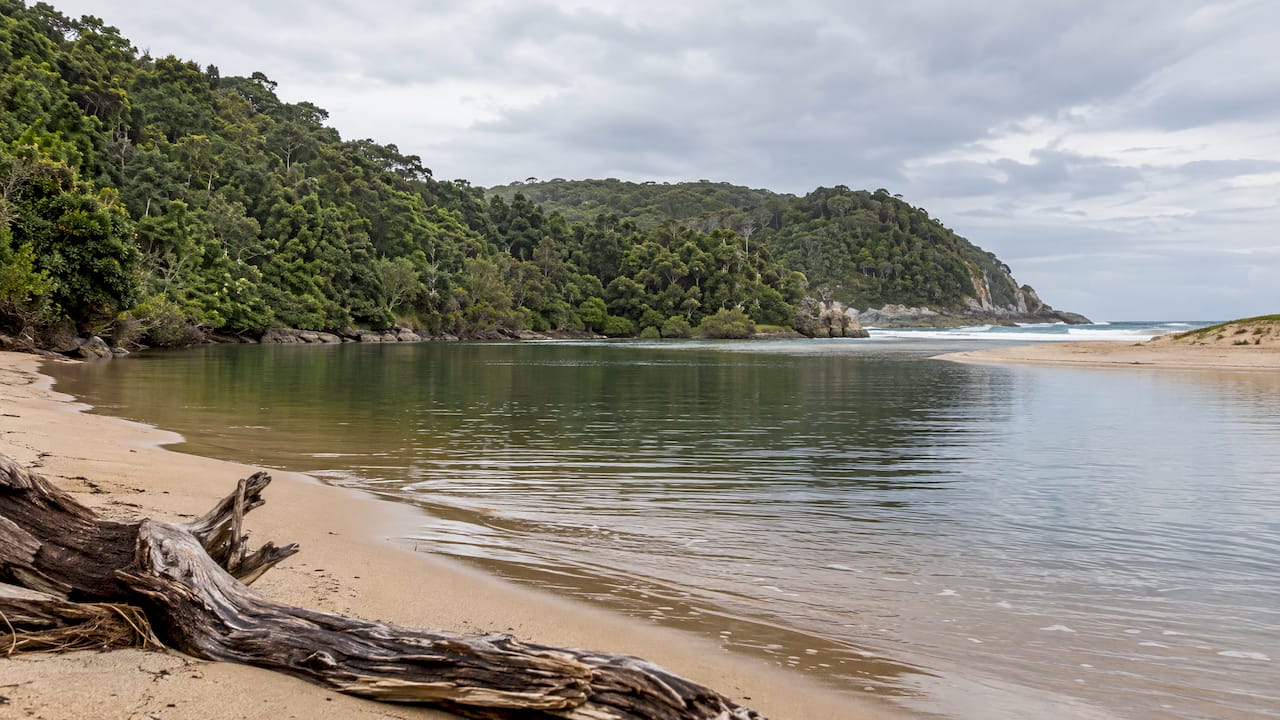
If you want the route laid out day by day, we have written a practical seven-day Garden Route itinerary. It fits comfortably between Cape Town and an Eastern Cape safari.
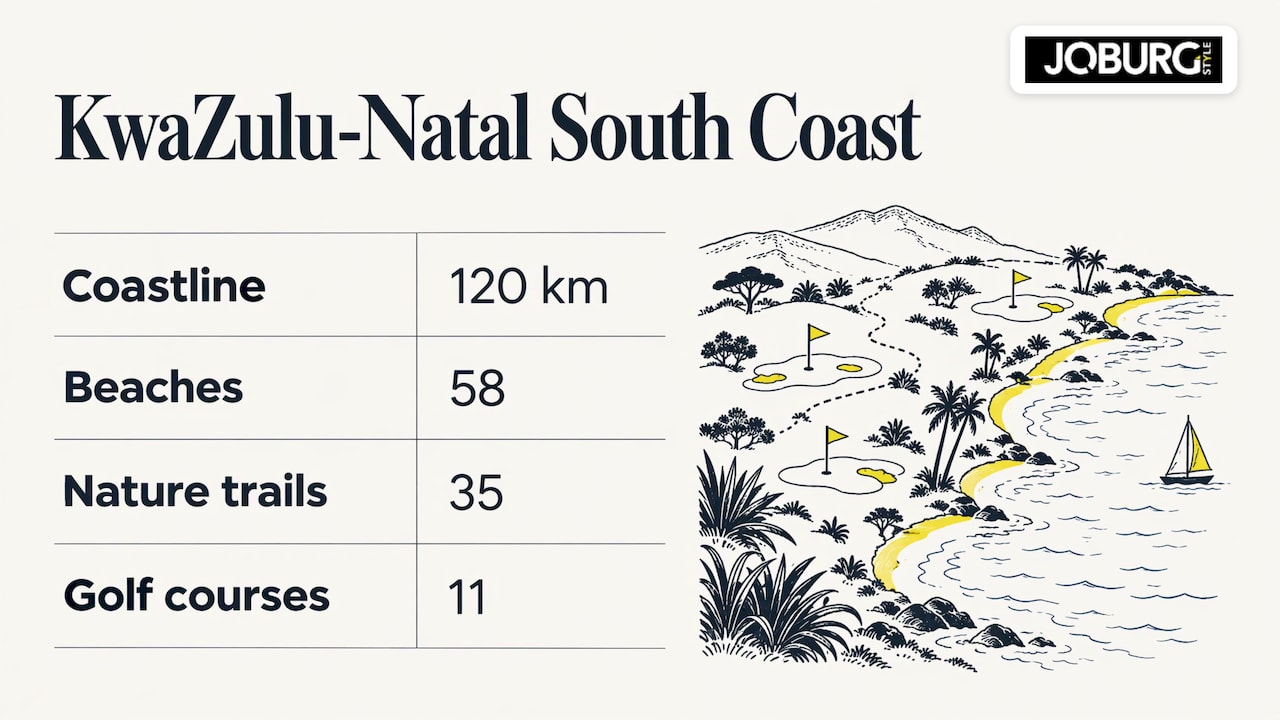
On the other side of the country, the KwaZulu-Natal South Coast is a different kind of beach holiday. Its official destination organisation says the coast stretches 120 km from Scottburgh to Port Edward and has 58 beaches, 35 nature trails, 11 golf courses, diving at Aliwal Shoal and Protea Banks, and the annual Sardine Run. It is warm, relaxed and well suited to families and divers. For a quieter tidal-pool morning or a round of golf, it is easy to build a week around.
Johannesburg and Soweto
Many international visitors land in Johannesburg and leave it on the first morning. That is a missed chance. The government lists Soweto tours among South Africa’s key national attractions, and the city has galleries, restaurants and a growing café and design scene that we cover every week.
If you have a spare weekend, our guide to weekend getaways from Johannesburg within three hours shows how many short escapes start from the city. For something restorative, there is also a guide to hot springs in South Africa.
A sensible way to use Johannesburg is as the first or last two nights of a trip. You recover from the flight, see Soweto and a gallery or two, and the onward connection to Cape Town or a safari airstrip is simple.
When to go
Timing changes the experience more than most visitors expect. For the Western Cape, the official tourism portal says the region is at its warmest and driest from October to March, while the May to September winter window brings cheaper and quieter rates.
The City of Cape Town publishes its own seasons for its municipal resorts, which give a useful picture of how demand moves: low season runs 1 April to 30 September, mid season 1 October to 31 March, and high season 15 December to 15 January. Private lodges and hotels set their own calendars, so check the property’s page for exact rates. The pattern is the same, though: late December and January are the most expensive and the busiest.
What that means in practice:
- Beaches, wine and the Garden Route: October to March.
- Value and fewer crowds in the Western Cape: the winter months, with a rain jacket in the bag.
- School holiday weeks: book accommodation and rental cars as early as you can, because they sell out first.
Putting a trip together
The most common mistake is trying to cover everything. Distances between regions are long, and every internal flight or long drive costs half a day.
Here are three shapes that work:
| Trip | Route | Best for |
|---|---|---|
| Classic first visit | Johannesburg, Kruger or a private reserve, Cape Town and the Winelands | Safari plus city and wine |
| Cape and coast | Cape Town, Winelands, Garden Route, Eastern Cape reserve | Scenery, road trip, a safari without Kruger |
| Beach and bush | Johannesburg, KZN South Coast, a reserve | Families and divers |
If you are driving, remember that road conditions differ by route. Chikaya Safaris’ field notes are one example of operators advising that a normal car handles Kruger and the Garden Route, but the same logic applies everywhere: match the vehicle to the road, and plan to arrive before dark.
For a first visit of around two weeks, a good split is a few nights in Johannesburg or a reserve, four to five in Cape Town and the Winelands, and the rest on the Garden Route or the Eastern Cape. Stretch it to three weeks and you can add the KZN coast or a second reserve without rushing.
Our view: choose places for the experience, not the list
Every South African destination guide ends up as a list, and lists flatter everywhere equally. From Johannesburg we see the country differently: as a set of very different trips that happen to share a flag. A week in the Eastern Cape bush has little in common with a week of Winelands lunches, and neither resembles a long weekend in Soweto and the city’s galleries.
That is why we cover South Africa through first-hand reviews, destination guides and interviews, in print, online and on video, rather than through one-line rankings. Our presence across Johannesburg and Dubai means that many of our readers pass through both on the way to somewhere else, and we write with that journey in mind.
We also believe local voices make the better guide. When you read about a lodge, a restaurant or a designer, you should know who is telling you and why it matters to the place. That is the standard we hold our own destination coverage to.
Chad McLintock
For hotels, lodges and tourism boards
If you run a property or represent a destination and want to reach travellers who are planning exactly this kind of trip, we offer a Sponsored Online Article for R6,000 one-off, as well as social media formats from R2,500 for a story to R7,500 for a reel, and an Integrated Media Campaign at R15,000 to R25,000. We also work on brand partnerships and destination marketing. See what is available on the JoburgStyle website.

FAQ
What is the best place to go in South Africa for a first visit?
Cape Town is the most common starting point. The official tourism board describes it as a base for the West Coast, Garden Route, Overberg, Cederberg and Karoo, and it has the Winelands on its doorstep. Add a safari in Kruger or the Eastern Cape if you have the time.
How long do I need in South Africa?
The official tourism portal suggests at least two weeks to scratch the surface of Cape Town and the Western Cape alone. If you want a safari and a coastal stretch as well, aim for two to three weeks and limit yourself to two or three bases.
Do I have to go to Kruger for a safari?
No. The Eastern Cape has more than 60 state-owned game reserves and over 30 private game farms, according to the South African government. Kruger remains the best-known park, with 147 mammal species, but it is not the only way to see the Big Five. For malaria advice for any region, speak to your GP or a travel health clinic.
When is the best time to visit?
For the Western Cape, October to March is the warmest and driest, and May to September is cheaper and quieter. Late December and January are the busiest weeks, so book early if you travel then.
Sources
- Cape Town base camp for all your adventures, South African Tourism
- Top Attractions in Cape Town, Cape Town Tourism
- Cape Winelands District Municipality
- Soetwater Resort, City of Cape Town
- KZN South Coast beaches and activities, Ugu South Coast Tourism
Recommended
- Hot Springs in South Africa: Where to Go and What to Know
- Weekend Getaways from Johannesburg: 9 Escapes Within 3 Hours
- Garden Route Itinerary: A Practical 7-Day Road Trip Plan
- Music Festivals in South Africa: A Guide to the Big Ones
JoburgStyle Media House publishes this article for general information and inspiration. Prices, opening hours, availability and booking terms can change. Please confirm the latest details directly with the venue, operator or brand before making plans. We disclose any sponsorship, hosted experience or affiliate relationship in the relevant article. Wellness content is for general information and is not a substitute for professional medical advice.
