
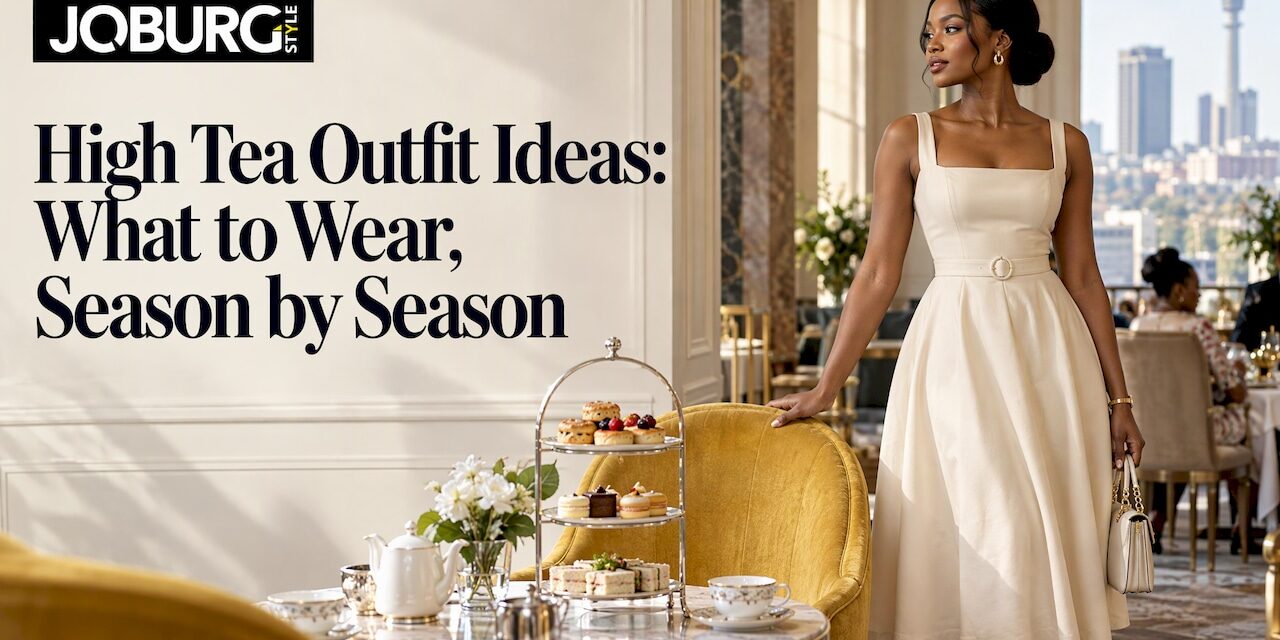
The safest high tea outfit is daytime elegance: a midi dress, or a blouse with a midi skirt or tailored trousers, in soft fabrics that won’t crease when you sit. Add closed or low shoes, a small bag and delicate jewellery. Most venues set no written rule, so you dress for the room: a little smarter at a grand hotel, lighter and easier in a garden. Below are outfits by season, venue and guest, the jeans question answered, and how all this compares with fine dining dress codes.
Key Takeaways
- Most high teas have no official dress code. The unwritten rule is daytime elegance, and when in doubt, dress a touch smarter than you think you need to.
- A midi dress, a blouse with a midi skirt, or soft tailoring covers almost every venue and season.
- Grand hotels can be strict: The Ritz London requires a jacket and tie for gentlemen and does not allow jeans or sportswear for anyone at afternoon tea.
- Keep accessories small. The three-tier stand is the centrepiece, so your outfit should frame it, not compete with it.
- Restaurant dress codes follow the same logic but are often enforced more firmly in the evening, so read the booking page first.
Table of Contents
- High tea or afternoon tea: does the name change the outfit?
- What the venue expects
- Outfit ideas for women
- Outfit ideas for men
- Can you wear jeans to high tea?
- What to wear by season
- Shoes, bags and accessories
- Five table rules that save an outfit
- From high tea to fine dining: how the dress code shifts
- Where to find more style and venue inspiration
- FAQ
- Sources
High tea or afternoon tea: does the name change the outfit?
What most people book is afternoon tea: scones, sandwiches and cakes on a tiered stand, served in the afternoon. Historically, “high tea” was a working-class evening meal eaten at a high dining table between five and seven. Today the two names are used interchangeably on menus and in searches, and the dress expectation is the same: smart, daytime and comfortable to sit in for two hours.
What the venue expects
Venue matters more than the name on the menu. A guide from Issu & Lloyd maps outfits to three settings, and the pattern holds across the other guides we read.
| Venue | What suits | Watch out for |
|---|---|---|
| Grand hotel or palm court | Midi dress, satin-look blouse with skirt, jacket and tie for gentlemen, low heel or ballet flat | Jeans, trainers, sportswear |
| Estate or garden | Blouse with skirt or flared trousers, loafers, light layer, floral prints | Stilettos on grass, wide sleeves, heavy fabrics |
| Tea room or café | Knit top with trousers, shirt dress, sundress, knitted polo with chinos | Anything athletic or beach-ready |
How strict are London’s famous tea rooms?
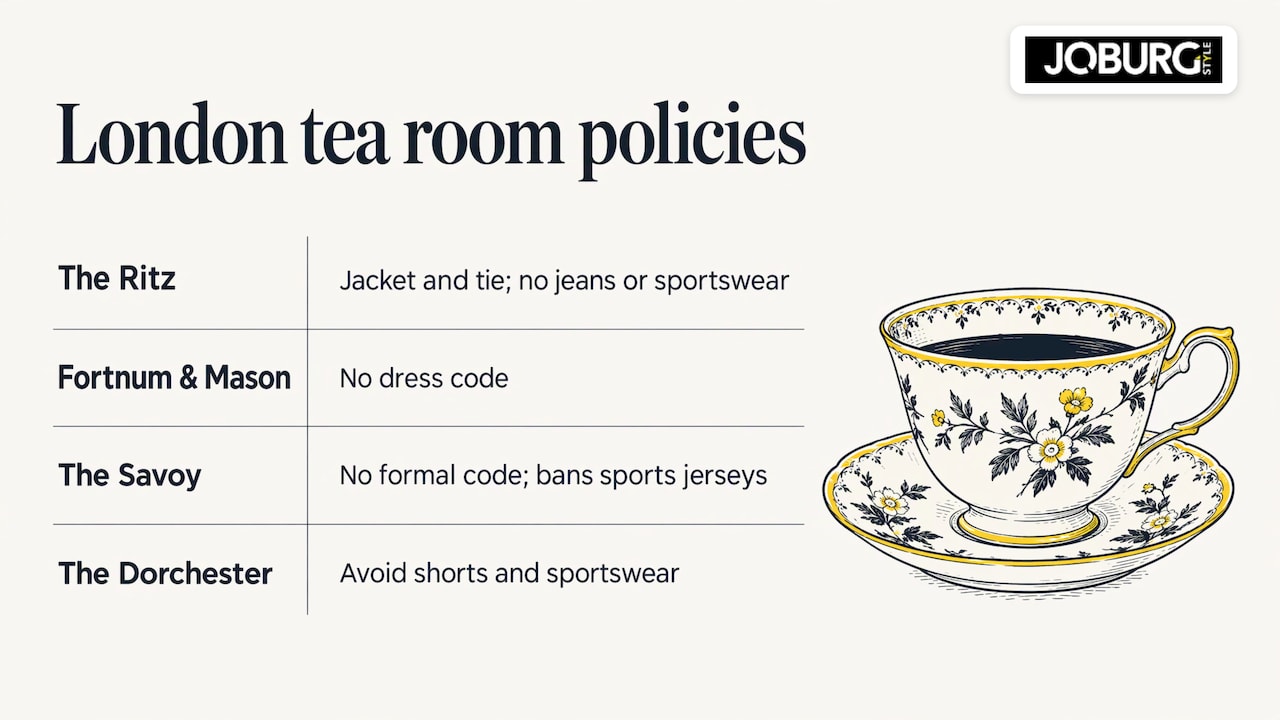
Policies differ more than people expect. The Ritz publishes its rule in its afternoon tea etiquette guide: gentlemen wear a jacket and tie in the Palm Court, and jeans and sportswear are not permitted for ladies or gentlemen. The hotel’s afternoon tea page adds that children under 16 are exempt from the standard dress code.
Other rooms are looser. According to one London atelier’s guide, Fortnum & Mason’s Diamond Jubilee Tea Salon states that it enforces no dress code, The Savoy’s Thames Foyer has no formal code but bans offensive attire and sports jerseys, and The Dorchester’s Promenade asks guests to avoid shorts and sportswear. The lesson: check the booking page for your specific room, then dress to the smartest reading of it.
Outfit ideas for women
A midi-length dress, elevated separates or soft tailoring is the formula that works almost everywhere. Four combinations to build from:
- The printed midi dress. A floral or small-print dress with sleeves or a light jacket. It needs no styling decisions, and a print forgives a drop of tea.
- Blouse and flowing skirt. A blouse or lace-detail top tucked into a midi skirt in satin, silk or fluid crepe. Add a thin belt to define the waist.
- Soft tailoring. Fluid wide-leg trousers, a lace-trimmed camisole and a light blazer. It is the right answer when you would rather not wear a skirt.
- Knitwear and a pleated or A-line skirt. A twin set or fine cardigan over a pleated skirt suits cooler months and cosy tea rooms.
Adrianna Papell describes the look as semi-formal, with ladylike silhouettes, soft fabrics and delicate prints, with pearls or understated gold as the usual jewellery. Choose fabrics that hold their shape when seated. Very tight pieces, glitter and sequins read as evening wear, and large loose sleeves can trail over the cake stand.
Outfit ideas for men
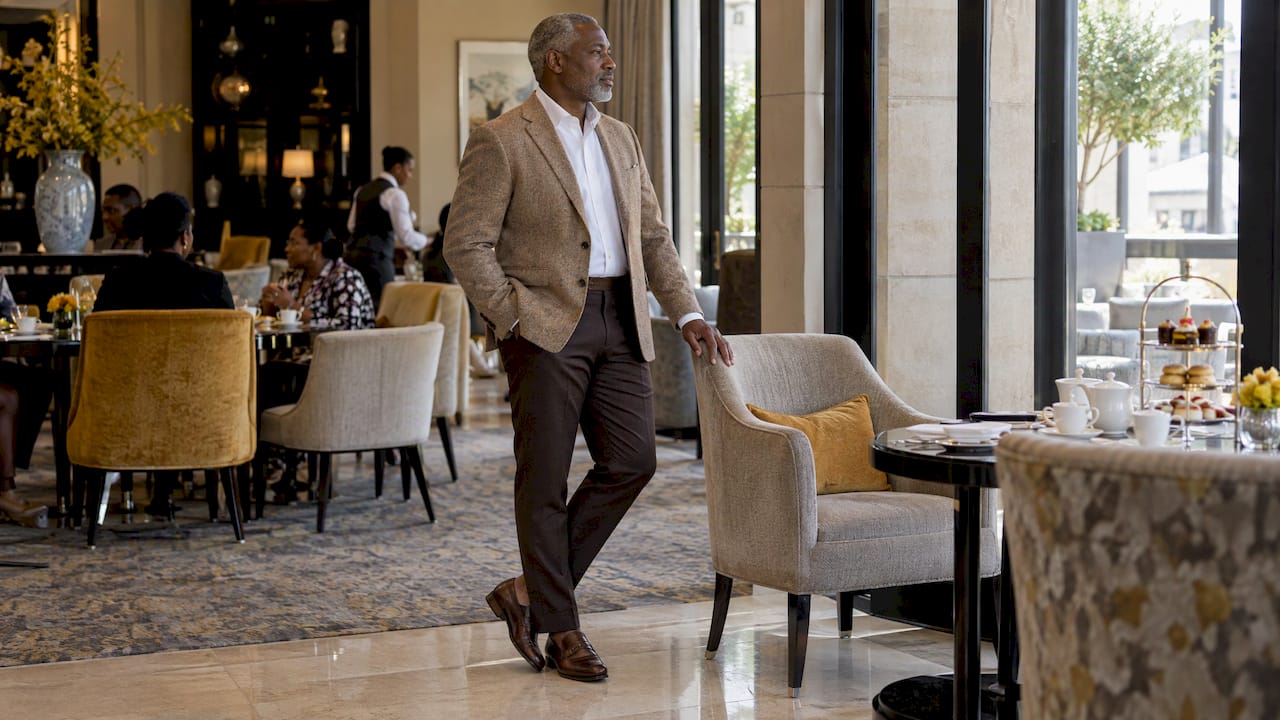
Men have fewer options but the same rule. Rydale’s guide suggests smart shirts, classic knitwear, tweed jackets or blazers, tailored trousers and loafers or smart shoes, and says a tie is not needed unless you are heading to a luxury location. In summer, a cotton shirt with chinos is enough. At a grand hotel, follow the written rule: jacket and tie at The Ritz, and a blazer is a sensible default elsewhere.
Can you wear jeans to high tea?
At relaxed venues, yes, if they are dark, clean and well fitted, and worn with a blouse, Oxford shirt or blazer. Marks & Spencer’s guide describes the unspoken smart-casual code as pairing a tailored piece with something dressed-down such as dark wash jeans, and lists trainers, ripped jeans, sportswear, large graphic logos, flip-flops and shorts to avoid.
At grand hotels the answer changes. The Ritz bans jeans at afternoon tea, though the London atelier guide notes smart jeans are allowed there at breakfast and in some of its bars. If you are unsure, wear a skirt, chinos or smart trousers: they pass everywhere.
What to wear by season
Season shapes fabric and colour more than silhouette. Most guides agree on the pattern below.
Spring and summer
Choose light wool, silk, fine cotton or structured viscose in pastels and soft prints. Linen looks lovely but creases badly once you sit, so a linen blend or a different fabric is the better pick. The London atelier guide says sleeveless is fine and strapless is best avoided. A lightweight printed blouse with a skirt and a removable jacket, as Rydale suggests, handles a warm room and a cool terrace. Keep a light layer to hand if tea is served outdoors; a UK outdoor packing checklist is a handy reminder of how quickly the temperature drops on a terrace.
Autumn
Tweed, wool, suede and corduroy in camel, russet, plum, forest green and cocoa. A blazer over a midi dress or a tweed skirt with a silk blouse is the classic combination.
Winter
Go for wool crepe, fine knit and velvet in deep colours such as bottle green, aubergine, oxblood and charcoal. Marks & Spencer suggests heavier natural fibres, a velvet dress, ankle or knee-high boots, a blazer or cardigan layer and a tonal scarf. A knit over a tweed skirt with tights and boots is the practical version.
Shoes, bags and accessories
You will walk in, sit for a long time and walk out again, so comfort counts. A low block heel, refined ballet flat or heeled sandal suits most settings. Sandhya Garg recommends a heel of 2 to 5 cm, enough for posture without making the walk from the car a trial. Carry a small structured bag rather than an oversized tote, which has nowhere to go on a crowded tea table.
- Jewellery: keep it delicate. Earrings and a watch show while you are seated, while a necklace disappears when you lean forward. One focal point is enough.
- Hats: no published London tea room code requires or forbids them. At a low table a wide brim collides with the cake stand, so a headband, pillbox or small percher is the right scale. Save the wide-brimmed straw hat for a garden party.
- Colour: soft, muted and pastel shades suit the afternoon, with jewel tones for more formal or evening-adjacent teas.
Five table rules that save an outfit
- Wear lighter colours than you would in the evening: cream, white, light blue.
- Choose fabrics that do not crease when you sit.
- Bring a layer for terraces and over-air-conditioned rooms.
- Keep jewellery small.
- Wear shoes you can actually walk in.
These follow the Issu & Lloyd list. For special occasions, a bridal shower tea is festive, so a fascinator works, but leave white to the bride.
From high tea to fine dining: how the dress code shifts
High tea is a daytime meal and dress codes are mostly unwritten. Fine dining restaurants are more likely to write the rule down and enforce it, particularly at dinner. Some state it in their terms. Qunu Restaurant at the Saxon Hotel in Johannesburg, for example, enforces a smart dress code, encourages a collared shirt and blazer for gentlemen and reserves the right to refuse service to guests who do not comply.
A workable approach for any restaurant:
- Read the booking page for the words “smart casual”, “smart” or “jacket required”.
- Smart casual means tailored trousers or a midi dress, a blouse or collared shirt, and leather shoes or neat flats. Sportswear, beachwear and flip-flops are the usual exclusions.
- Evening is dressier than daytime. Take your high tea outfit and move to darker colours, richer fabrics and a heel if you like. A blazer and a dress that works at a Sunday lunch will usually carry you through dinner.
- When there is no information, match the smartest tier of the venue’s own photos and prices.
Our view on dressing for the table
We write about dining, hotels and the occasions people dress for, and we cover them from Johannesburg and Dubai. The same pattern shows up in the places we feature: the setting tells you what to wear before any rule does. Our coverage of the SA Style Awards winners at an exclusive Hyde Park high tea is a good example of an afternoon where polished, considered dressing is part of the occasion.
Our advice is to start from one well-cut piece you love, a midi dress or a blazer, and build the rest around comfort and the venue. Pay attention to local designers too: we champion South African talent, and a well-made piece from a local label gives a tea table outfit a point of difference without needing to be loud.
For the wider story of how tea is being reinvented, see our feature on pairing high tea with a modern twist.
Chad McLintock
Where to find more style and venue inspiration
JoburgStyle is a South African lifestyle publisher based in Johannesburg, with a presence in Dubai. We cover fashion, dining, hotels and cultural occasions through our quarterly print magazine, website, social channels and YouTube. If you are a hotel, restaurant or designer who wants readers to see your tea service or collection, our Sponsored Online Article costs R6,000 one-off, and our Social Media Reel costs R7,500 one-off. See what we offer at joburgstyle.co.za.
FAQ
What is worn to high tea?
A midi dress, or a blouse with a midi skirt or tailored trousers, in soft fabrics. Add flats or a low heel, a small bag and delicate jewellery. Men wear a smart shirt and chinos or trousers, often with a blazer.
Can you wear jeans to afternoon tea at a grand hotel?
Not usually. The Ritz London does not permit jeans or sportswear at afternoon tea. At relaxed tea rooms, dark, clean and well-fitting jeans with a blouse or blazer generally work, but a skirt or smart trousers are the safe choice if you are unsure.
Do you have to wear a hat?
No. No published London tea room dress code requires or forbids hats. If you want one, choose something small such as a headband or pillbox, because a wide brim gets in the way of the cake stand at a low table.
What colours suit high tea?
Soft, light colours such as cream, pastels and pale blue suit spring and summer. In autumn and winter, deeper tones such as bottle green, plum, burgundy and navy work well. Avoid white at a bridal shower.
How is fine dining dress different from high tea?
Fine dining codes are more often written and enforced, especially at dinner. Start with the same smart base, then go darker and more polished, and check the restaurant’s booking page for its exact wording.
Sources
- The Quintessential Guide To Afternoon Tea Etiquette, The Ritz London
- Luxury Afternoon Tea in London, The Ritz London
- Terms and Conditions, Qunu Restaurant, Saxon Hotel
- What to Wear to High Tea: A Season-by-Season Guide, Merve Bayindir
- What to wear to a high tea? Issu & Lloyd
- What to Wear to a High Tea: The Tuchuzy Outfit Guide
- High Tea Outfit Ideas for Women, Adrianna Papell
- High Tea Dress Code, Rydale
- What to Wear for Afternoon Tea, M&S
- Afternoon Tea Dress Code 2026, Sandhya Garg
- Nature lover travel checklist: the complete UK outdoor guide
Recommended
- Summer Outfit Ideas: 12 Easy Looks for Women
- Smart Casual Outfits: Ideas, Layering and Vintage Tips
- H&M Studio Holiday 2026 Brings Parisian Drama to Festive Fashion
- Capsule Wardrobe South Africa: Build One That Works Year-Round
JoburgStyle Media House publishes this article for general information and inspiration. Prices, opening hours, availability and booking terms can change. Please confirm the latest details directly with the venue, operator or brand before making plans. We disclose any sponsorship, hosted experience or affiliate relationship in the relevant article. Wellness content is for general information and is not a substitute for professional medical advice.
