

A capsule wardrobe for South Africa is a small set of clothes in coordinating colours that mixes into outfits for work, weekends, evenings and travel, and it has to be built around layers. A cool Joburg morning can turn warm by lunchtime, and Durban hardly dips below mild. Start with a neutral palette and one or two accent colours. Add a handful of hard-working pieces, then wear the set for a month before you buy anything else.
This guide takes you through that process step by step. It covers what to keep, what to buy, how many pieces you need, and how to turn the set into outfits for the office, a night out and a trip.
TL;DR
- A capsule wardrobe is a small collection of clothes that can be put together in different ways and covers everything you would normally need to wear.
- In South Africa, layers matter more than seasons: a light jersey, a blazer, a light jacket or trench and a simple base layer carry you from a Joburg morning to a warm afternoon.
- Pick two or three neutrals and one or two accent colours, so every piece goes with every other.
- The 3-3-3 rule (three tops, three bottoms, three pairs of shoes) gives 27 outfits and suits a travel capsule. Everyday capsules usually grow to 15 to 33 pieces.
- Audit what you own first, build around the gaps, then trial the set for a month.
Table of Contents
- What a capsule wardrobe is, and what it is not
- Why South Africa needs a layered capsule
- How to build your capsule in four steps
- The pieces that earn their place
- What the 3-3-3 rule means
- Outfit formulas that work across a South African day
- Making the capsule feel current
- Building a capsule for an occasion or a trip
- A worked example: a Johannesburg capsule of 16 pieces
- Perspective: why a local capsule beats a copied one
- Where to find ideas and local designers
- FAQ
- Sources
What a capsule wardrobe is, and what it is not
The Cambridge English Dictionary describes a capsule wardrobe as a small collection of clothes that can be put together in different ways and includes everything you would normally need to wear. The idea is not to own as little as possible. It is to own clothes that all work together.
That difference matters. A capsule is not a uniform and not a challenge to survive on 10 items. It is a system: every top works with every bottom, every layer works over every top, and you can get dressed without thinking. Fewer pieces that you actually wear beat a full cupboard in which you reach for the same five things.
For most readers in South Africa the real question is practical. What do I keep, what do I buy, and how do I make it work in a country where one day can run through three kinds of weather?
Why South Africa needs a layered capsule
Northern-hemisphere capsule guides tend to sort clothes by season: a summer set, a winter set. That rarely suits us. Woolworths’ Witchery guide to dressing for South African weather calls our weather transitional. A cool Joburg morning can be warm by lunch, Cape Town can pass through four seasons before dinner, and Durban barely dips below mild.
The practical answer is layers. The same guide’s core list is a light jersey, one versatile blazer, a slip dress or simple base layer, a light jacket or trench, and coordinating accessories. Each can be put on or taken off as the day changes, so one capsule covers most of the year with a heavier coat or puffer added for the coldest highveld mornings.
Streetwear-focused label Maison Morato makes the same point in its guide to a South African streetwear capsule: a good capsule is mostly about layers, because a Joburg winter morning and a Durban summer afternoon need very different things.
Colour is the cheapest seasonal tool you have. The Witchery guide argues that deeper, richer tones read as cooler-weather dressing, while brighter or lighter shades bring the same pieces into warmer months. A single dress in the right colour can work across two seasons if you style it differently each time, for example with a knit and boots in June and bare legs and sandals in October.
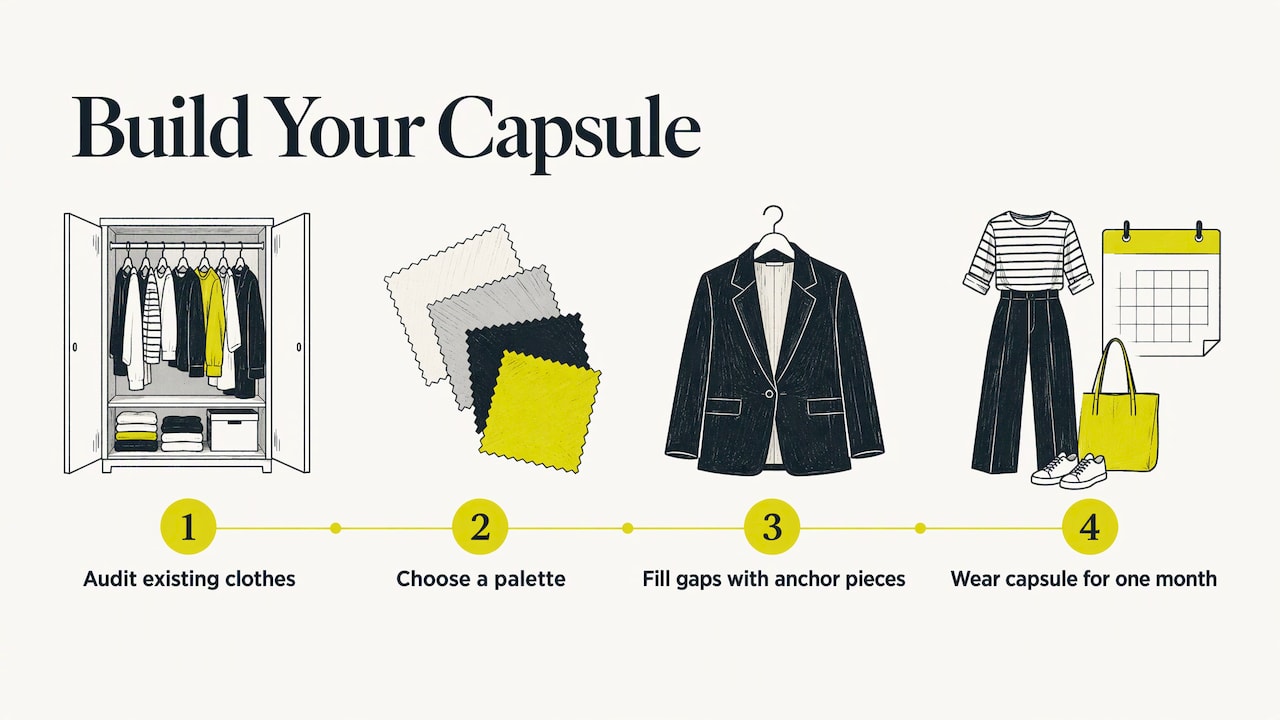
How to build your capsule in four steps
The clearest South African method comes from a Sweet Peas Handmade guide to building a capsule wardrobe, published in June 2026. It has four steps, and we have added what tends to go wrong at each.
Step 1: Audit what you already own
Take everything out. Anything you have not worn in six months is a candidate to leave out of the capsule. Sort what remains into keep, repair, pass on and “unsure”. Put the unsure pile in a box and check it again in a month.
Where it goes wrong: people keep pieces for the person they used to be, or for an event that never came. Be honest about the life you have now, whether that is a hybrid office week, a lot of braai weekends or regular flights to Cape Town.
If you pass clothes on, you are also doing something useful. Our practical guide to sustainable fashion in South Africa looks at what to do with the pieces you no longer wear.
Step 2: Choose a palette
The Sweet Peas guide suggests a neutral base such as charcoal, sand and deep navy, plus two accent colours. Its 2026 winter suggestions were royal purple and heritage burgundy. Morato’s version is a rule of three colours: two neutrals and one accent, for instance black or off-white with olive, grey or black with cream, or navy or sand with white.
FILA South Africa’s 2026 capsule guide goes strictest, with black, white and navy and one signature accent used sparingly on something small like a hat or socks. Its argument is that a tight palette means colours never clash and removes morning decision fatigue, while the single accent shows you are current without looking over-styled.
Where it goes wrong: choosing a palette from a trend rather than from your skin tone and your existing clothes. Hold each colour up to your face in daylight, and check that your current best-loved pieces fit into the palette. If most of them do, you already have half a capsule.
Step 3: Fill the gaps with anchor pieces
Once you can see what you have, buy only what is missing, and start with the pieces that do the most work: a good blazer, shoes you can walk in and one bag that goes with everything. The Sweet Peas guide puts it as investing in anchor accessories and footwear. The next section lists the pieces most capsule guides agree on.
Where it goes wrong: buying a whole new capsule in one go. Gaps only show up once you wear the set, which is why step 4 exists.
Step 4: Run a one-month trial
Wear only the capsule for a month. Note the days you felt under-dressed, over-dressed or cold, and the item you kept wishing you had. Those notes are your shopping list. Morato recommends the same approach for streetwear: start with two neutral tees, one pair of bottoms and one hoodie, wear them for a month, and see what is missing before buying all 15 pieces.
A month is long enough to cover a work week, a weekend away and one evening out. If you can, let it include a cold snap or a hot spell as well.
The pieces that earn their place
There is no single correct list, but the same items turn up in most South African guides. IOL’s Gerry Cupido, writing in August 2026, names eight timeless wardrobe staples for women:
| Piece | What to look for |
|---|---|
| Classic white shirt | Crisp, well cut, works under a blazer or on its own |
| Tailored blazer | Black is the most versatile; navy, charcoal or beige also last |
| Neutral basic T-shirts | White, black, grey and beige |
| Dark-wash jeans | A fit you can wear to work and to a restaurant |
| Little black dress | A classic silhouette that dresses up or down |
| Comfortable flats | Black or tan leather |
| White sneakers | Without bold branding |
| Tailored trousers | Grey, black, navy or khaki |
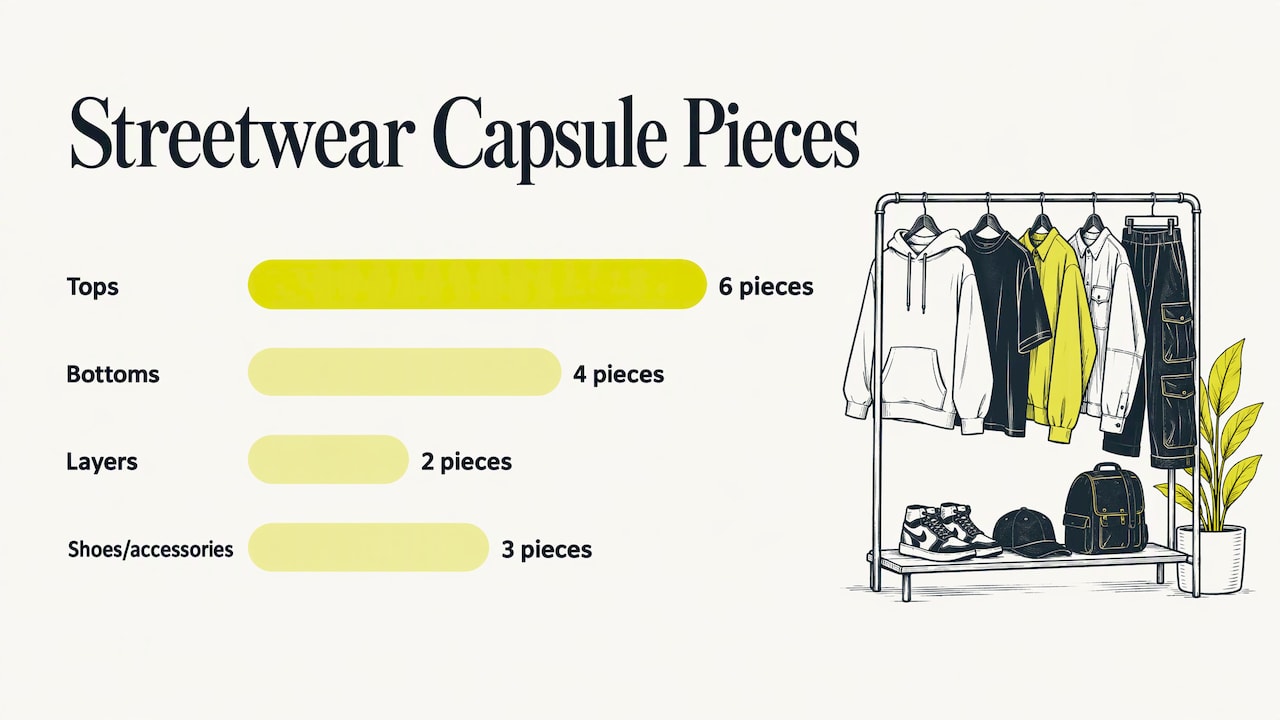
For a streetwear-led wardrobe the balance shifts. Morato’s 15-piece proposal has six tops (two heavyweight neutral tees, one graphic tee, one accent boxy tee, one hoodie and one crewneck), four bottoms (cargos, jeans, tailored trousers and shorts), two layers (a lightweight jacket and a winter puffer or fleece) and three shoe or accessory items (white sneakers, statement sneakers and a cap or beanie). It reckons that gives more than 40 combinations before you change shoes. Luto Store’s streetwear capsule approach is similar: T-shirts that work alone and layer under hoodies or jackets, sweaters for cooler days, track pants and sneakers, two or three dependable shades as the base and brighter tones added selectively.
On shoes, FILA South Africa says three pairs cover the year: a daily-driver sneaker, a recovery slide or sandal, and one more pair suited to how you live.
A useful test for any piece: can you name three outfits you would wear it in, with things you already own? If not, it is a gap-filler for a dream wardrobe, not a capsule piece.
What the 3-3-3 rule means
The 3-3-3 rule is the shortest capsule formula you will see. As 1abel explains, it means three tops, three bottoms and three pairs of shoes, which gives 27 outfit combinations from nine pieces (3 × 3 × 3). Add one layering piece and the count doubles to 54. That is enough for a week or two of travel.
The New York Times calls the travel capsule “fashion algebra”: how few garments can you mix and match to equal the most combinations. Alongside 3-3-3 it names the more complex 5-4-3-2-1 formula: five tops, four bottoms, three pairs of shoes, two layering pieces and one extra item of your choice.
The logic is multiplication, not addition. 1abel notes that a few well-coordinated pieces in one tonal family produce dozens of looks, which is why nine pieces give 27 outfits, and why most everyday wardrobes grow to 15 to 33 pieces instead of staying at nine. Treat 3-3-3 as a travel tool or a starting point, not the finish line for your daily wardrobe.
Outfit formulas that work across a South African day
A capsule only works if you know how to combine it. The Witchery guide gives three formulas that suit our changeable days:
- A dress under a knit. Cool morning on the highveld: wear both. By afternoon the knit comes off and the dress carries on.
- Tailored trousers and a knit. They stay smart once a blazer comes off, which suits an air-conditioned office followed by a warm walk to the car.
- A dress with a light cardigan or jacket. It works from afternoon into evening, whether that is a work function or dinner out.
For work specifically, ImNow’s professional capsule guide starts with a structured blazer, a crisp white or light shirt and tailored trousers. It then grows to one blazer, two bottoms (such as trousers and a pencil skirt) and four tops. That gives eight combinations, doubled by wearing the blazer on some days, which is enough for a full work week.
For streetwear, the same maths applies: two neutral tees, a hoodie, cargos and jeans already make a week of outfits, with the jacket added when the temperature drops.
Making the capsule feel current
Neutrals keep a capsule stable, and one or two trend-led pieces keep it fresh. The 2026 South African trends reported by the North Coast Courier include safari chic, fluid tailoring and relaxed denim, with linen suits, wide-leg trousers, safari-style dresses and oversized jackets. Designer Bongiwe Mpanza’s advice there is to balance bold jewel tones with earthy neutrals, which is almost exactly the neutral-plus-accent formula above.
Fabric matters in our summers too. Nicci Boutiques says linen is the biggest summer fabric, alongside cool cotton, viscose and silk. It names black harem pants, a white top and a black strappy dress as staples that dress up or down. For winter it points to berry colours, neutral sand, warm chocolate, moody blues and buttery cream alongside black. Those slot neatly into a navy, sand and charcoal base.
A few ways to add trend without breaking the capsule:
- Swap the accent colour each season and keep the neutrals constant.
- Change accessories (a scarf, a belt, a cap) before changing garments.
- Choose one statement piece a season that works with at least three things you own.
If you want more South African inspiration for that one piece, our guide to South African fashion brands worth knowing is a good place to start. For the bigger picture, see global fashion trends shaping wardrobes now. If you love bold prints, African print outfits show how to fit a statement pattern into a neutral base without it taking over.
Building a capsule for an occasion or a trip
Some of the best uses of a capsule are short-term ones. For a trip, apply the 3-3-3 rule, pick a palette, and ensure everything layers. For wider ideas on compact travel wardrobe planning, the same mix-and-match thinking applies: count outfits, not items.
For specific South African situations, we have written dedicated guides:
- A safari packing list for what to wear and bring on a game drive, where casual mix-and-match separates in muted shades are the foundation.
- Durban July outfits, for the one day of the year when your capsule needs an occasion piece on top.
- A Dubai dress code guide for South African visitors, since a capsule with covered shoulders and knees, light layers and one smart option packs well for the Gulf.
One practical tip for any trip: lay out the whole set on the bed first and confirm that each top works with each bottom. If one item only works with one other item, leave it at home.
A worked example: a Johannesburg capsule of 16 pieces
To make this concrete, here is one way to combine the guidance above for a young professional in Johannesburg who works in an office three days a week and spends weekends out. It is an illustration, not a prescription.
- Palette: navy, sand and charcoal as neutrals, with burgundy as the single accent.
- Tops (five): two white tees, one crisp white shirt, one navy knit, one burgundy tee.
- Bottoms (four): tailored charcoal trousers, dark-wash jeans, sand chinos, one black skirt or shorts.
- Layers (three): a navy blazer, a light jacket or trench, a heavier coat or puffer for July mornings.
- Shoes (three): white sneakers, black or tan flats or loafers, a pair of sandals.
- Dress (one): a little black dress that dresses up or down.
That is 16 pieces. The five tops and four bottoms alone make 20 base combinations. Each can be worn with or without the blazer, which doubles it to 40, and the layers and shoes add more. A cool morning means jeans, a tee, the knit and the trench. A client meeting means the trousers, the white shirt and the blazer. A Friday evening means the dress, the light jacket and flats.
Notice what is missing: anything that only works for one occasion. Everything earns its place several times, which is the real test of a capsule.
Perspective: why a local capsule beats a copied one
We cover fashion in Johannesburg and Dubai, and one thing is clear from our events and designers: South Africans dress for changeable days, not for a catalogue season. A capsule built in a cold-climate city simply does not fit a Joburg morning that turns into a warm afternoon.
That is why we think the best capsule starts with local designers and local conditions. When you build around pieces made by South African labels, you get cuts, fabrics and prints designed for our weather and our occasions, and you support the people who are shaping what South African style looks like.
Keep your neutrals simple, and let one or two accent pieces carry the personality. Follow the stories we publish on emerging designers and cultural events, and choose the one piece a season that speaks to you. That is how a small wardrobe stays interesting.
Chad
Where to find ideas and local designers
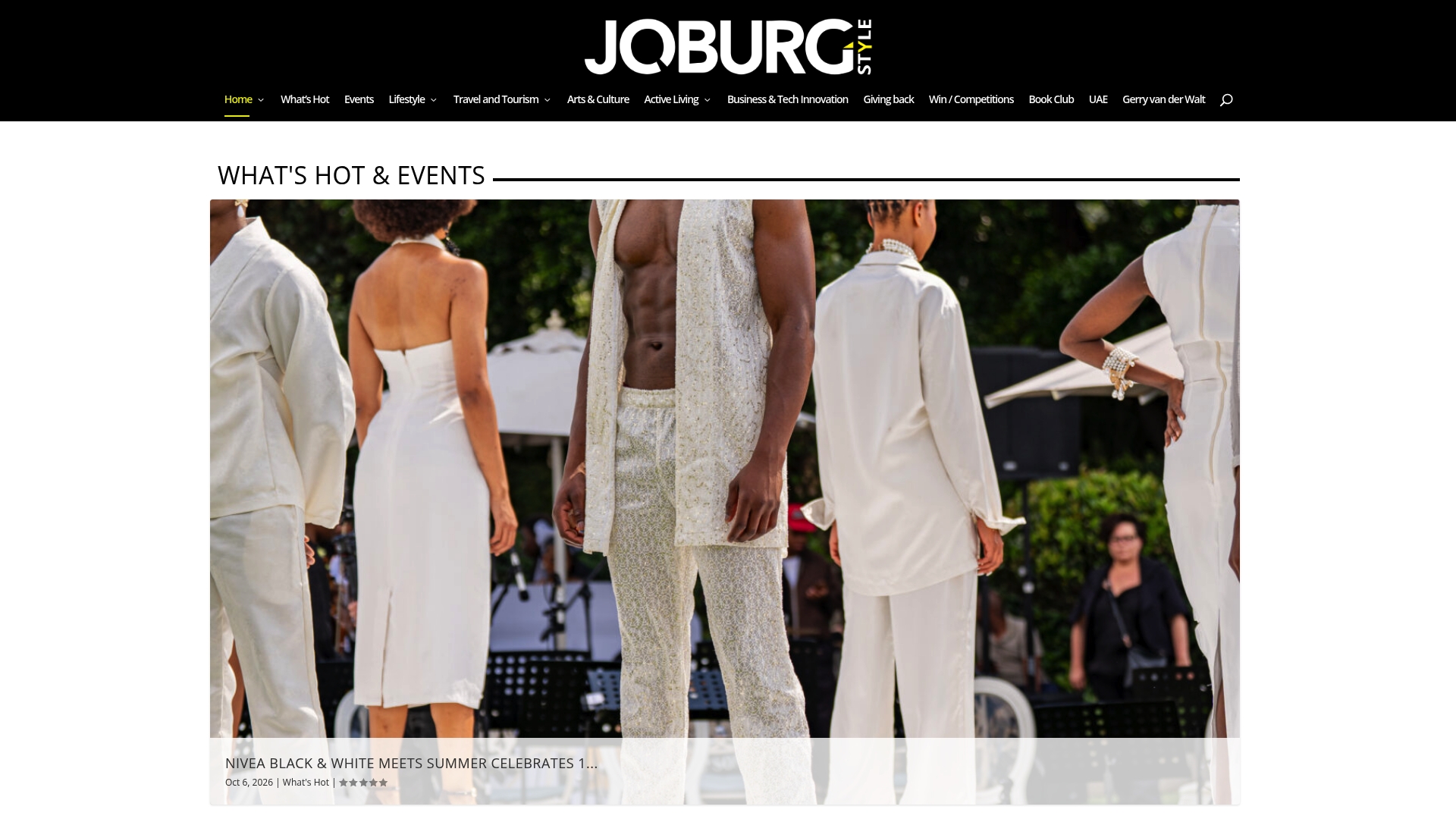
Joburgstyle is an online platform covering fashion, lifestyle, arts and culture in South Africa and beyond, with a focus on local designers and the events where new collections appear. If you are looking for the one accent piece for your capsule, our coverage of Shanghai Fashion Week and South African designers and our KZN South Coast fashion labels feature introduce labels worth knowing. Start from our homepage for the latest fashion, travel and culture stories.
FAQ
What is considered a capsule wardrobe?
It is a small collection of clothes in coordinating colours that can be combined in different ways and covers what you would normally need to wear. Most everyday capsules run from about 15 to 33 pieces, according to 1abel. Travel capsules can be as small as nine.
What does the 3-3-3 rule for clothes mean?
It means three tops, three bottoms and three pairs of shoes, which makes 27 outfits from nine pieces. Adding one layering piece doubles that to 54. It works best as a travel formula or a starting point for a trial month.
What colours should a South African capsule wardrobe use?
Pick two or three neutrals, such as navy, sand, charcoal, black or white, and one or two accents. Richer shades suit cooler months and lighter or brighter shades suit warmer ones, so one dress can serve two seasons.
How many pieces do I need for a South African capsule?
There is no fixed number. A streetwear set of 15 pieces gives more than 40 combinations, and a work capsule of one blazer, two bottoms and four tops gives eight combinations, doubled with the blazer. Start small, trial it for a month and add only what you miss.
Sources
- CAPSULE WARDROBE definition, Cambridge English Dictionary
- Witchery Women’s Clothing Guide to Dressing for South African weather
- How to Build a Streetwear Capsule Wardrobe in South Africa
- Building a Capsule Wardrobe in South Africa: The 2026 Slow Fashion Trend
- 2026 Capsule Wardrobe Guide, FILA South Africa
- Wardrobe staples every woman should own for timeless style, IOL
- Capsule Wardrobe: How to Build a Streetwear Collection, Luto Store
- 3-3-3 Rule Capsule Wardrobe, 1abel
- What’s the Perfect Capsule Wardrobe for Traveling? The New York Times
- How to Build a Professional Capsule Wardrobe for Work, ImNow
- Groutville designer brings kasi chic to the fashion frontline, North Coast Courier
- Enter The Cocoon, Nicci Boutiques
