
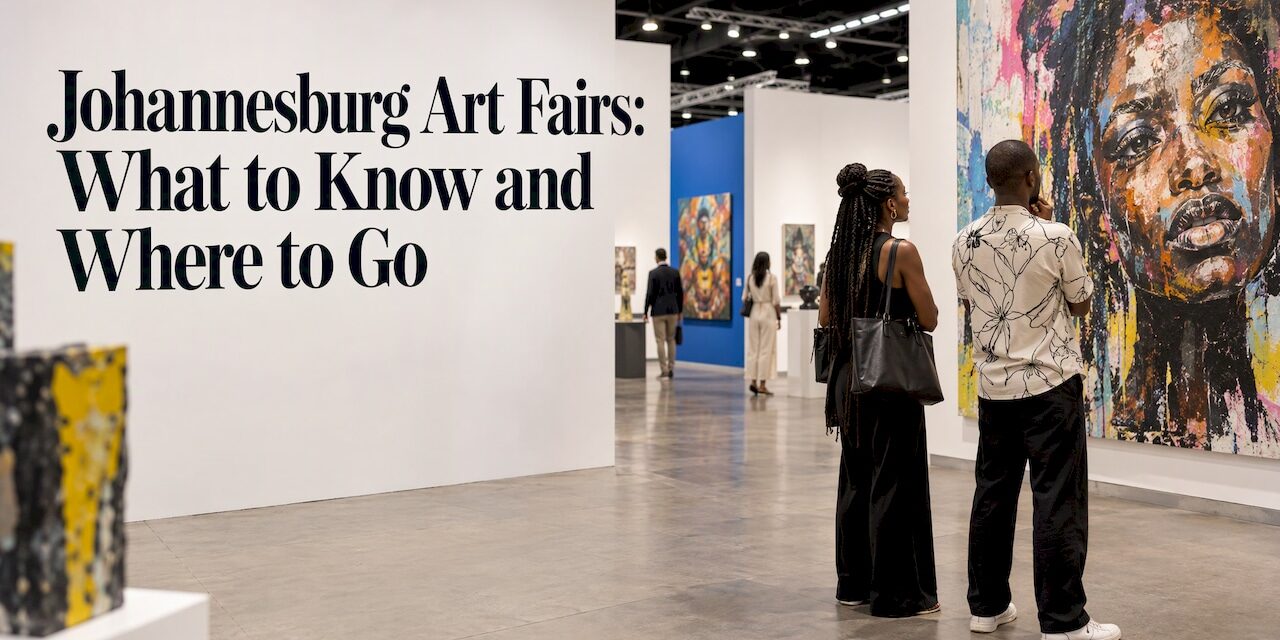
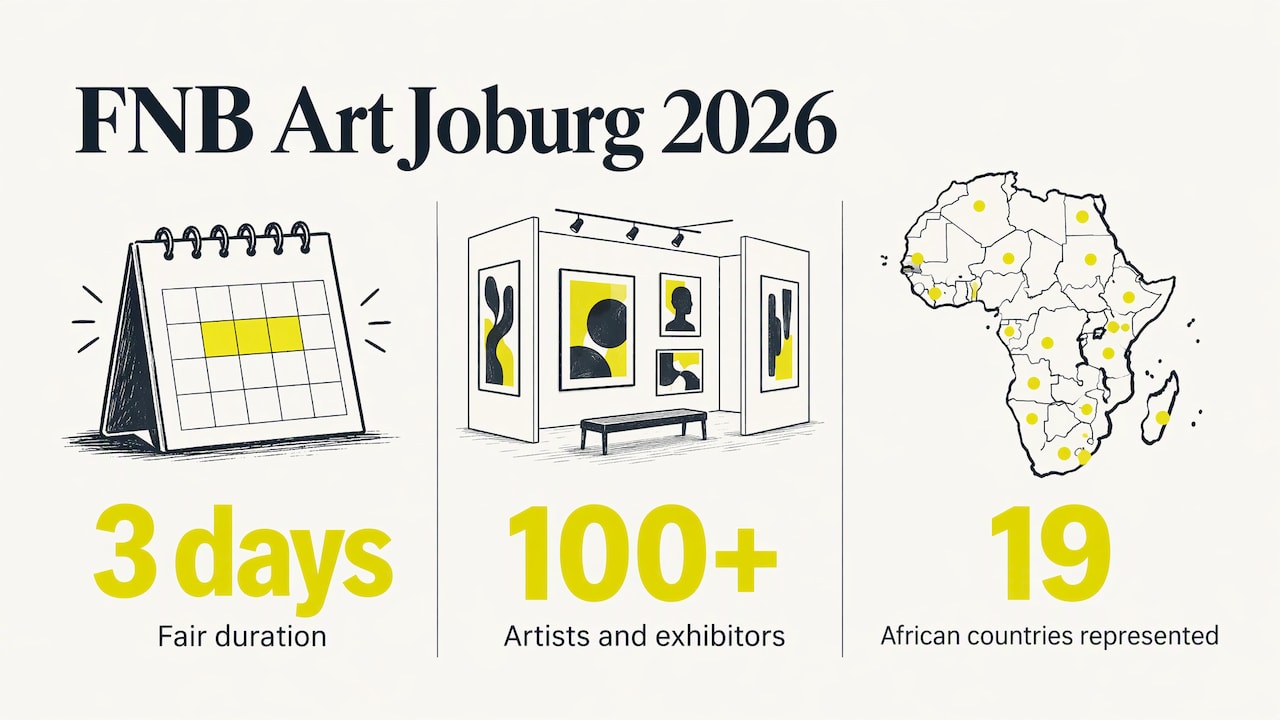
The main art fair in Johannesburg is FNB Art Joburg, held each September at the Sandton Convention Centre. Its 19th edition ran from 4 to 6 September 2026, with more than 100 artists and exhibitors from 19 African countries. Around it sits a wider arts season of open studios, gallery programmes and maker markets that run through the year. This guide separates the fair from the festivals and markets, so you can choose what suits you and plan around the dates that matter.
TL;DR
- FNB Art Joburg is the city’s flagship contemporary art fair. It is held at Sandton Convention Centre in early September, and the 2026 edition was its 19th.
- Open City, the city-wide programme that runs alongside the fair, adds exhibitions, open studios, performances, music and workshops across Johannesburg.
- Outside September, the best places to see and buy art are the galleries and maker markets. Check each organiser’s page for current dates and entry arrangements before you travel.
- A fair is a place to look, talk to galleries and learn. Treat buying as a second step, and read our guide to art as an investment first.
Table of Contents
- The main fair: FNB Art Joburg
- The wider September season: Open City
- Fairs, festivals and makers’ markets: which one do you want?
- Why the fair matters for artists and galleries
- How to plan your visit
- Beyond Johannesburg
- What we think
- Follow the scene with Joburgstyle
- FAQ
- Sources
The main fair: FNB Art Joburg
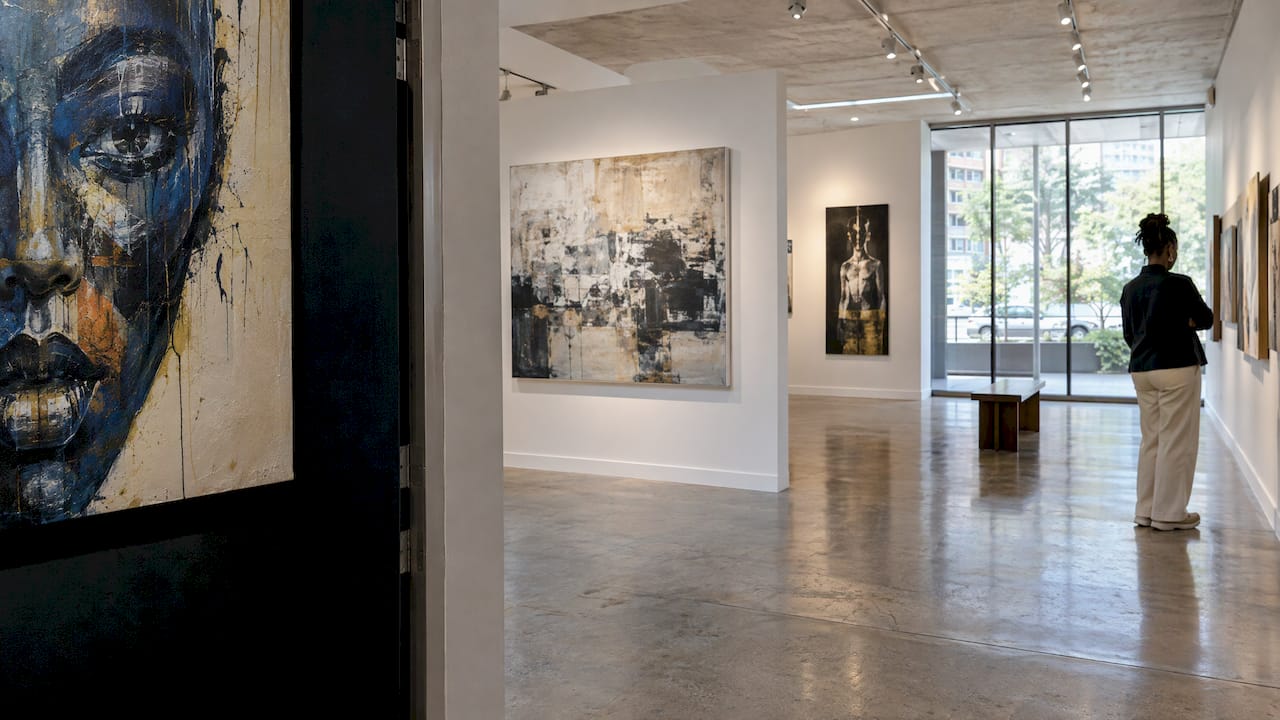
If you type “art fair Johannesburg” into a search bar, this is the event the results lead to. The FNB Art Joburg fair is held at the Sandton Convention Centre and, in 2026, ran for three days in early September. That edition gathered more than 100 artists and exhibitors representing 19 African countries.
It is a commercial fair: galleries rent stands and sell work. The fair is also a place to learn. Africa Art News describes it as more than a marketplace, pointing to its talks, guided walkabouts, installations and publishing initiatives as a platform for education, discovery and discussion about contemporary African art.
What a first-time visitor will find
An art fair is a trade show for galleries. Each gallery has a stand, hangs a selection of its artists, and staff are on hand to talk about the work. That makes it different from a gallery visit in three ways:
- Range in one place. You can compare dozens of galleries and artists in an afternoon, which would otherwise take weeks.
- Conversation. Gallery staff and sometimes the artists are at the stands, so questions about a practice, a medium or a price range are expected.
- Programming. Talks and walkabouts give context for work you may not know.
The fair is organised into curated sections. If you want to browse by theme rather than wander, look at the section list on the fair’s own website before you go, and pick two or three to see properly. A fair this size is tiring when you try to see everything.
The timing pattern
The fair is an annual September event, tied to what the press calls Johannesburg’s arts spring. Do not rely on last year’s dates. Organisers confirm the exact days, ticket categories and opening hours on the fair’s official site each year, so check there when the new edition is announced. If you plan travel from Cape Town, Durban or abroad, book accommodation near Sandton early, since hotel demand rises when a large convention is on.
The wider September season: Open City
Many visitors who search for art festivals in South Africa are really looking for this. Open City is the city-wide arts programme associated with the September art season. In 2026 it ran until 14 September and included exhibitions, open studios, performances, music and workshops across the city.
The difference matters when you plan:
| Art fair | Arts festival or city programme | |
|---|---|---|
| Main purpose | Galleries sell art to collectors and the public | Public programme of performances, exhibitions and workshops |
| Where | One venue, such as a convention centre | Many venues across the city |
| Pace | Compact, a few days | Spread over a week or more |
| Best for | Comparing galleries, buying, learning about the market | Wandering, meeting artists, live culture |
The name “Johannesburg Festival of the Arts” also appears in search results. That is a different thing again: a learner-focused festival in Rosettenville, where children and adults take part in music, drama, visual art and dance. It is a participation event, not a commercial fair.
Fairs, festivals and makers’ markets: which one do you want?
The city has more than one kind of event that gets called an art fair. Knowing the type saves a wasted trip.
Craft and design markets
Several markets sell handmade work by local makers. They are good for gifts, homeware and smaller pieces, and they are where many emerging designers first meet customers.
- KAMERS/Makers Sandton lists 24 to 29 November 2026, 09:00 to 17:00, at St David’s Marist Inanda, with local fashion, homeware, gourmet food and gifting. It recurs ahead of the festive season, so check the organiser’s show page for the next dates.
- Field Market lists a 14 November 2026 market at Field & Study Park, 11 Louise Avenue, Parkmore, for makers, creators, artists, crafters and artisans selling handcrafted goods.
If you prefer a relaxed weekend outing with food, our guide to Johannesburg Sunday markets shows how to find local makers and avoid wrong dates, and our list of Johannesburg food markets covers what to expect before you go.
Music and culture festivals with an arts angle
Some events overlap with the art scene without being art fairs. Ngeke! Festival, a music event with an anti-corruption message, was scheduled for 7 November 2026 at The Nest in Johannesburg. It is a reminder that the city’s cultural calendar mixes music, activism and visual culture, and that dates for many events are announced only a few months ahead.
Galleries all year
When no fair is on, galleries are your art fair in slow motion. Johannesburg has dense clusters you can walk in a day. We have mapped them in our guides to Johannesburg art galleries around Rosebank and the Keyes Art Mile, including galleries, food stops and First Thursdays. For public collections, see our museums in Johannesburg picks, which range from free entry to R240.
Why the fair matters for artists and galleries
For a visitor, the fair is a day out. For an artist, it can shape a career. The National Arts Council’s June 2026 newsletter presents the RMB Latitudes INDEX partnership as a bridge between artistic creation and commercial exhibition, giving independent and emerging artists exposure to collectors, curators and institutions.
That is the real value of a fair for the local scene. A gallery in Johannesburg meets buyers from other African countries and beyond. An emerging artist sees how work is presented and priced. A visitor sees all of it at once. If you care about local talent, buying a print or a small original from a young artist at a fair is a direct way to support the scene.
How to plan your visit
- Confirm the dates and ticket type on the organiser’s official page. Fairs publish ticket categories, opening hours and any preview days there. Do not rely on a third-party listing for prices.
- Choose the days. Weekday afternoons are generally calmer than weekends at large fairs, which makes conversations with gallery staff easier. Check the programme for the talks you want and plan around them.
- Pick a route. Choose a few sections or galleries to see properly, then wander.
- Travel light. Convention centres involve long walks, and you may want a hand free for a catalogue.
- Plan your lunch and your evening. Sandton has plenty of dining, and the wider city programme often runs in the evenings.
- Bring questions, not just eyes. Ask a gallery about an artist’s background, medium, edition size and how the work is framed and shipped.
If you want to buy
Most first-time buyers do best by setting a budget and starting small: prints, editions, works on paper or work from emerging artists. Ask for a written invoice, the artist’s name and the title, the year, the medium and the dimensions, and ask whether the work is framed. Our piece on art investment in South Africa goes further into buying with both passion and profit in mind. For a significant purchase, speak to a qualified art adviser or your financial adviser before you commit.
Beyond Johannesburg
If you travel, the same pattern applies in other cities: a main fair once a year, with galleries and markets filling the rest of the calendar. Always check the organiser’s page for current dates and tickets rather than relying on last year’s. If you travel further, our report on Art Dubai’s smaller 20th edition shows how another major fair handles access and programming, and is useful for anyone building an art-focused trip.
If you are in the city for only a day, our one-day Johannesburg loop pairs the Apartheid Museum with Maboneng.
What we think
Johannesburg’s art scene is at its best when you treat the fair as the start of a conversation, not the end of one. The big September weekend gives you a map: which galleries are showing what, which artists are rising, and which ideas are being argued about.
At Joburgstyle we cover fashion, lifestyle, arts and culture in Johannesburg, and we have always pushed local talent first. That means covering the gallery openings, the makers’ markets and the designers whose work sits alongside the art. Fashion and art share the same audience and often the same rooms, and the events that mix philanthropy, design and culture are the ones that give the city its character.
Our advice is to go to the fair, then keep going. Visit a gallery the following week, return to an artist you liked, and follow the work through the year. Our guides are built for exactly that second visit.
Chad
Follow the scene with Joburgstyle
Joburgstyle is an online platform covering fashion, lifestyle, arts and culture in Johannesburg, South Africa and abroad, with event coverage, interviews with influential personalities and features on emerging local designers. If you want to keep up with openings, fairs and cultural movements in the city, start on the Joburgstyle homepage and browse our arts and culture coverage.
Our travel and lifestyle pages sit alongside the arts coverage, so you can build a weekend around an exhibition, a market and a good meal.
FAQ
What is the biggest art fair in Johannesburg?
FNB Art Joburg is the city’s flagship contemporary art fair. Its 2026 edition was the 19th and was held at Sandton Convention Centre, with more than 100 artists and exhibitors from 19 African countries.
When are art fairs held in Johannesburg?
The main fair takes place in early September each year, and the city’s wider arts programme runs around it. Smaller maker markets run across the year, with a cluster before the festive season. Confirm each date on the organiser’s own page, since schedules change.
Do I need to buy art to attend?
No. Visitors come to look, hear talks and join walkabouts. The fair’s programme includes talks, guided walkabouts and installations, so it works as an education day as much as a sales floor.
What is the difference between an art fair and an art festival?
An art fair is a commercial event where galleries show and sell work from stands in one venue. A festival or city programme, like Open City, spreads exhibitions, open studios, performances and workshops across many venues.
Where can I see art in Johannesburg outside fair season?
Galleries and museums are open throughout the year. Start with our guides to the Rosebank galleries and the Keyes Art Mile, where you can combine viewing with food and First Thursdays.
Sources
- Your guide to Joburg’s biggest art events this September, Explain
- FNB Art Joburg 2026: Johannesburg’s role in Africa’s art market, Africa Art News
- Quarterly newsletter, National Arts Council, June 2026
- Shows, KAMERS/Makers
- Traders, Field Market
- Fair Play returns to South Africa: it’s time to say Ngeke, Anti-Corruption Music
