
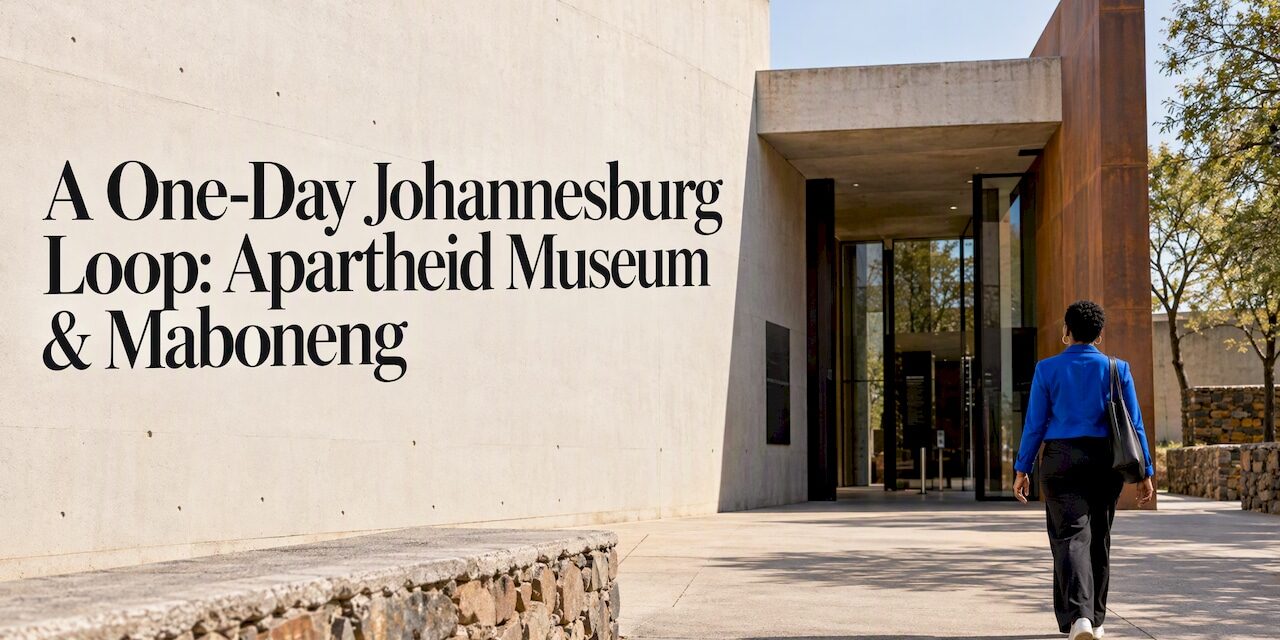
If you have time in Johannesburg, start with the Apartheid Museum, Maboneng precinct and a day trip to the Cradle of Humankind, then round things off with Gold Reef City or Joburg Zoo. Culture seekers get history and context, creative wanderers get street art and galleries, families get rides and animals, and anyone craving fresh air gets caves, hills and open veld within easy reach of the city.
TL;DR:
- From May 1, 2026, Apartheid Museum admission costs R240 for international adults and R170 for South African citizens with ID; the museum closes Mondays.
- Constitution Hill opens daily from 9 AM to 5 PM, with last tickets at 4 PM; its one hour Highlights tour costs R150 for adults.
- A guided Soweto visit covers Vilakazi Street, Mandela House, and the Hector Pieterson Memorial in two to three hours, adding context about the 1976 uprising.
- Book a guided cave tour at the Cradle of Humankind ahead of time; the site is about an hour west of Johannesburg.
- Market stalls and festival dates change frequently, so check local listings the week before rather than relying on last year’s schedule.
Table of Contents
- Top picks: the best things to do in Johannesburg right now
- History and heritage: museums, Soweto and constitutional sites
- Art, creative precincts and galleries worth your afternoon
- Parks, gardens and outdoor escapes inside the city
- Family-friendly and theme attractions for a full day out
- Markets, food and festival highlights worth planning around
- Best day trips and safaris from Johannesburg
- Practical planning: tickets, opening hours, transport and safety
- Why trust our local coverage of Johannesburg
- Local cultural experiences and community festivals to look out for
- Food and drink beyond the markets: dishes and restaurants worth seeking out
- Nightlife and entertainment: where Johannesburg comes alive after dark
- A one-day loop: culture, precinct and market in a single visit
- FAQ
- Sources
Top picks: the best things to do in Johannesburg right now
Johannesburg rewards a mix of heavy and light. Pair a morning that asks something of you with an afternoon that does not, and the day feels balanced rather than exhausting. This shortlist gives you the order we would walk through it if you handed us a single weekend.
- Apartheid Museum: the city’s essential history lesson, best visited in the morning when you have the energy to take it in properly.
- Constitution Hill: the old prison complex turned constitutional court, a short detour from the city centre and easy to combine with a museum morning.
- Soweto and Vilakazi Street: book a guided tour if it is your first visit, since context changes what you see on Mandela House and the surrounding streets.
- Maboneng precinct: galleries, street art and weekend markets, best on a Sunday when the stalls and food vendors are out in force.
- Johannesburg Art Gallery: a quieter, deeper collection in Joubert Park, worth an hour if you want South African and international art without the crowds.
- Joburg Zoo: a solid half-day for families, with shade and benches scattered through the grounds for when little legs give out.
- Gold Reef City: rides and an underground mine tour together make this the city’s best single stop for families with older children.
- Cradle of Humankind: a day trip west of the city for anyone who wants caves, fossils and a change of pace from the urban grid.
- Johannesburg Botanical Garden or Zoo Lake: free or near-free green space for a picnic, a walk or simply somewhere to sit that is not a mall.
Each of these works as a standalone outing, but they also link up neatly: a museum morning flows into a precinct lunch, and a Saturday market pairs naturally with a Sunday nature reserve.
History and heritage: museums, Soweto and constitutional sites
Johannesburg’s heaviest history sits within a short drive of each other, which makes it possible to cover decades of change in a single day if you plan the order well.
The Apartheid Museum is the obvious starting point. From 1 May 2026, the Apartheid Museum’s entry fees are tiered for international and South African visitors, with different rates for guided tours, and the museum is closed on Mondays, so plan your visit accordingly. Budget at least two to three hours, since the exhibits are dense and worth reading properly rather than rushing.
Constitution Hill opens daily from 09:00 to 17:00, with last tickets sold at 16:00.Opening hours show a Highlights tour (one hour) at R150 for adults and a Full Site tour (two hours) at R200, with discounted rates for children, students and pensioners, and online bookings sometimes carry a 5% saving. A published rate sheet also lists special Night and Time Travel tours, and the site recommends booking group visits ahead of time.
In Soweto, the core walk covers:
- Vilakazi Street, the only street in the world to have housed two Nobel Peace Prize laureates.
- Nelson Mandela House, now a small museum on his former home.
- The Hector Pieterson Memorial, marking the 1976 student uprising.
A guided tour adds context that a self-guided wander will not, particularly around the events of 1976, and most visitors cover all three sites comfortably in two to three hours.
Art, creative precincts and galleries worth your afternoon
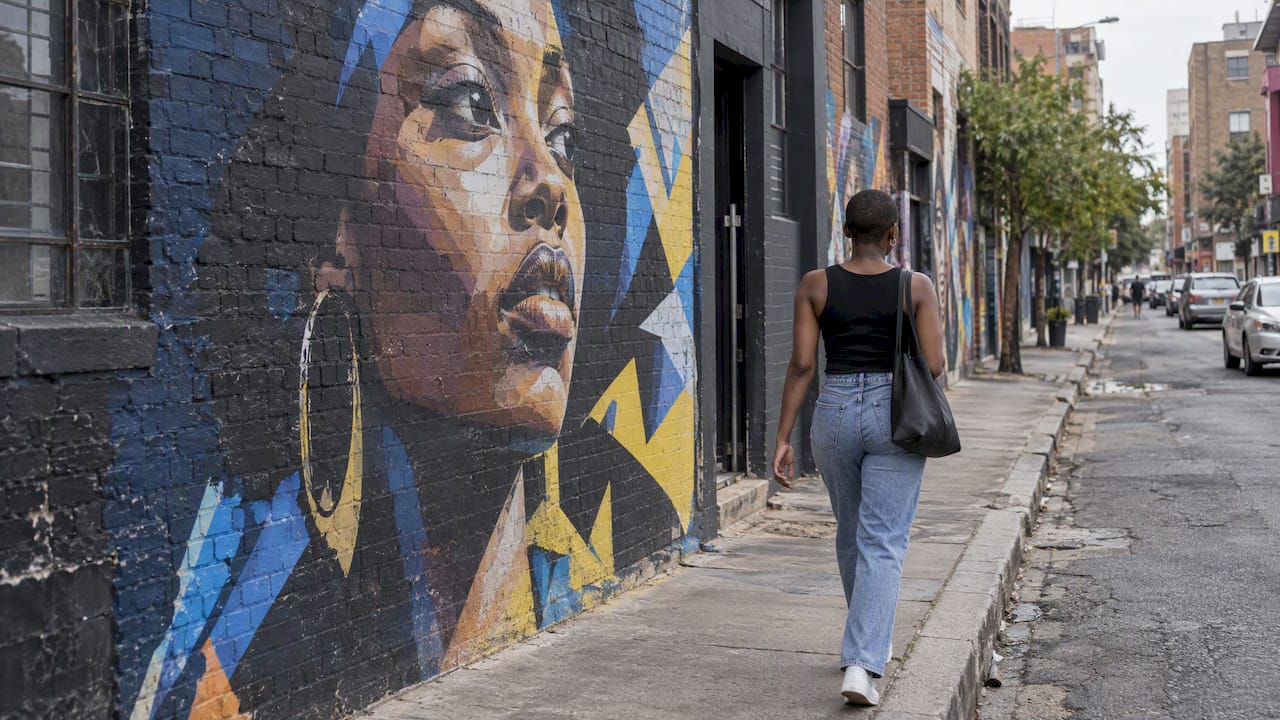
Maboneng and Victoria Yards are where Johannesburg’s creative energy is easiest to find in one walk. Maboneng mixes galleries, rooftop bars, street art and a well-known Sunday market, while Victoria Yards in Lorentzville leans more towards working artist studios, a permaculture garden and small makers’ stalls. Both reward slow wandering rather than a checklist approach.
The Johannesburg Art Gallery in Joubert Park holds over 10,000 artworks and opens Tuesday to Sunday from 10:00 to 17:00, with guided tours available to groups by appointment. It is one of the continent’s older public collections and far less crowded than the precincts, which makes it a good counterpoint to a busier Maboneng morning.
A few practical notes before you go:
- Weekend pop-ups and market stalls rotate, so check listings the week before rather than assuming a stall will be there.
- Group visits to the gallery need to be arranged ahead of time rather than on the day.
- Street art in Maboneng changes often, so a repeat visit rarely looks the same twice.
Pro Tip: Follow local culture coverage like our feature on MaXhosa Africa’s Paris Fashion Week return to track which Johannesburg designers and creatives are showing work locally that same season.
Parks, gardens and outdoor escapes inside the city
Not every good Johannesburg outing needs a ticket. The Johannesburg Botanical Garden in Emmarentia offers rose gardens, a herbarium and open lawns that suit a picnic or a slow walk, and it sits right next to Emmarentia Dam for anyone who wants water views. Zoo Lake, across the road from the zoo, is a popular weekend spot for walking, paddling and informal picnics. The Wilds in Houghton is smaller and steeper, with indigenous planting and good city views, while George Harrison Park in the south marks the site of the original 1886 gold discovery that founded the city.
For something more active:
- Northcliff Hill offers a short, steep climb with one of the better panoramic views over the northern suburbs.
- Zoo Lake and the Botanical Garden both suit casual birdwatching, especially early morning.
- A picnic in any of these spots works well paired with a market stop beforehand for supplies.
Visit green spaces in daylight hours and in a group where possible, and treat them the way you would any public park in a large city: aware of your surroundings, without being paranoid about it.
Family-friendly and theme attractions for a full day out
Johannesburg’s family attractions cluster around rides, animals and a bit of mining history, and most families can comfortably manage one of these per day without feeling rushed.
- Gold Reef City: built around a recreated turn-of-the-century mining town, Gold Reef City runs underground mine tours throughout the day alongside rides, museums and live demonstrations, making it the strongest single stop for families with school-age children.
- Joburg Zoo: the zoo covers roughly 54 hectares and houses around 2,070 animals across some 365 species, with educational and entertainment programmes running through the grounds, and its main entrance sits on Jan Smuts Avenue in Parkview.
- Lion & Safari Park: a half-day or full-day trip north of the city, better suited to families with younger children who want guaranteed animal sightings without a long drive.
Buy tickets online where possible to skip queues at the gate, bring sun protection for Gold Reef City’s outdoor sections, and check which rides have height restrictions before you promise anything to younger children.
Markets, food and festival highlights worth planning around
Weekend markets are where Johannesburg’s food, crafts and music culture actually show up in one place. Fourways Farmers Market and the Rosebank Sunday Market both offer produce stalls, street food and live acoustic sets, while Victoria Yards leans more towards artisan goods and small-batch food producers.
On the festival calendar, our coverage of the Pick n Pay Wine & Food Festival tracks ticket releases and dates as they are confirmed each year, and it is worth checking before you plan a weekend around it. Back to the City, held annually in Newtown, has become one of the city’s largest cultural festivals, combining music, street art, sports and food across multiple event zones.
- Markets and festivals shift their programming often, so check listings the week before rather than assuming last year’s dates hold.
- Weeknight visits to museums and weekday mornings at popular sites tend to carry shorter queues than weekend afternoons.
- Evening outings in Maboneng, Newtown and Rosebank are generally busier and better lit than quieter residential streets, so stick to the main precincts after dark.
Pro Tip: Subscribe to local event listings a few weeks out, since Johannesburg’s festival calendar shifts monthly and sold-out programming happens faster than you would expect.
Best day trips and safaris from Johannesburg
When you want a change of scenery without a long drive, three options stand out. The Cradle of Humankind, a UNESCO World Heritage Site roughly an hour from the city, covers fossil caves and visitor centres focused on human origins, and suits anyone drawn to deep history rather than wildlife. Pilanesberg offers a safari day trip further north, built around a malaria-lower game reserve and suited to visitors who want a safari experience without committing to the Kruger region. Pretoria, closer still, offers the Union Buildings, Voortrekker Monument and a different pace of city altogether.
- Cradle of Humankind: roughly an hour’s drive, best with a guided cave tour booked ahead rather than on arrival.
- Pilanesberg: a longer day, usually two to two and a half hours each way, best done with an organised safari operator for wildlife viewing.
- Pretoria: around an hour from central Johannesburg, easily combined with a half-day of sightseeing rather than a full day trip.
Self-drive works for Pretoria and the Cradle, but a guided operator is the safer, simpler choice for Pilanesberg given the distance and the wildlife-viewing logistics involved. Wherever you go, stick to marked paths in reserves and follow ranger instructions around animals rather than approaching for photos.
Practical planning: tickets, opening hours, transport and safety
Most of the city’s major sites use timed or dated tickets, and booking ahead saves time at the gate. Constitution Hill’s published rates run from 09:00 to 17:00 daily with last entry at 16:00, and the Apartheid Museum’s new 2026 tiered pricing, R240 for international adults and R170 for South African citizens with ID, takes effect from 1 May, with Mondays closed.
Constitution Hill’s online bookings can carry a 5% discount over gate prices, which is worth claiming if you already know your visit date.
For getting around:
- Use a trusted operator, Uber, or an organised tour transfer rather than informal transport, particularly after dark.
- Local travel guidance recommends planning journeys around peak traffic hours, since Johannesburg’s rush hour can add significant time to any cross-town trip.
- Museums and galleries are generally quieter on weekday mornings; weekend afternoons carry the longest queues at Gold Reef City and the zoo.
- Carry cash in small denominations for market stalls, since not every informal vendor accepts cards.
Spring and early summer (September to November) bring pleasant daytime temperatures for outdoor sites and day trips, while midwinter mornings (June and July) can be cold enough to affect early starts at outdoor reserves.
Why trust our local coverage of Johannesburg
Our recommendations draw on official venue information, published opening hours and ticket rates, and our own reporting on the city’s events calendar. We have covered the Pick n Pay Wine & Food Festival and tracked designers such as MaXhosa Africa as they show on international stages, which keeps us close to what is actually happening in Johannesburg’s cultural calendar rather than relying on dated lists. This guide was written by Chad, drawing on official venue pages and our own event listings to keep the practical details current.
Local cultural experiences and community festivals to look out for
Johannesburg’s cultural calendar runs well beyond its museums. Community festivals across the city regularly feature traditional music and dance, from marimba and gumboot performances at public events to contemporary acts blending isicathamiya and jazz influences. Newtown, as the city’s long-standing cultural precinct, hosts much of this programming, and Back to the City has grown into one of the anchor events for African hip-hop and street culture on the calendar.
Beyond the big-name festivals, smaller community events pop up around heritage occasions and public holidays, often combining food stalls with live performance in parks and precinct squares. These tend to be free or low-cost to attend, and they offer a more intimate alternative to ticketed festival programming.
Our ongoing event coverage tracks larger annual gatherings that draw crowds from across the city, which is a useful way to gauge scale and plan transport and timing around them. If you want to catch traditional performance specifically, community centres and cultural precincts are generally a better bet than mainstream venues, since programming there is built around heritage and local talent rather than purely commercial bookings.
Checking listings close to your travel dates matters here more than almost anywhere else in this guide, since community festival dates shift from year to year and are not always confirmed far in advance.
Food and drink beyond the markets: dishes and restaurants worth seeking out
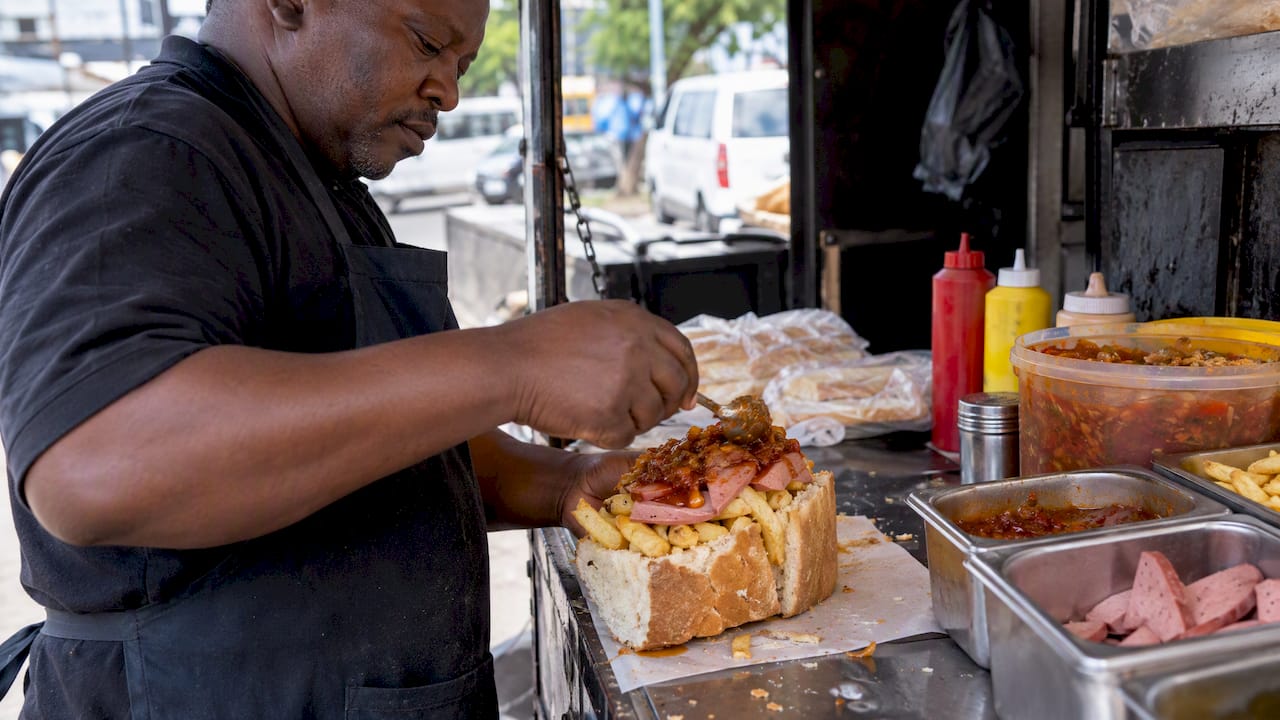
Johannesburg’s food scene stretches well past its weekend markets. Street food vendors across the city sell boerewors rolls, kota (a hollowed-out quarter loaf filled with chips, polony and relish) and vetkoek, all of which make a cheap, filling lunch between sightseeing stops. Braai culture runs deep here too, and a proper braai, whether at a restaurant or a backyard gathering, remains one of the most authentic ways to eat in the city.
Rosebank, Melville and Maboneng carry the highest concentration of sit-down restaurants, spanning everything from contemporary South African cooking to pan-African menus drawing on West and East African influences. Melville in particular has built a reputation around its strip of independent cafés and restaurants, which suits an evening of wandering between a few different spots rather than committing to one booking.
For something distinctly local, look for restaurants serving pap with chakalaka and grilled meat, a combination that remains a staple across township and suburban kitchens alike. Shisanyama grills, communal meat-braai setups found in areas like Soweto, offer a social, often inexpensive way to eat that doubles as a cultural experience in its own right.
Pairing a restaurant booking with a market visit earlier in the day tends to work well: graze through stalls at lunchtime, then book a sit-down dinner somewhere like Melville or Rosebank once the markets wind down for the evening.
Nightlife and entertainment: where Johannesburg comes alive after dark
Johannesburg’s nightlife splits fairly cleanly by neighbourhood. Maboneng and Newtown carry the city’s live music venues and late-night bars, with programming that ranges from jazz sets to DJ-led club nights depending on the evening. Our coverage of Strictly Soul, one of the city’s recurring R&B events, gives a sense of the scale these music nights can reach when a well-known act is on the bill.
Rosebank and Sandton lean more towards rooftop bars, cocktail lounges and hotel bars, better suited to a quieter evening than a late club night. For theatre and live performance, the Joburg Theatre in Braamfontein and the Market Theatre in Newtown both run regular programming across drama, musicals and comedy, and checking their listings ahead of a visit is worth the five minutes it takes.
For an evening out, it is recommended to stick to the main streets and established venues and arrange transport home before heading out rather than trying to find a ride late at night.
A one-day loop: culture, precinct and market in a single visit
If we only had one day, we would start at the Apartheid Museum in the morning, when the exhibits have your full attention, then head to Maboneng for lunch among the galleries and street art. Close the afternoon at Zoo Lake or the Botanical Garden, or swap in a Sunday market if the timing lines up. Book an Uber or a trusted transfer between each stop rather than driving yourself, since parking in Maboneng gets tight by early afternoon.
— Chad
FAQ
What are 10 must-see places in Johannesburg?
A strong list includes the Apartheid Museum, Constitution Hill, Vilakazi Street, Nelson Mandela House, the Hector Pieterson Memorial, Maboneng precinct, the Johannesburg Art Gallery, Joburg Zoo, Gold Reef City and the Cradle of Humankind. Together they cover history, art, family entertainment and a nature-based day trip, which gives most first-time visitors a representative spread of the city.
What are some fun activities to do in Johannesburg South?
Gold Reef City, with its underground mine tour and recreated mining town, sits in the city’s south and remains one of the strongest family-friendly options in that part of Johannesburg. Soweto’s heritage sites, including Vilakazi Street and the Hector Pieterson Memorial, also fall within the southern part of the city and work well combined with a Gold Reef City visit on the same day.
What can I do in Johannesburg in one day?
One day works best as a museum morning, a precinct lunch, and a park or market in the afternoon: try the Apartheid Museum, then Maboneng, then Zoo Lake or the Botanical Garden. This combination covers history, culture and a slower pace without overloading the day with travel time between distant sites.
How do I spend two days in Johannesburg?
Spend day one on history and culture: the Apartheid Museum or Constitution Hill in the morning, Soweto in the afternoon. Use day two for either a family stop like Gold Reef City or Joburg Zoo, or a day trip to the Cradle of Humankind if you would rather get out of the city entirely.
Sources
- Visitor information – Apartheid Museum
- Opening hours – Constitution Hill
- Johannesburg Art Gallery
- Joburg Zoo
- Gold Reef City mine and attractions
