

The South African Border War was a brutal, covert conflict waged between 1966 and 1989—a period of history we cannot even agree on the name for, known variously as the Angolan Bush War or the Namibian War of Independence.
This history remains largely unexamined in our national conversation, yet the powerful new Unspoken War documentary finally gives voice to the hidden stories of this past, aiming to document a legacy of silence and trauma.

Nikki Comninos’ Personal Connection
“We are all deeply connected to this war in so many ways,” says director Nikki Comninos (Convict Conman, Tracking Thabo Bester). She explains that if you live in Southern Africa, you have been touched by it, whether a family member fought in the war or resisted it, or because of the indelible imprint these conflicts left on society.
The reverberations are everywhere, including in generational relationships, community dynamics, the security industry, and even in boarding school and hostel culture. “This war shaped modern South Africa profoundly, yet it remains largely unexamined in our national conversation. That silence felt dangerous.”

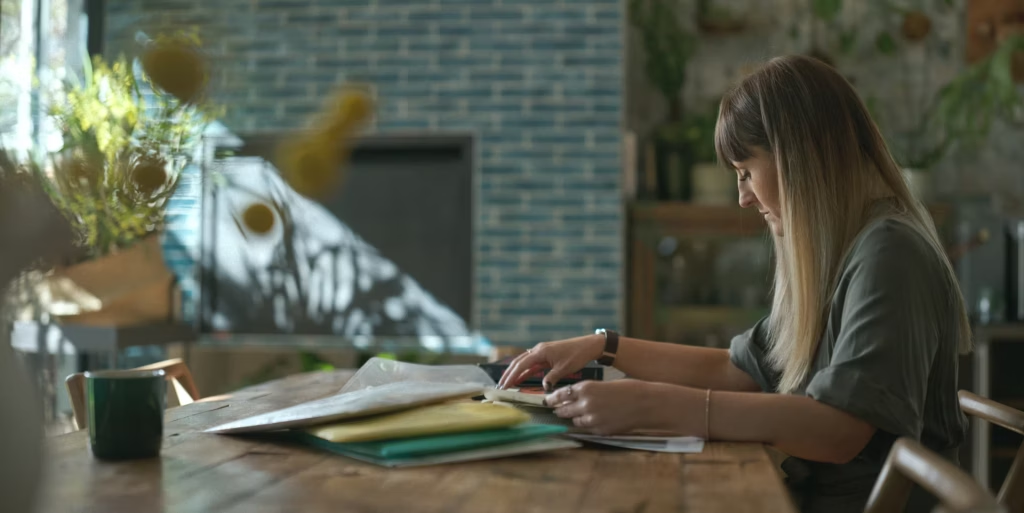
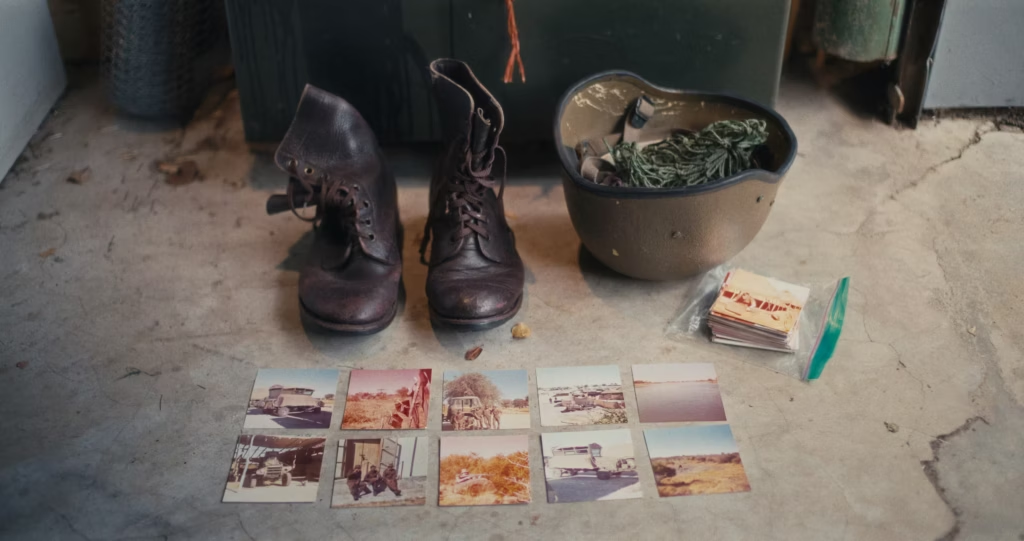
Nikki herself was born in Zimbabwe as a direct result of the war. Her father had been avoiding conscription by studying, but once he had run out of deferment options, he went into political exile.
Her mother, Julie Frederikse, covered the conflict as a foreign correspondent. Julie shared her personal archive and appears in the series. This experience, Nikki explains, brought them closer.


‘The experience brought us closer – she was both a historical resource and a huge emotional support. I learned things about her I never knew, even though we’re close. I didn’t realise she flew into the operational area for press tours. As a female journalist at that time, she was exceptionally determined – a tough cookie, as they say.’
~ Nikki Comninos

For the director, now was the crucial time to tell the story of the war because this history was disappearing. The generation that fought is ageing, and many were taking their stories to the grave—whether from shame, trauma, or the belief that no one wanted to listen. “We realised if we didn’t document these voices now, we’d lose them forever.”
When she started researching, Nikki quickly realised there wasn’t a single, consolidated record of this part of history, which helped her understand the importance and gravity of the project.
Countering the Masculine Lens of War
In the research process, she found definite gaps in the historical record. War tends to be told through a very masculine lens, she observes, adding, “We definitely wanted to counter that with this series.”
Women and children are often brushed over as casualties of war, but they endure the absences and the trauma that comes home. The director was interested in the private grief and resilience within this narrative. “Practically, I hope this series becomes a resource for families trying to understand their parents or grandparents.”
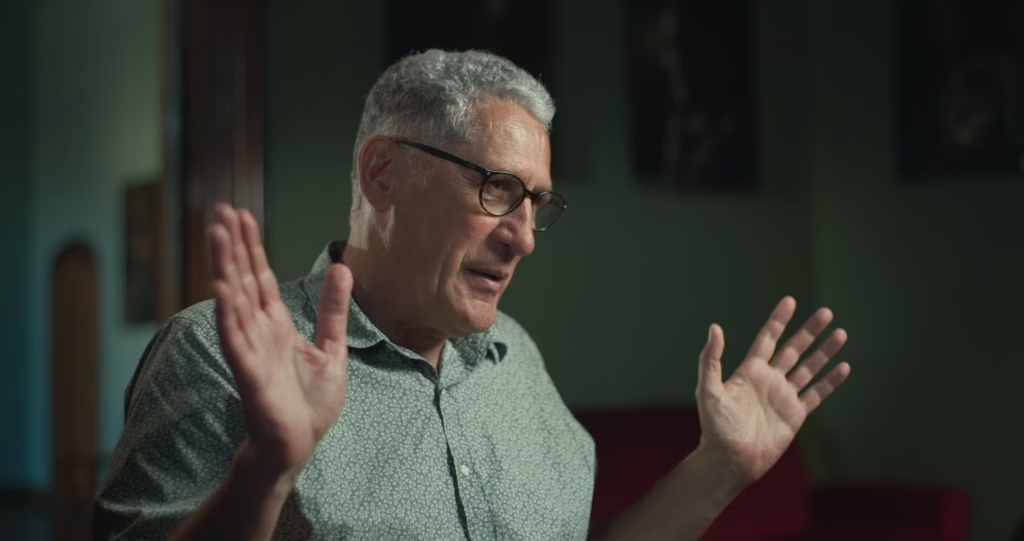
In Unspoken War, her mother Julie speaks about the importance of the voice of the people, stressing the value of hearing what people think at a grassroots level rather than just accepting the official version. This perspective profoundly resonated with Nikki.
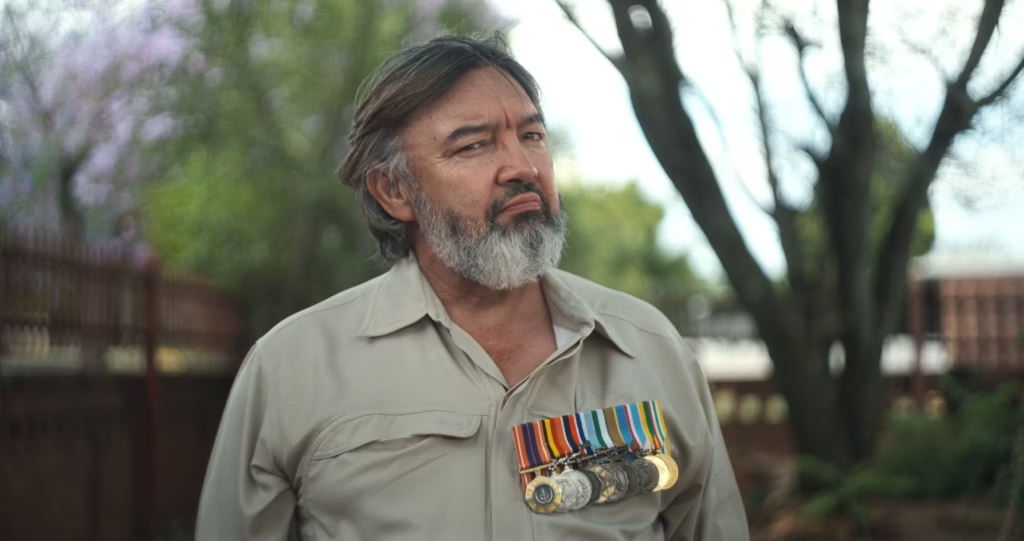
‘Official narratives are often sanitised or weaponised for political purposes. We interviewed a variety of people – conscripts, Special Battalion leaders, conscientious objectors, exiles, families, PLAN [People’s Liberation Army of Namibia] fighters – because the truth exists in the aggregate of lived experience, not in official statements. That grassroots approach reveals the human cost that official records can’t capture and often try to conceal.’
~ Nikki Comninos
The Shared Experience of Being a Pawn
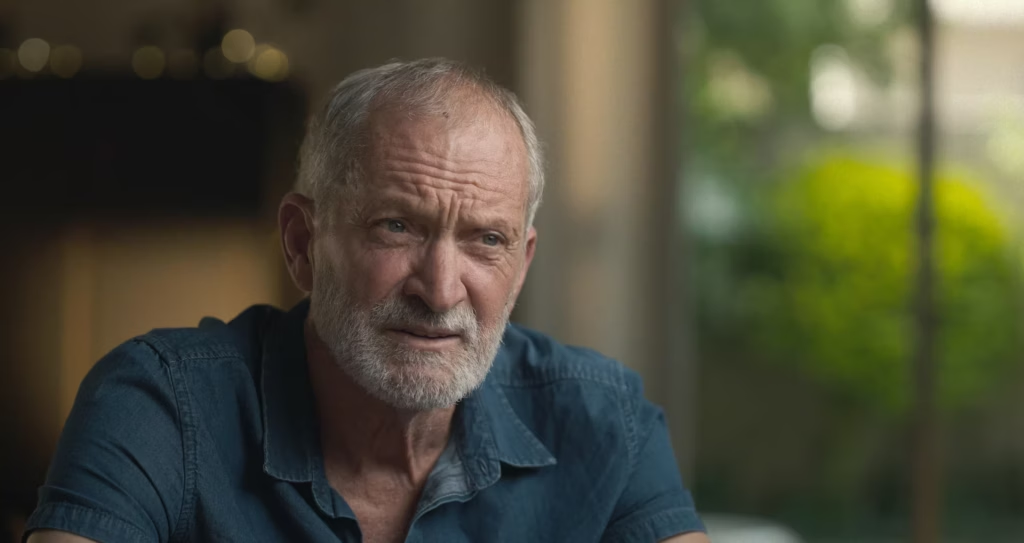
Some of the soldiers she interviewed had been conscripted at just 16 years old. Consequently, what became clear to the director is the proverb: “when elephants fight, it is the grass that suffers.”
That became her lasting takeaway, as all the soldiers they spoke to were hurting. Often, though, that hurt was masked by foregrounding other emotions. Their stories revealed a deep paradox: they expressed pride in their service while simultaneously showing signs of deep trauma.
‘That cognitive dissonance, that need to find meaning in their suffering, was heartbreaking. It was incredibly sad to see these soldiers broken by war, and then to look at the world today and see how many wars are being fought. It’s painful to know how much more trauma is being created that future generations will have to carry. No one wins in war.’
~ Nikki Comninos
This feeling came through repeatedly in her interviews. Almost everyone, regardless of which side they were on, felt betrayed. Conscripts felt betrayed by the state that sent them; resisters also felt betrayed by their political systems; families felt betrayed by the silence.
Everyone shared the experience of being a pawn in war. That shared sense of betrayal became a powerful through-line she had not anticipated.


Creating Permission to Finally Speak
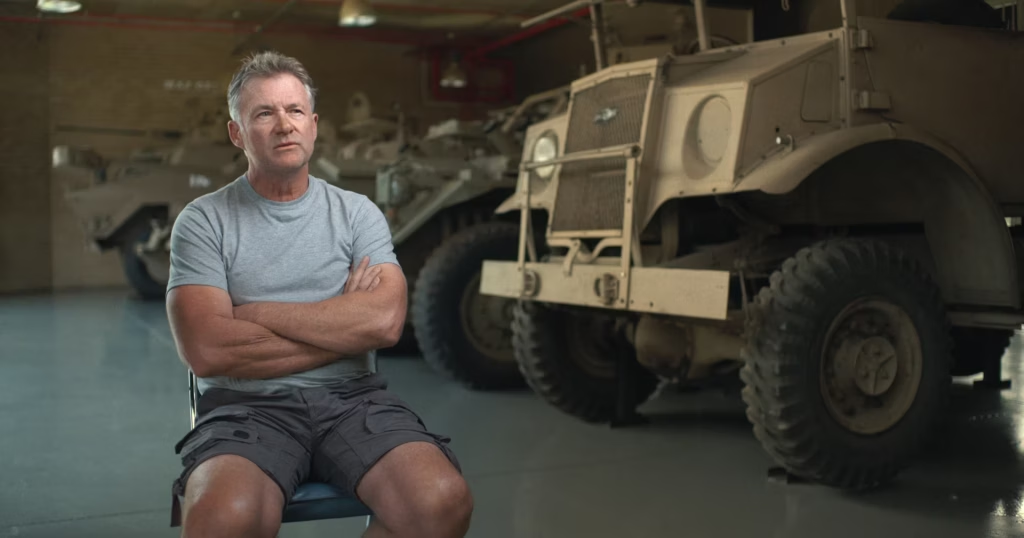
Another surprise for Nikki was the positive effect the interviews had on her subjects, many of whom were sharing their stories for the first time. Many expressed thanks afterwards, suggesting to her that the act of telling—of being heard—has value in itself.
While it is harder to measure whether it facilitates real change, bearing witness matters, she argues. She started seeing the documentary not just as a historical record but as something that might contribute to reconciliation.
She ultimately hopes that Unspoken War “creates permission for people to finally speak about what they’ve been carrying in silence.”

For her, a happy ending would mean a greater understanding between us all, which would open up a space for understanding other people’s pressures, motivations, and experiences.
She concludes: “We are all human and we share universal emotions and desires, even though from the outside it often seems there is an inconceivable divide between us. We are more the same than we want to believe.”
You can binge Unspoken War on Showmax or watch it at 9 PM on Wednesdays on M-Net until 10 December 2025.
Watch the trailer
For more articles, go here.
