
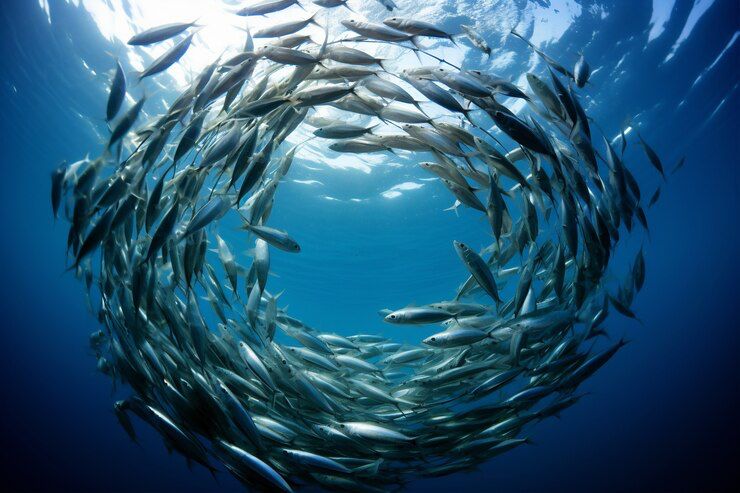
South Africa’s iconic Sardine Run, one of the most extraordinary wildlife spectacles on the planet, unfolds along the East Coast each winter. This seasonal migration of billions of small silvery fish between late May and July is triggered by a drop in sea temperature, creating a narrow band of cooler water along the coastline. While influenced by ocean currents, the sardine migration remains one of nature’s great enigmas, as its exact drivers are still not fully understood.
“This thrilling phenomenon is as spectacular as it is unpredictable, as no two seasons are the same due to variations in timing and scale” ~ Shaun Lamont, Managing Director of First Group Hotels and Resorts.
The run attracts tourists, researchers, and locals, offering an unforgettable glimpse into a marine feeding frenzy sparked by kilometres of sardines pursued by massive numbers of predators. The sheer scale and energy make it a true bucket-list experience.

The Path of the Sardine Shoals
The migration typically starts along the Transkei coast in the Eastern Cape, moving up the Wild Coast and along the KwaZulu-Natal South Coast. Most years, it doesn’t extend much beyond Durban, as warmer water temperatures and strong currents disperse the shoals. “The Sardine Run isn’t one long, continuous shoal,” explains Lamont. “It consists of multiple shoals arriving at different times, varying in size and location, spanning four to six weeks.”
Five Reasons to Experience This Wildlife Spectacle
Lamont believes this marine event earns a spot on any adventurer’s bucket list and offers five compelling reasons why:
1. A Marine Safari Like No Other
The Sardine Run surpasses even the great wildebeest migration in volume—nature at full throttle and every angler’s dream. Game fish like tuna, mackerel, dorado, and marlin follow the shoals, with boat and dive operators offering fishing charters and dive excursions to experience the “Greatest Shoal on Earth.” Hook into something special, and you’ll have bragging rights for life.
2. Nature’s Untamed Spectacle
No tanks, no feeding times, no human control—just raw nature in real time. This migration offers a rare chance to witness a wild marine event up close.
3. Boosting Coastal Communities
The sardine migration draws tourists from around the world to the KwaZulu-Natal South Coast. Accommodation providers see high occupancy during the season, which coincides with school holidays. Restaurants and local businesses also thrive, making it a key tourism highlight.
4. A Photographer’s Paradise
From swirling bait balls and breaching whales to leaping dolphins and golden ocean light, the Sardine Run offers incredible photo opportunities. For underwater photographers, these massive shoals create once-in-a-lifetime shots.
5. A Race Against Time
Scientists note a gradual delay in shoal timing as ocean waters warm. While this spectacle still dazzles, its unpredictability adds urgency, as even the “Greatest Shoal on Earth” is vulnerable to climate change.
Plan Your Sardine Run Adventure
If you’ve never witnessed this marine migration, now’s the time. Whether from the beach watching locals haul in nets, by boat, or from the air on a helicopter ride, you’re guaranteed an unforgettable experience.
Stay Close to the Sardine Run Action
Comfortable, family-friendly accommodation options in prime South Coast locations place you at the center of the action. Properties like Margate Sands, La Côte d’Azur, and Costa Smeralda in Margate, or Club Hacienda in Shelly Beach, offer front-row views for magical memories.

“There’s something humbling about watching one of nature’s greatest marvels unfold,” concludes Lamont. “The Sardine Run reminds you how wonderful our planet still is.”
To book your accommodation for this experience, visit www.firstgroup-sa.co.za.
For more articles, please go here
