
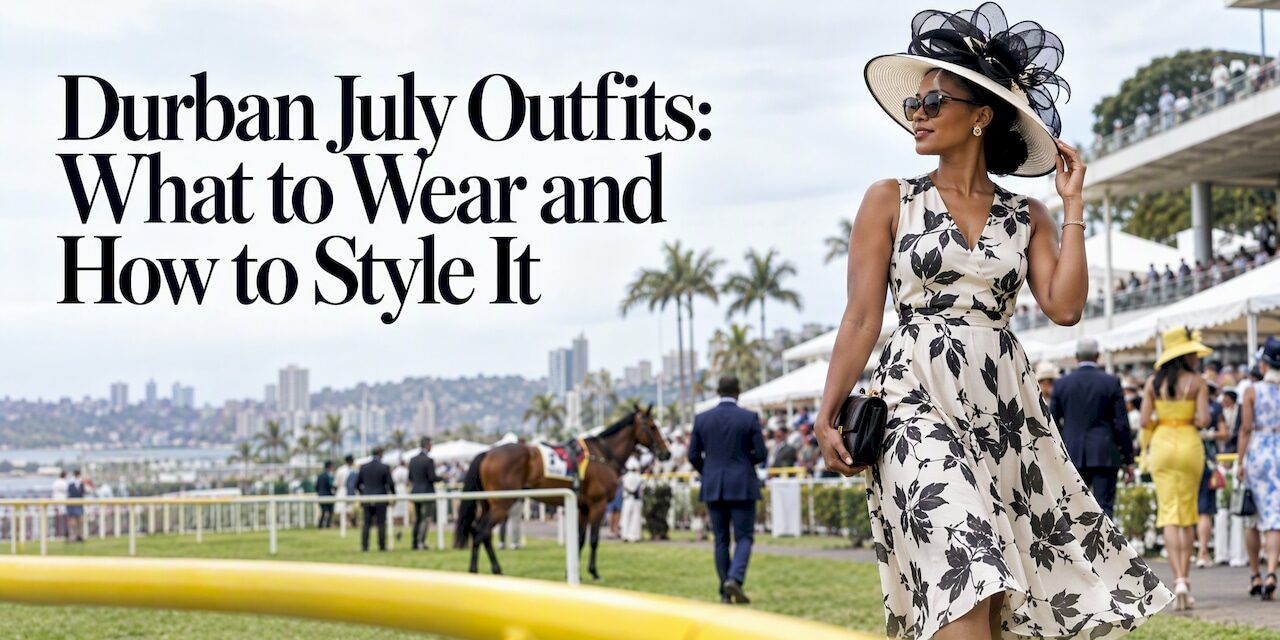
The best Durban July outfit reads the year’s theme loosely, looks polished from midday to after-party, and works on grass, stairs and a cold evening. There is no rulebook, but there is a pattern: bold, tailored, personal, and practical underneath. The 2026 races are behind us, so this is your guide to what worked, what went wrong and how to plan your look for the next one.
TL;DR
- There is no enforced dress code. The annual theme is a storytelling prompt, so interpret it through your own style instead of dressing as a literal costume.
- Build on a neutral, well-cut base (midi dress, tailored trousers, linen suit) and let hats, belts, brooches and headpieces carry the theme.
- Choose block heels, wedges or smart flats over stilettos, and pack a comfortable spare pair for the after-party.
- Winter in Durban is deceptive: hot at midday, cold once the sun drops. Carry a blazer, shawl or gilet.
- Wear South African designers where you can. Longevity and local craft are a growing part of the Durban July look.
Table of Contents
- How the Durban July dress code really works
- What the 2026 theme, Country Allure, asked for
- Outfit ideas for women
- Outfit ideas for men
- Shoes: the part that makes or breaks the day
- Weather: dress for two different afternoons
- The accessories that carry a Durban July look
- Last-minute outfit fixes
- Wearing local designers and thinking long term
- Our view: dress for the day, not the camera
- Keep up with the style scene
- A simple planning timeline
- FAQ
- Sources
How the Durban July dress code really works
People search for the “dress code” as if there were a door policy. There is not. A roundup of Greyville dress guidance describes it as having no enforced policy, with daytime chic prevailing and plenty of room for personal adaptation. What exists instead is a theme, announced months ahead by the organisers and title sponsor, Hollywoodbets.
The organisers are explicit that the theme is a vehicle for storytelling rather than a costume brief. They encourage racegoers to reinterpret it through their own lens, from high-fashion drama to subtle detail, so you do not look as though you are in fancy dress. That is the single most useful principle for planning an outfit.
In practice, three rules sit underneath the theme:
- Dress up. This is South Africa’s biggest fashion day, so smart-casual is underdressed.
- Make it yours. Judges, photographers and the crowd reward creativity and a clear point of view over expensive but generic looks.
- Plan for a long day. You are on your feet from the gates opening until well after the last race.
What the 2026 theme, Country Allure, asked for
The 2026 Hollywoodbets Durban July was held on Saturday, 4 July 2026 at Greyville Racecourse, and the theme was Country Allure. The organisers framed it around South Africa’s rural landscapes and equestrian heritage, to be blended with contemporary fashion, not rendered as literal Western costume.
Here is how that translated into clothes, according to the Gauteng tourism fashion guide:
- Colour: earthy neutrals such as sand, olive, chocolate brown and tan, plus jewel tones, with gold and metallic accents.
- Textiles: heritage-inspired fabrics including tweed and linen.
- Silhouettes: adaptable shapes such as midi gowns, wide-leg trousers and tailored waistcoats.
- Accessories: wide-brimmed hats, metallic-buckled belts and sculptural headpieces.
On the day itself, celebrities went much further. Press coverage described the wildest fashion moments in terms of LED-lit corsets and sculptural winged bodices, which shows how far the theme can stretch. You do not need to go that far. The more wearable ideas, such as velvet dusters, equestrian tailoring and suede textures, are what regular racegoers can copy.
A note on next year: I did not find an announced theme for the 2027 race while researching this piece. Themes have historically been revealed in the months before the event, so check the official Durban July site before buying anything theme-specific. The advice below is built on principles that hold whatever the theme.
Outfit ideas for women
The midi dress or gown
A midi hemline is the most reliable choice for the grass, the stairs and the walk from the car park. It gives you movement and drama without a train catching on a heel or in a crowd. Pick a fabric that breathes: a heavy ball gown looks spectacular in photographs, but the experts at Gauteng tourism say heavy fabrics that cannot breathe are a mistake on a warm Durban afternoon.
For a Country Allure-style look, think suede-toned or olive silk, tiered skirts, structured shoulders and a cinched waist. Add a belt with a metallic buckle and you have a theme nod that still looks like you.
Wide-leg trousers and tailoring
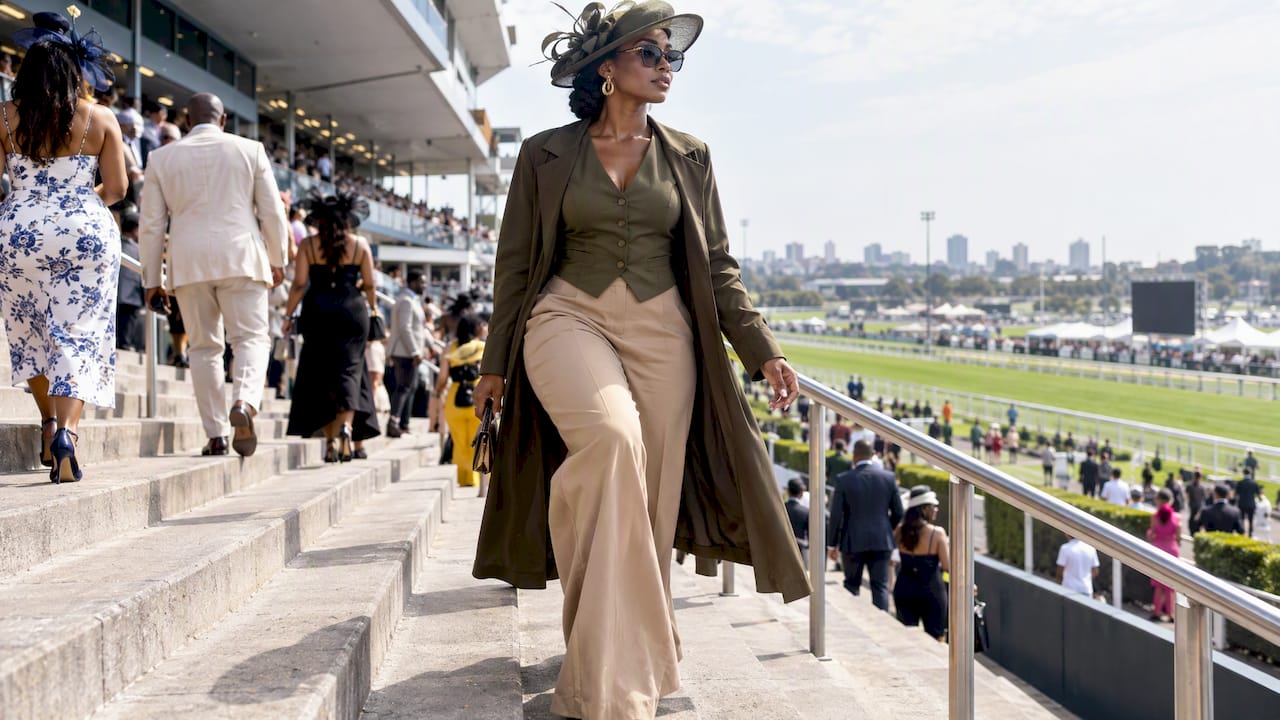
Trouser looks are a strong answer for anyone who wants to move freely. A wide-leg trouser in tan, chocolate or olive with a fitted waistcoat or corset-style top gives you the equestrian line without a jodhpur in sight. Finish with a long duster coat or tailored blazer. The coat doubles as your warm layer after sunset.
Jumpsuits and co-ords
A co-ord set in linen or a linen blend is easy to wear all day and easy to restyle for the after-party. Swap the hat for gold earrings and a clutch, and the same outfit moves from the racecourse to the club.
Heritage prints
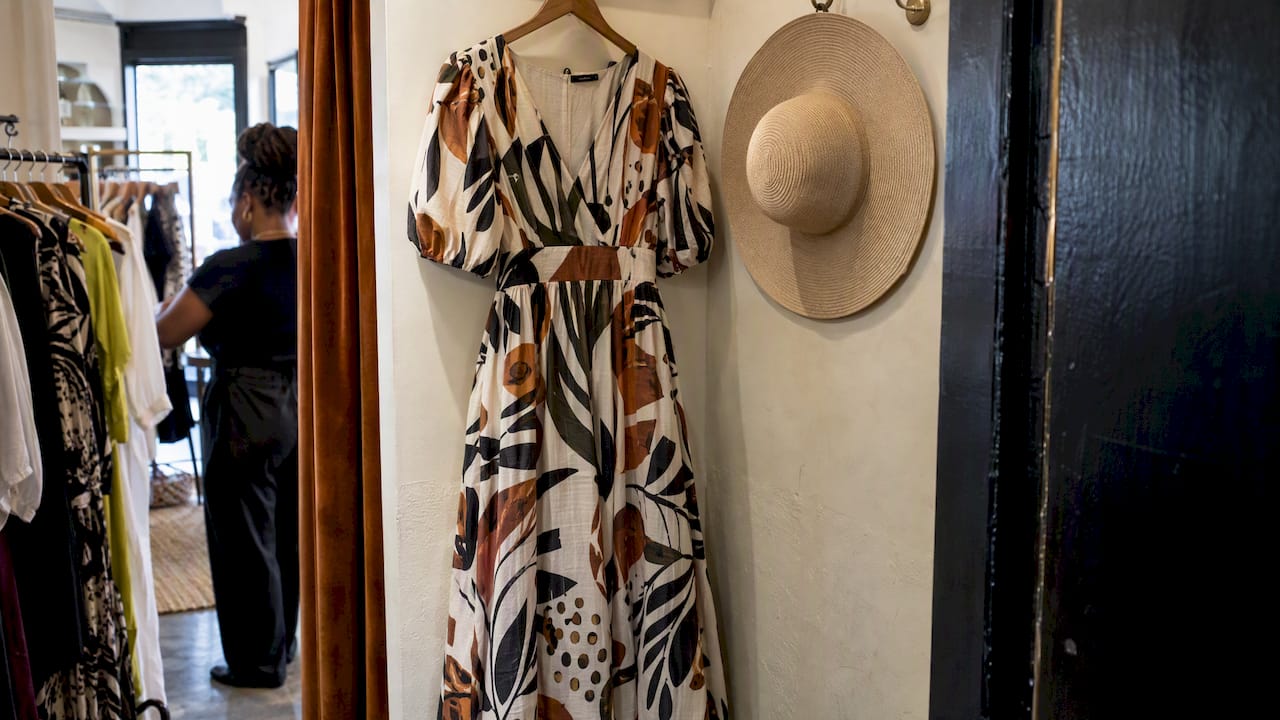
Print is a natural fit for a South African fashion day. If you want to wear it with confidence and without looking like you grabbed the first piece in the wardrobe, our guide to African print outfits and how to wear them in South Africa covers fit, colour pairing and occasion dressing. A print midi dress with a plain wide-brimmed hat is a good, balanced formula.
Outfit ideas for men
Men’s looks come down to a suit or jacket and trousers, a collared shirt, shoes that grip on grass and a belt or accessory that makes the outfit yours. That is the formula, and the creativity lies in how you vary each piece.
- The linen suit: in sand, olive or stone, with an open-collar shirt or a patterned one. Light, comfortable and photographs well.
- Tailored waistcoat and wide-leg trousers: the waistcoat is a theme-friendly layer you can wear without a jacket in the warm hours and with one later.
- The statement jacket: velvet, tweed or suede-effect, worn over a plain shirt so the jacket does the talking.
- Accessories: a bow tie in white or yellow, a gold chain, a black cowboy hat and leather gloves have all featured in racegoers’ own looks, though a cowboy hat is the one piece to handle carefully if you want to avoid the literal-costume trap the organisers warn about.
For shoes, leather soles that slip on wet grass are the thing to avoid. Choose a leather or suede boot, brogue or loafer with some grip. If you want something more relaxed for the after-party, our piece on the Gel-Kinetic Fluent sneaker shows what a comfort-first shoe looks like, though most men will keep the sneakers in the bag until the evening.
Shoes: the part that makes or breaks the day
The theme may be glamorous, but the ground is grass, sand and stadium stairs. IOL’s first-timer’s guide is blunt about the common mistake: stilettos sink into mud or grass. It recommends block heels, wedges or stylish flats, and suggests carrying comfortable backup flats for the move from the racecourse to the after-party.
A practical shoe checklist:
| Situation | Good choice | Avoid |
|---|---|---|
| Grass and sand | Block heel, wedge, flat boot | Stilettos |
| Stadium stairs | Shoes with a secure strap or lace | Backless, loose mules |
| All-day wear | Cushioned insole, broken-in pair | Brand-new shoes |
| Men on wet grass | Grippy rubber or textured soles | Smooth leather soles |
| After-party | Packed spare flats or sneakers | Staying in the same heels |
Wear new shoes at home for at least a few evenings first. A blister at 1 pm is a long way from the end of the day.
Weather: dress for two different afternoons
Durban in July is deceptive. The midday sun is hot enough to need sunscreen and sunglasses, but a sharp chill sets in once the sun drops below the grandstand, as IOL’s guide notes. Gauteng tourism’s advice adds that the coastal location means conditions can shift quickly, so balance style with function.
The fix is a good outer layer that looks deliberate:
- a tailored blazer or long duster,
- a large shawl or wrap in a coordinating colour,
- a gilet over a dress or shirt.
The layer is part of the outfit, not an afterthought. Choose it first, then build around it. Sunglasses matter too, and our look at Sunglass Hut’s seasonal trends is a useful reference for frame shapes if you are choosing a pair to go with a hat.
The accessories that carry a Durban July look
A hat is the headline accessory, but it is not the only one.
- Hats and headpieces: a wide-brimmed hat is easiest to wear for hours. Sculptural headpieces are dramatic but need practice, so test them in a mirror and in a breeze.
- Belts: a metallic-buckled belt does more for the theme than almost any other single piece.
- Brooches and pins: cheap, easy to add to a jacket, and personal.
- Bags: a small cross-body or clutch. You will be carrying a phone, a card, sunscreen and probably a folded pair of flats.
- Jewellery: gold and metallic accents fit the earthy palette. Choose one statement item rather than many.
Last-minute outfit fixes
If the race is a week away and you have nothing, do not buy a whole new look. IOL’s last-minute fashion tips suggest starting with a neutral base, such as tailored trousers, a midi dress or a linen suit, and transforming it with accessories. Statement belts, brooches and a wide-brimmed hat act as the bridge between your personal style and the theme.
Here is a quick, realistic sequence:
- Pick the base you already own and that fits well.
- Decide on the one hero accessory (hat, belt or headpiece).
- Add a coordinating warm layer.
- Test the whole outfit sitting, climbing stairs and walking on uneven ground.
- Pack the spare shoes, sunscreen and a small power bank.
A stylist’s trick: if you cannot decide, remove one item. Most overdone outfits fail because of one piece too many.
Wearing local designers and thinking long term
Support for South African design is increasingly part of the Durban July conversation. Ubuntu Times’ trend analysis points to natural textures such as linen and hemp, along with upcycling and modular design, encouraging people to buy pieces that last and reflect local craft.
For a racegoer, that translates into a sensible approach: spend on one well-made piece that you will wear again, and use accessories to adjust it year to year. A tailored waistcoat, a good duster or a quality midi dress is worth more than a one-day costume.
If you want to find designers to watch, our coverage of Local Fashion Police 2026’s top 30 finalists, the FIASA Awards and David Tlale’s 20-year anniversary show is a good starting point. Book fittings and alterations early, because good tailors fill up in the weeks before the race.
Our view: dress for the day, not the camera
We cover fashion events across Johannesburg, South Africa and Dubai, and the same lesson keeps coming back: the people who look best are rarely the ones who wear the most. They are the ones whose outfit fits, moves with them and says something about who they are.
At the Durban July, that means a few firm opinions from us:
- Theme as a mood, not a costume. If you have to explain it, it is too literal.
- Comfort is a style choice. An outfit you are fighting by 3 pm will show in your posture and your photographs.
- Back local talent. The best conversations at fashion events begin with “Who made that?” and a South African answer is always more interesting.
- Plan the evening. The racecourse is only half of the day, so design a look that can transition.
We would rather see you in a simply cut, beautifully finished outfit with one confident accessory than in something dramatic that you cannot sit down in.
— Chad
Keep up with the style scene
If you want more event-ready inspiration, Joburgstyle covers runways, local designers and cultural events across South Africa. Our report from SA Fashion Week at Melrose Arch is a good place to see how designers are cutting, layering and accessorising right now. Travelling to the coast for the weekend? Our guide to slow travel on the KZN South Coast can help you turn race day into a proper trip.
A simple planning timeline
Good outfits are rarely last-minute. Here is a realistic schedule, working back from race day on the first Saturday of July.
- Three months out: watch for the theme announcement, save inspiration and decide your budget. Book a tailor or designer if you want something custom.
- Six to eight weeks out: buy or commission your base garment and hero accessory. Check that the fabric breathes.
- Two to three weeks out: have final fittings, break in your shoes and test the hat or headpiece.
- The week before: steam or press everything, prepare the spare shoes and warm layer, and check the forecast.
- Race morning: apply sunscreen before dressing, pack the bag and leave time for travel to Greyville.
The official Durban July site is where the organisers publish the theme and event details, so confirm the date and any entry requirements there before you book travel or accommodation.
FAQ
What should I wear to the Durban July?
Wear something dressed-up and personal, built on a well-cut base such as a midi dress, tailored trousers or a linen suit. Interpret the annual theme through colour, texture or one hero accessory rather than a literal costume. Choose breathable fabric, sensible shoes and a warm layer for the evening.
Is there a strict Durban July dress code?
No. The event has a yearly theme, but it is a creative prompt rather than an enforced rule. The organisers encourage racegoers to reinterpret it in their own style. Dressing up and being creative is the real expectation.
What was the Durban July 2026 theme?
The theme was Country Allure, for the race held on Saturday, 4 July 2026 at Greyville Racecourse. It asked racegoers to blend South Africa’s rural landscapes and equestrian heritage with contemporary fashion. I did not find a confirmed theme for the next race, so check the official Durban July site.
Can I wear heels to the Durban July?
Yes, but choose block heels or wedges. Stilettos tend to sink into grass and mud, and you will be walking and climbing stairs for hours. Carry a pair of comfortable flats for later.
What should men wear to the Durban July?
A suit or jacket with trousers, a collared shirt and leather shoes with grip is the foundation. Add personality with a waistcoat, a patterned shirt, a bow tie, a chain or a statement jacket. Keep the outfit breathable for the afternoon and bring a layer for the evening.
Sources
- Pure country allure, the Hollywoodbets Durban July
- Hollywoodbets Durban July 2026 comprehensive fashion guide, Whats on G
- The first-timer’s guide to making it from the Durban July main race to the after-party, IOL
- Last-minute fashion tips to nail the Country Allure theme, IOL
- South Africa’s 2026 fashion trend, Ubuntu Times
- Durban July dress code overview
- Hollywoodbets Durban July, Race Coast
