



Dubai rewards the traveller who plans three things before booking: the visa, the season and the neighbourhood base. Most South African passport holders need a visa arranged before they fly, the cooler months suit a first visit best, and the city is much easier once you split it into districts rather than trying to see “Dubai” as one place. This guide covers all of that, then moves to what to do, how to get around and how to dress and behave, written from Johannesburg for readers who want more than a checklist.
TL;DR
- Most South African passport holders need a pre-arranged visa, and the tourist route asks for a passport valid for at least six months. Confirm the current rules with your airline or the official UAE channels before paying anyone.
- The cooler months, roughly November to March, are the comfortable window for a first visit. Our best time to visit Dubai guide goes through the trade-offs against cheaper summer rates.
- Use the Metro and tram for distance, taxis for the last stretch and an abra in Old Dubai. A Nol card covers most public transport.
- Base yourself by interest: Downtown for icons, the Marina and JBR for beach and tram, Old Dubai for souks, Dubai Design District for design and cafés.
- Swimwear belongs at the beach and pool, not in malls. Carry prescriptions for any medicine you take, as some are controlled.
Table of Contents
- Before you book: visa, passport and advisories
- When to go
- Choosing where to stay
- Getting around Dubai
- What to do in Dubai
- Etiquette, dress and the rules that matter
- What a first trip can look like
- Budgeting and packing for the trip
- Read more before you fly
- FAQ
- Sources
Before you book: visa, passport and advisories
Start with paperwork, because it is the one part of a Dubai trip that can stop you boarding.
South African ordinary passport holders typically need a visa arranged in advance. A conditional visa-on-arrival route exists for people holding valid residence permits from certain countries, such as the US, UK, EU states, Japan, South Korea, Australia, New Zealand or Canada, according to a visa-service explainer updated for 2026. Most readers of a Johannesburg site will not fall into that group, so plan on applying before departure.
The same source lists the usual tourist-route documents:
- A passport valid for at least six months
- A personal photograph
- An onward or departure ticket
- Medical insurance valid in the UAE
Visa rules change, and your airline will check your documents at OR Tambo, so treat any guide, ours included, as a starting point. Ask your airline or accredited travel agent what they need to see, and apply only through channels you have verified.
Also read official advice before you go. South Africa’s Department of International Relations and Cooperation (DIRCO) issued an advisory on 1 March 2026 for South Africans living in the UAE. It urged vigilance, following UAE authorities, avoiding restricted or military areas and large gatherings, keeping phones charged, holding valid passports and visas, and watching South African Mission communications. It was written for residents, but the habits are sensible for visitors too: save your embassy or consulate contact details, keep digital copies of your passport, and check DIRCO’s current travel advice the week you fly.
When to go
The short version: go in the cooler months if you want to spend your days outside, and go in summer only if price matters more than being outdoors.
Dubai’s heat shapes everything from where you eat to when you sightsee. In winter you can walk the souks, sit on a terrace and spend a full day at the beach. In summer, much of life moves indoors into air-conditioned malls, aquariums and attractions, and outdoor time shrinks to early mornings and late evenings. Flights and hotels are generally cheaper in the hot months, which is the trade-off we unpack in our guide to the best time to visit Dubai for South Africans.
A few practical points follow from the climate:
- Book outdoor activities for morning or late afternoon, whatever the season.
- Pack for the contrast. Light fabrics outside, a wrap or light jacket for aggressively cooled interiors.
- Sun protection is not optional. If you are heading from a Highveld winter into a Dubai one, you will still burn faster than you expect.
- Check events before fixing dates. Art, design and shopping calendars shift each year. Our piece on Art Dubai shows how the fair is structured, and the official tourism site lists the current season’s events.
Choosing where to stay
Dubai is a string of districts along the coast, joined by highways and a Metro line. Pick the base that matches how you travel, and the rest of the trip falls into place.
| Area | Best for | Getting around |
|---|---|---|
| Downtown Dubai | First visit, skyline, Dubai Mall, fountain shows | Metro plus short walks and taxis |
| Dubai Marina and JBR | Beach days, restaurants, easy evenings | Tram and Metro |
| Old Dubai (Deira, Bur Dubai) | Souks, creek crossings, heritage streets | Metro, walking, abras |
| Dubai Design District | Design, galleries, cafés, creative events | Taxi or Metro plus short ride |
First-timers usually do well in Downtown or the Marina area, since both sit on a Metro or tram link. If you are travelling with a creative bent, consider the design quarter: we wrote a full guide, Dubai Design District: skip the mall for cafés and design week, because it is the part of the city that most visitors miss and many South Africans in fashion and design will enjoy.
Getting around Dubai
You do not need to hire a car. Public transport is straightforward, and taxis fill the gaps.
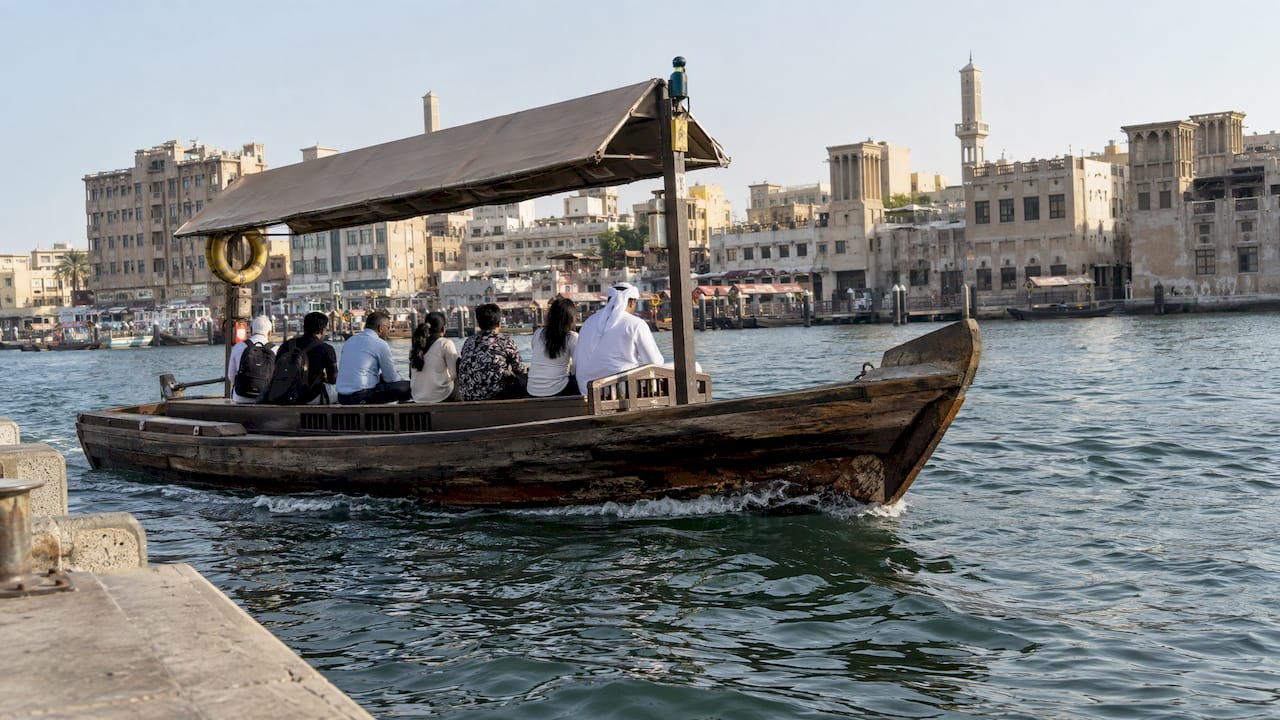
The Nol card. A Nol card works across the Metro, tram and buses, and most marine services accept it too. Abras, the small wooden boats across the creek, take cash, and ferries have their own ticketing. Buy a card at a Metro station on arrival and top it up as you go.
Metro and tram. The same transport guide advises using the Metro for long journeys and the tram around the Marina and JBR. The Red Line serves DXB Terminals 1 and 3, while Terminal 2 is less convenient, so check which terminal your flight uses before choosing between Metro and taxi.
Taxis and ride-hailing. RTA taxis run 24 hours a day and can be booked through the RTA Dubai app, Careem or hailed in the street. The RTA’s S’hail planner helps you map a route across modes. Taxis make sense for the last leg to a hotel, for late nights and for short hops between districts the Metro does not connect directly.
A simple day plan:
- Metro to the area you want to explore.
- Walk it properly, with a coffee stop in the shade.
- Taxi onward if you are tired or the heat has built.
- Abra across the creek if you are in Old Dubai.
What to do in Dubai
The question we hear most is what to do in Dubai beyond the famous names. The answer depends on your pace, so think in themes rather than a list of ticketed attractions. Check opening hours and booking requirements on the official tourism site before you go, since they change.
Icons and skyline
Downtown Dubai is where the postcard views live: the world’s tallest tower, the Dubai Mall beside it and the fountain show on the lake in the evening. It is an easy first day, because everything sits within a short walk and the Metro is close. Book observation decks for the cooler, clearer parts of the day if you want the best view.
Old Dubai
Cross the creek by abra, wander the textile and spice souks, and walk the heritage lanes of Bur Dubai. This is the Dubai that existed before the towers, and it is cheap, atmospheric and best done in the morning. Dress a little more conservatively here, as the official guidance below explains.
Beach and water
JBR and the Marina give you public beaches, a promenade and a tram to ride. Swim at the beach, rest in the afternoon, and eat out in the evening. It is the part of the trip that feels most like a Cape Town or Durban weekend, only with skyscrapers behind you.
Design, art and creative Dubai
The creative scene is the reason many of our readers go back. Galleries, studios and cafés cluster in the design district, and the city’s fairs bring international and African artists together. For a taste of that, read our feature on African talent shaping Dubai’s creative future, and our overview of what to see at Art Dubai.
Eating and brunch
Dubai’s dining ranges from street-side shawarma to destination restaurants, and its Friday brunch culture is a ritual of its own. If you plan to join one, our Dubai brunch guide explains how it works, what it costs and where to start, so you can budget before you book.
Desert and adventure
Most visitors add a desert evening: dune drives, a camp dinner, a camel ride and sandboarding. If you enjoy that kind of trip, there are other desert and ocean destinations worth pairing in your wider travel planning, such as this Dakhla adventure activities guide, which covers kitesurfing, desert camps and 4×4 safaris in Morocco.
Etiquette, dress and the rules that matter
Dubai is relaxed about visitors, but it has clear rules, and tourists who ignore them are the ones who get into trouble. Dubai’s official tourism site is the reference here, and its practical information page is worth reading before you pack.
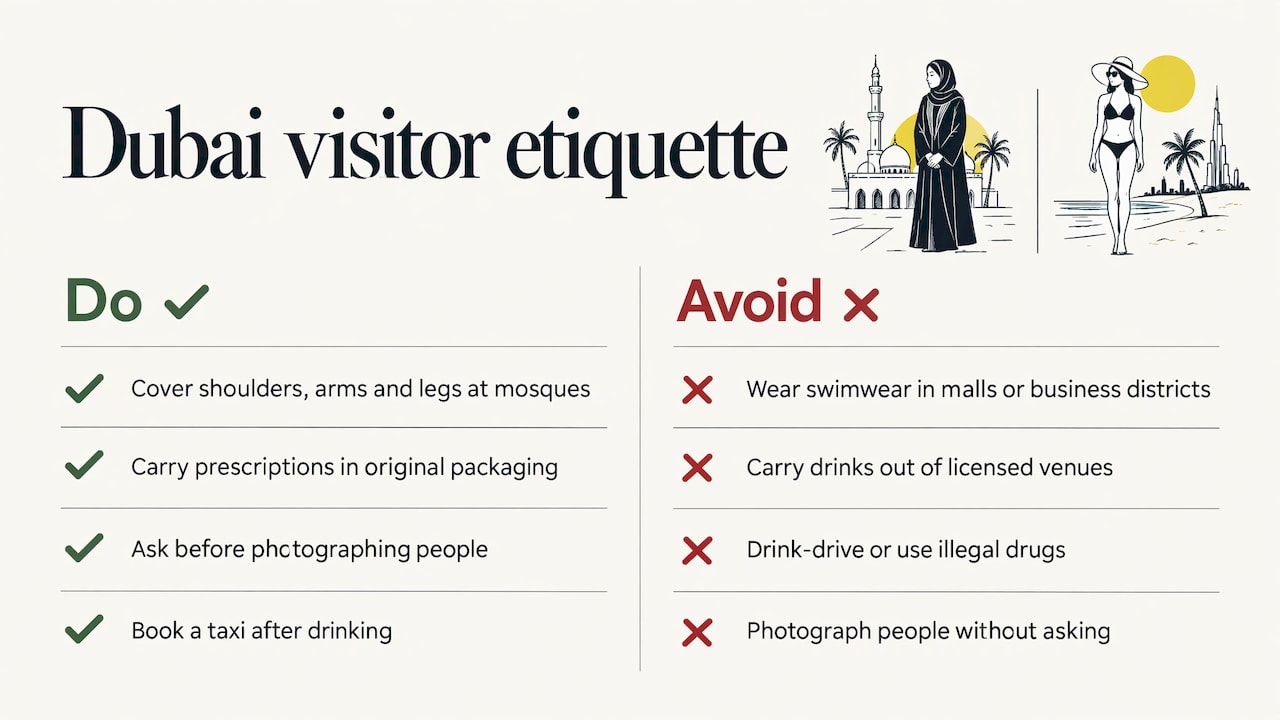
Clothing. Swimwear is fine at beaches, waterparks, public pools and spa areas, but not in shopping malls or business districts. Conservative clothing is appreciated in historic neighbourhoods and places of worship. If you visit a mosque, expect to cover shoulders, arms and legs, and women may need a headscarf.
Alcohol. It is served to people aged 21 and over in licensed establishments. Drunk or disorderly behaviour, drink-driving and illegal drugs are prohibited. Do not carry drinks out of a licensed venue, and book a taxi rather than gamble on being under the limit.
Medicines. Some medicines are controlled or banned in the UAE. The official guidance advises checking the rules of the UAE Ministry of Health and Prevention, carrying your prescription and considering getting the relevant permit. If you take chronic medication, speak to your doctor or pharmacist well before departure, and carry the medicine in its original packaging.
Everyday conduct. Keep public displays of affection modest, ask before photographing people, and be considerate during Ramadan, when daytime eating and drinking in public is treated more sensitively. Check the current guidance on the official site if your dates overlap.
What a first trip can look like
A sample five-day shape, built around the cooler months and a Metro-friendly base:
- Day 1: Arrive, settle in, evening walk and dinner near your hotel.
- Day 2: Downtown icons in the morning, the mall and fountain in the evening.
- Day 3: Old Dubai by Metro and abra, souks, an early dinner by the creek.
- Day 4: Beach at JBR or the Marina, tram ride, sunset dinner.
- Day 5: Design district and cafés, then a brunch or a final shopping stop before the airport.
If you have a few more days, add a desert evening and one cultural event, which is where Dubai starts to feel like a place rather than a list.
Budgeting and packing for the trip
Keep your budget honest by separating four buckets: flights and visa, accommodation, food and transport, and paid attractions. Flights out of OR Tambo and your hotel will be the biggest items, and both move with the season, so compare the same dates across a couple of channels before you commit. Package tours from South African operators bundle flights, accommodation and transfers, and are worth pricing against building the trip yourself.
On the ground, the Metro and tram keep daily transport costs low, and free experiences, such as walking the creek, a public beach and the evening fountain show, fill days without spending. Brunches and observation decks are the splurges, so choose one or two rather than all of them.
Packing is simple. Take light, breathable clothes, a cover-up for malls and cultural sites, a swimming costume for the beach, sunscreen, a hat and comfortable walking shoes. If you also plan a safari on the same itinerary, our safari packing list helps you separate what to wear for each trip.
Our view: Dubai through a Johannesburg lens
We cover Johannesburg and Dubai side by side, and that shapes how we write about the city. Both are ambitious, fast-moving and full of creative people building something. The difference is that Dubai is far better known for its malls than for its makers.
That is why we point readers to the neighbourhoods, events and people who give the city character: the design district, the art fairs, the brunch rituals, and the African talent working there. A South African visitor often finds familiar energy in these places, and that connection is what turns a holiday into something worth writing home about.
Our goal is to give you a plan that is useful and local in spirit: where to base yourself, how to move, what to respect, and which stories to read before you go.
Chad
Read more before you fly
We publish Johannesburg and Dubai coverage across fashion, travel, arts and dining. If you want to keep planning, start with our Dubai guides and features on Joburgstyle, including the design district, brunch and Art Dubai pieces linked above.

If you are a hotel, designer, organiser or tourism board that wants to reach readers planning trips between South Africa and Dubai, our team works on sponsored features and brand collaborations. Reach out through the Joburgstyle homepage.
FAQ
Do South Africans need a visa for Dubai?
Most South African ordinary passport holders need a visa arranged before travel. A conditional visa-on-arrival route exists for holders of valid residence permits from certain countries, as one 2026 visa explainer sets out. Always confirm current requirements with your airline before you book.
What is the best time to visit Dubai?
The cooler months, roughly November to March, are the most comfortable for outdoor sightseeing. Summer is hot and shifts activity indoors, though it often brings lower rates. Our best time to visit Dubai guide compares the two.
How do I get around Dubai without a car?
Buy a Nol card for the Metro, tram and buses, use taxis or ride-hailing for the last stretch, and take an abra across the creek in Old Dubai. RTA taxis operate 24 hours, so late arrivals are covered.
What should I wear in Dubai?
Swimwear is for beaches, pools and spa areas, not malls or business districts. Cover shoulders, arms and legs at mosques and dress modestly in historic areas, per Dubai’s official tourism guidance. Light fabrics work best for the heat.
Can I take my medication to Dubai?
Some medicines are controlled or prohibited in the UAE. Check the UAE Ministry of Health and Prevention rules, carry your prescription and consider obtaining the relevant permit, as Dubai’s tourism site advises. Talk to your doctor before you travel.
Sources
- Dubai Visa for South African Citizens: Fees & Apply
- DIRCO advisory to South African citizens residing in the UAE, 1 March 2026
- Dubai Public Transport Guide 2026
- How to Use Public Transport in Dubai
- Essential Travel Tips for Dubai, Visit Dubai
