
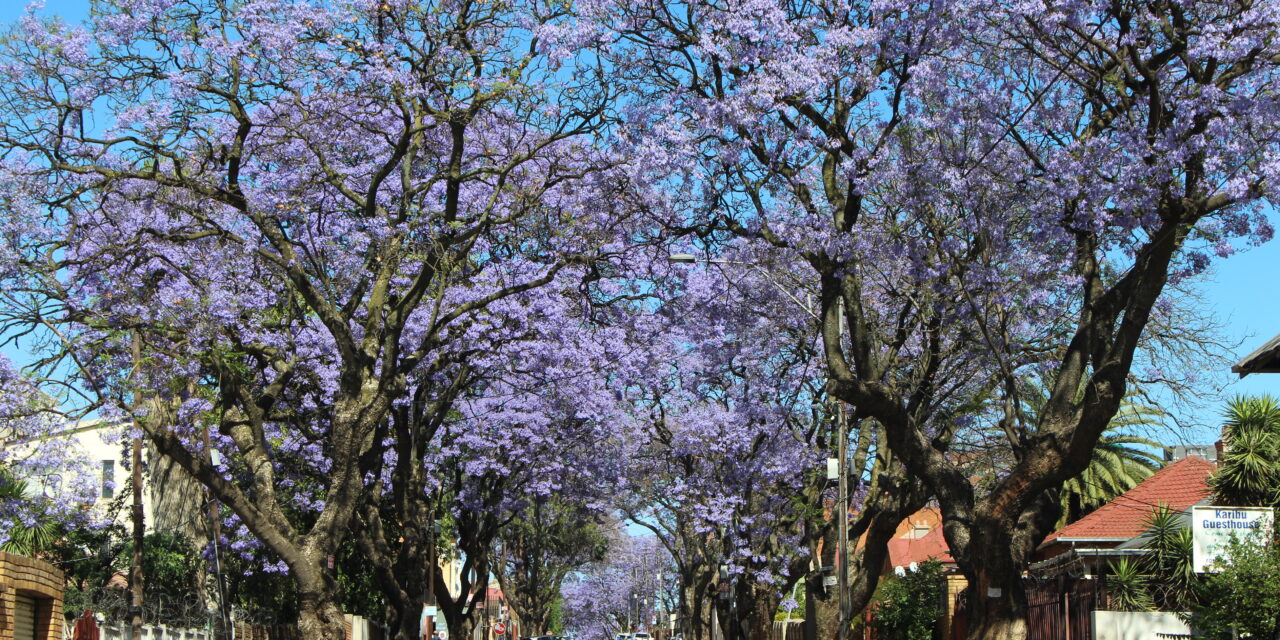
As Arbor Month comes to a close, Johannesburg’s purple canopy offers a reminder that the city’s green future depends not only on what we plant next, but on what we choose to protect
Every September, Johannesburg turns purple.
The city’s famous jacaranda-lined streets have become synonymous with spring, photography and the character of Johannesburg itself. But beneath the beauty lies an environmental contradiction: the tree that has come to define Johannesburg’s spring is not indigenous to South Africa.
Originally from South America, Jacaranda mimosifolia was introduced as an ornamental tree and has since become deeply embedded in Johannesburg’s urban landscape. As we say goodbye to Arbor Month and move into summer, that contradiction gives us a useful place to start: how do we protect the green city we have while making better choices for the one we are still growing?
The Jacaranda Question
Under South Africa’s National Environmental Management: Biodiversity Act (NEMBA), Jacaranda mimosifolia is listed as a Category 1b invasive species outside the urban edge in Gauteng, KwaZulu-Natal, Limpopo, Mpumalanga and North West. Within the urban areas of those provinces, however, jacaranda is not listed under that entry, meaning the same national restrictions do not apply inside cities like Johannesburg. The official 2020 Alien and Invasive Species List sets out the distinction.
So this is not an argument against Johannesburg’s purple heritage. Mature jacarandas are part of the city’s history, identity and landscape. The more useful question is what we plant, protect and preserve alongside them.
Johannesburg City Parks and Zoo (JCPZ) spokesperson Jenny Moodley agrees that the jacaranda’s place in the city is nuanced. She says that while the trees are alien, “their spectacular purple display has become synonymous with Johannesburg’s landscape and forms part of the visual character and history of our city.”
The focus, she says, must increasingly be on building a more resilient and biodiverse urban forest by protecting the existing canopy and prioritising indigenous trees and plants.
A City Needs More Than a Canopy
Johannesburg’s environmental future depends on much more than the trees lining its suburban streets. A truly green city needs functioning ecosystems beneath and beyond its canopy.
The City’s Spatial Development Framework 2040 recognises green infrastructure as part of sustainable urban development, including natural reserves, wetlands, rivers, wildlife corridors, forests and open spaces.
That changes how we should think about green space. A wetland is not simply undeveloped land. A river corridor is not a gap between buildings. A green belt is not land waiting for development. These spaces support biodiversity, connect habitats and help make neighbourhoods more liveable.
Moodley says Johannesburg’s urban forest is under considerable pressure from climate change, drought and extreme weather, pests and diseases, illegal felling, fires, infrastructure conflicts and development. JCPZ is even receiving requests to remove healthy trees for solar installations, new entrances and renovations.
Her message is simple: trees should be considered at the beginning of planning and design, rather than treated as obstacles afterwards.
Protect What Is Already Growing
That may be Arbor Month’s most important lesson to carry into summer. Planting matters, but so does protecting the mature tree already outside your home, the wetland nearby, the koppie on the horizon and the green corridor running through a suburb.
“Johannesburg cannot afford to lose mature trees faster than we replace them,” Moodley says. “Every tree we protect today is one less tree we have to replace tomorrow. Every tree we plant today is an investment in the Johannesburg our children will inherit.”
JCPZ also cautions that the unauthorised removal or damage of City-owned trees is an offence and can attract substantial penalties. A mature tree cannot simply be replaced by putting a sapling in the ground; restoring its environmental value can take decades.
The scale of current greening work is significant. Through the SUNCASA climate resilience programme, 47,600 trees were planted in Johannesburg, alongside the restoration of 489 hectares in the Jukskei River catchment through invasive-alien clearing and the reintroduction of indigenous vegetation.

Why Indigenous Planting Matters
Indigenous planting is part of making that urban forest more resilient. Moodley points out that indigenous trees are adapted to local environmental conditions and can provide habitat and food for indigenous birds, insects and other wildlife. A diverse mix of appropriate species also reduces the risks that come with a monoculture.
SANBI’s Highveld and Grassland Indigenous Tree List is a useful starting point when choosing species suited to Johannesburg’s broader ecological context.
The important word is appropriate. Indigenous does not mean planting any South African tree anywhere. Species should suit the local climate, available space, water requirements and eventual size of the tree.
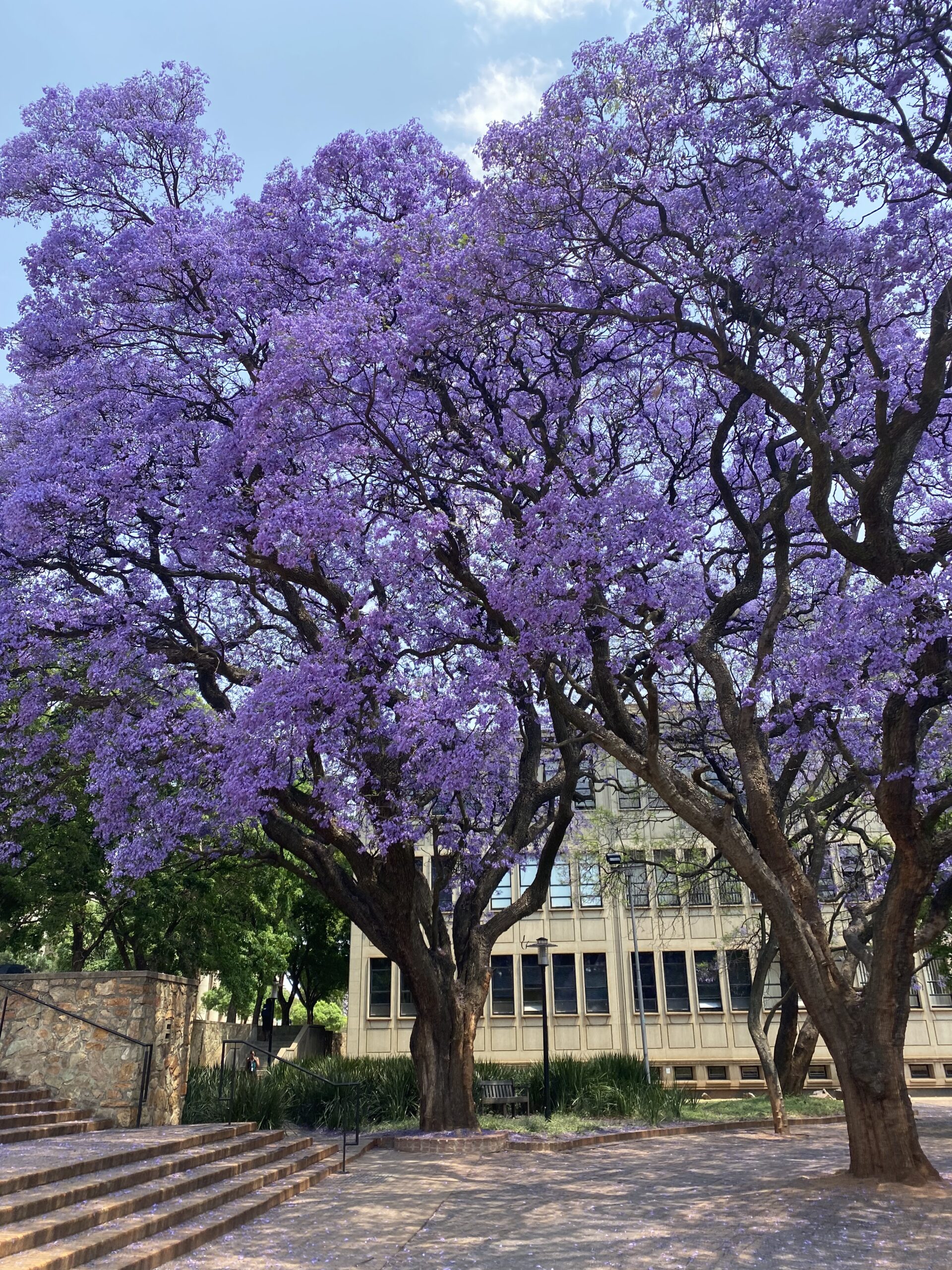
The purple canopy can remain part of Johannesburg’s heritage while indigenous planting becomes part of its future.
What We Take Into Summer
As Arbor Month ends and Johannesburg moves into summer, the message should not end with September. The coming months are an opportunity to turn awareness into everyday habits: plant an appropriate indigenous or fruit tree, start a food garden, care for newly planted trees, protect mature ones and pay attention to the natural spaces around us.
This year, JCPZ’s Arbor Month call has been “My Tree, My Oxygen – Plant Yours Today”. But its message extends beyond planting: residents, businesses, schools, developers and community organisations are being asked to plant, protect and preserve.
Johannesburg does not have to choose between being a growing, modern city and being a green one. But growth cannot come at the expense of every mature tree, wetland, park, koppie, nature reserve or green belt in its path.
The Jacaranda City has already inherited its purple canopy. As summer begins, the opportunity is to protect that inheritance while growing something more diverse, more indigenous and more resilient alongside it.
