
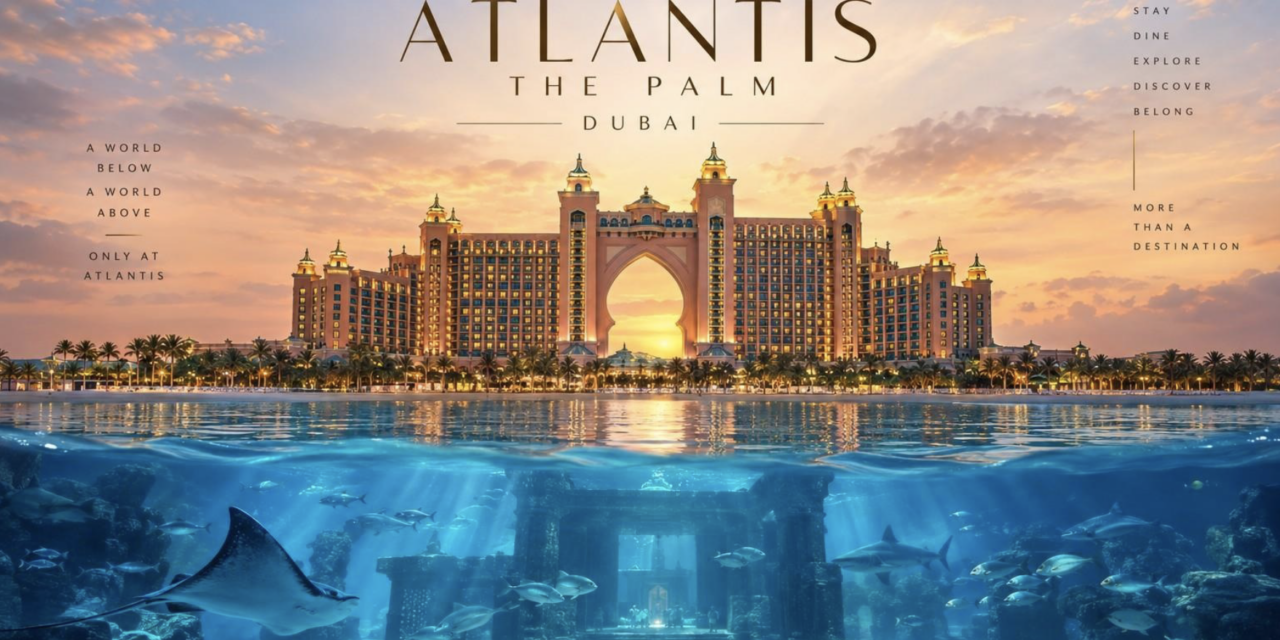
From the outside, we all know the icon: the unmistakable silhouette at the crown of Palm Jumeirah, the restaurants, beaches, aquarium, waterpark and sheer theatre that has become synonymous with Dubai. But walk through a door most guests never see, and another Atlantis reveals itself.
Behind the restaurants and immaculate corridors is an extraordinary working ecosystem of chefs, bakers, marine specialists, divers, veterinarians, engineers, hospitality professionals and thousands of staff collectively creating something that, from the guest’s side, is supposed to feel effortless.
Atlantis invited us to step beyond the guest experience and see what happens behind the scenes. Somewhere along the journey, one member of the Atlantis team described the property in five words that came to define everything we subsequently saw: “It’s not a hotel. It’s an emotion.” He was right.
THE OTHER SIDE OF ATLANTIS
The strange thing about disappearing behind the scenes at Atlantis is how quickly you lose your bearings. One minute you’re walking through the polished public spaces of one of Dubai’s most recognisable resorts. The next you’re inside the arteries of an enormous hospitality operation.
Even the back-of-house corridors carry an almost obsessive sense of organisation and cleanliness. With the wider Atlantis operation described to us as employing roughly 5,000 staff, including the waterpark operation, the property functions almost like a small city.
Yet one small gesture followed us everywhere we went. Staff would greet us by placing a hand over their heart. When we asked why, the answer was simple: “We greet our guests from the heart.” Despite all the scale, architecture, technology and spectacle surrounding Atlantis, somebody still has to make you feel welcome.
FRANTZÉN: FINE DINING WITHOUT THE STIFFNESS
Our journey took us into the world of Björn Frantzén, where any preconceived idea that ultra-high-end dining must be silent or stiff begins to disappear. The philosophy is closer to rock-and-roll hospitality: polished, precise, but deliberately alive. The team calls it casual elegance.
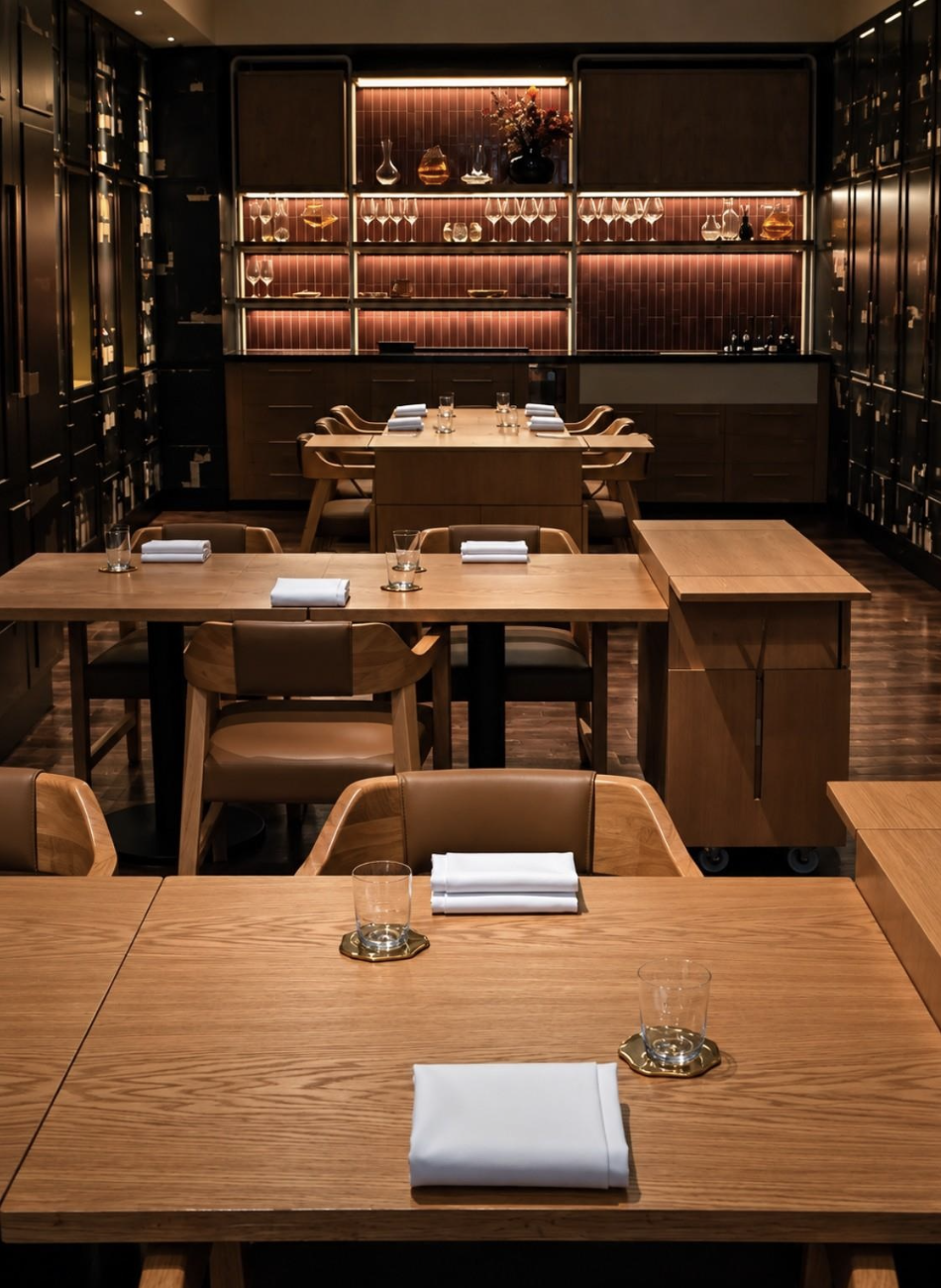
Guests begin upstairs in a relaxed, living-room-style setting, where sofas replace conventional restaurant formality. A champagne trolley appears with five introductory bites to begin the experience. For guests who prefer not to drink alcohol, the restaurant creates its own non-alcoholic pairings, carefully developed to complement each menu.
A new menu can take close to half a year to develop through sourcing, cooking, testing, tasting and refinement. Before guests head downstairs, the ingredient box introduces the produce behind the menu: exceptional seafood, caviar, wasabi, vegetables and ingredients sourced from across the world. We saw langoustines from northern Norway, Japanese wasabi, Danish eggs and locally grown tomatoes.
The evening moves downstairs for the savoury tasting menu before returning upstairs for coffee, madeleines, petit fours, sweets and candies. The complete experience can last three to four hours.


DINNER SHOULD BE FUN
The dining room changes the energy again. There is music, chefs working in front of you, movement and conversation. Sauces are finished at the table, dishes involve interaction and guests can sit close to the action. It feels alive, and that is intentional.
One of the most revealing comments concerned Björn Frantzén himself. We were told he does not simply ask whether guests liked the food. The expectation is that the food is good. What he asks is: “Did people have fun?”
That sentence stayed with me. At this level of dining, technical perfection is almost assumed. The more difficult challenge is creating a room people do not want to leave.
That led us to a wonderfully Swedish expression: lunch utan slut — lunch without an ending. At the Stockholm restaurant, we were told, some regular lunches can begin around midday and continue until midnight. Food may bring you through the door, but conversation, atmosphere and human connection make you stay.
THE CELLAR
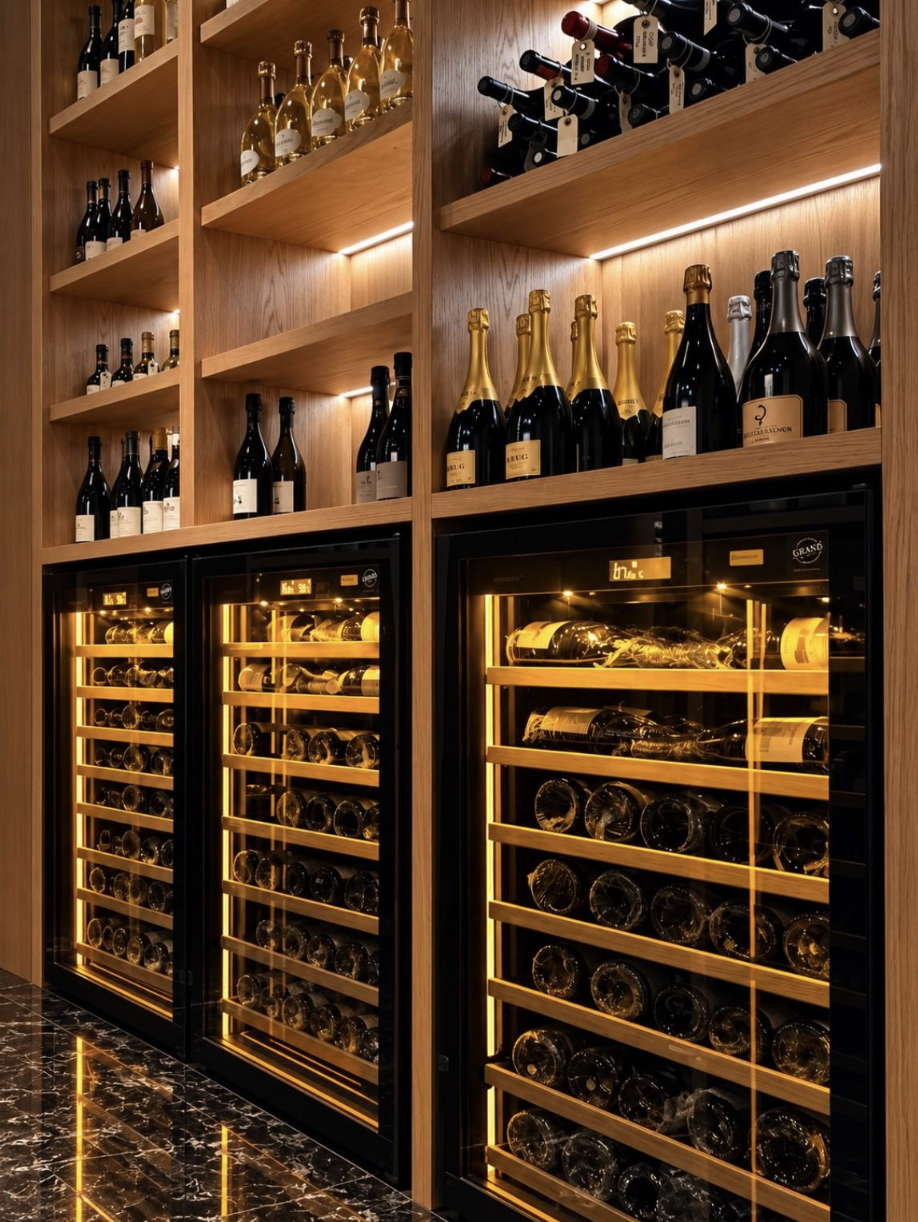
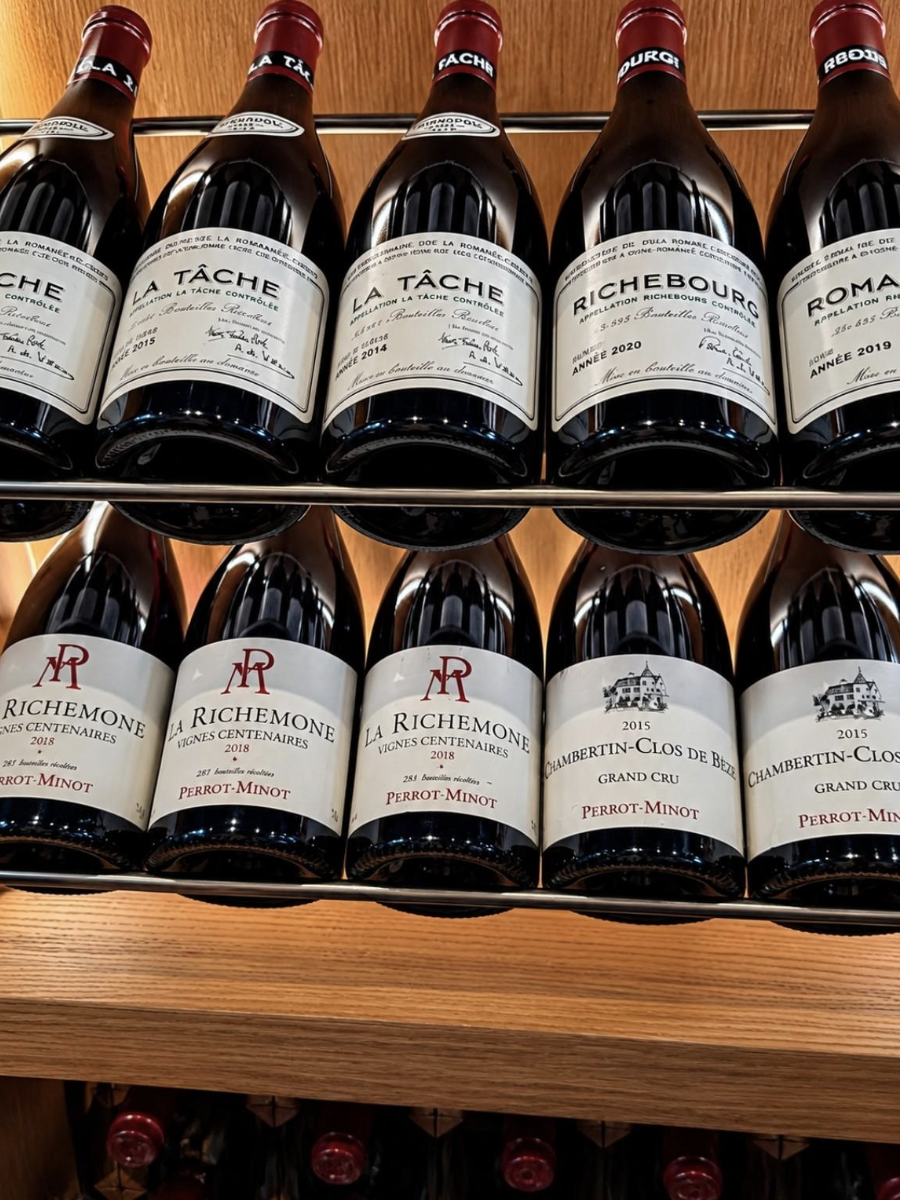
The cellar holds slightly more than 3,000 labels, according to our host, spanning producers and regions from around the world. Naturally, somebody eventually asks the obvious question: what is the most expensive bottle?
The answer was a Burgundy quoted to us at approximately AED210,000 — close to US$60,000 at the time of the tour. My South African brain immediately did the conversion: around a million rand.
“So are we getting one each for free?” I asked. “It’s a gift for you,” came the answer. Perfect. Unfortunately, someone eventually has to pay.
The restaurant offers several pairing levels, including an ultra-premium option quoted at AED10,000. The team joked that Dubai guests often gravitate either to the entry point or straight to the top.

THE PEOPLE AND THE DNA
The Frantzén story is not only about ingredients. Many members of the team have moved between Stockholm, Singapore and Dubai, retaining knowledge within the group. The phrase that kept returning was DNA.
Learning an operation at this level was described as learning “the dance”: understanding the people around you, their movements, standards and expectations until the service begins to flow naturally. If teams constantly rotate, that shared rhythm is difficult to build. Staff retention, therefore, becomes part of the product.

THE FISH HOSPITAL
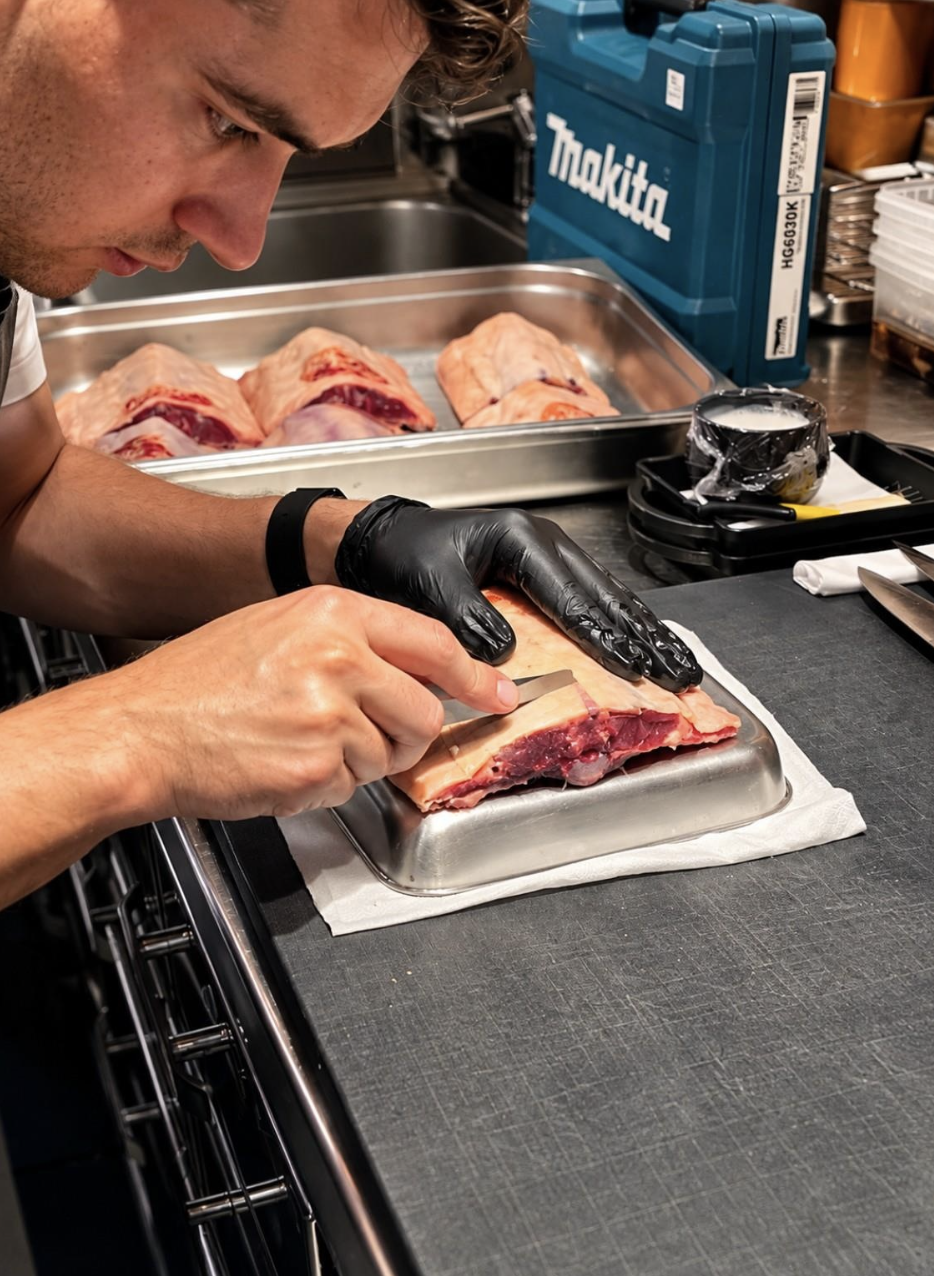
Walking deeper into the back of house, we passed a group of children from the Atlantis Explorers Club. Beside them was something I was not expecting to encounter inside a luxury resort: a fish hospital.
Here the glamour gives way to another enormous part of the Atlantis operation: marine specialists, veterinary care, divers, breeding programmes and animal care. Suddenly the aquarium is not simply an attraction on the other side of some glass.


3,000 CROISSANTS A DAY
Next came the central pastry kitchen. The pastry operation alone was described to us as employing around 50 people and operating 24 hours a day. Then came the number that stopped us: approximately 3,000 croissants every day.
We watched dough being proofed at carefully controlled temperature and humidity before moving through an operation encompassing baguettes, breads, croissants, almond croissants, cheesecakes, brownies and countless pastry bases. One gentleman worked through croissants with such effortless repetition that I suggested he could probably do it in his sleep. Apparently, he probably dreams about them too.
The scale is industrial. The execution remains artisanal. That contradiction appears repeatedly at Atlantis.

Where artists work
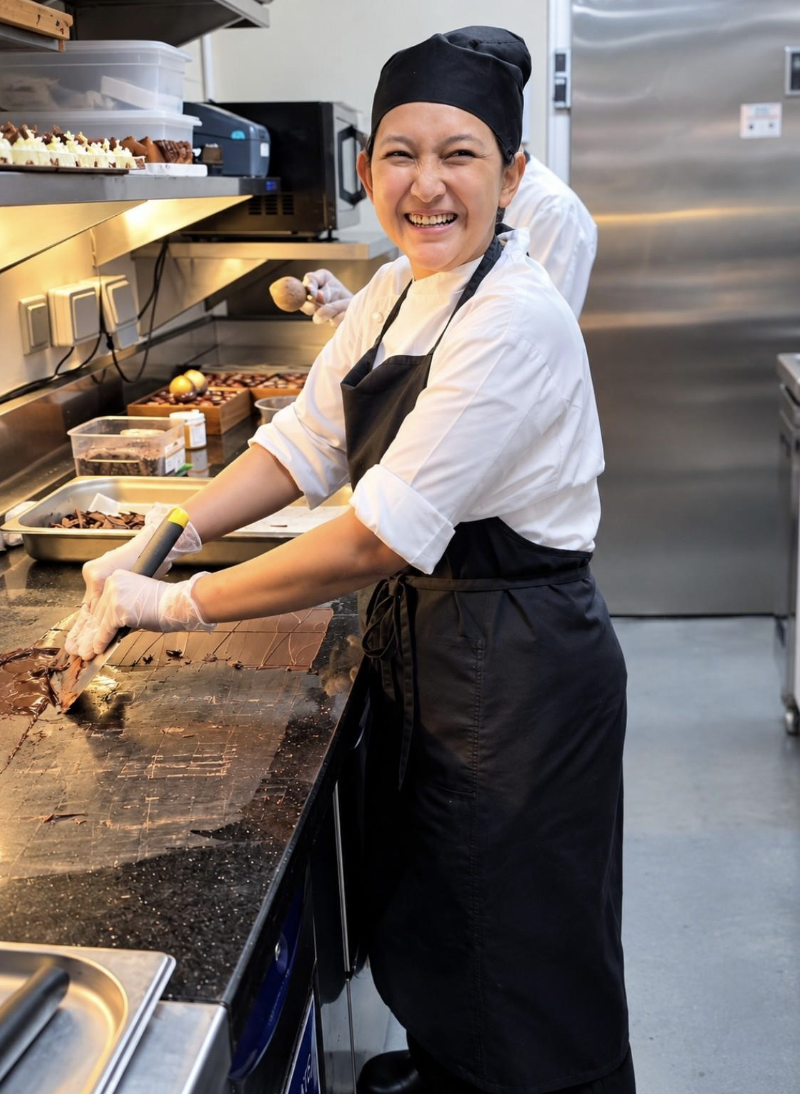
The human side of the operation: artistry, chocolate and a team that clearly enjoys the craft.
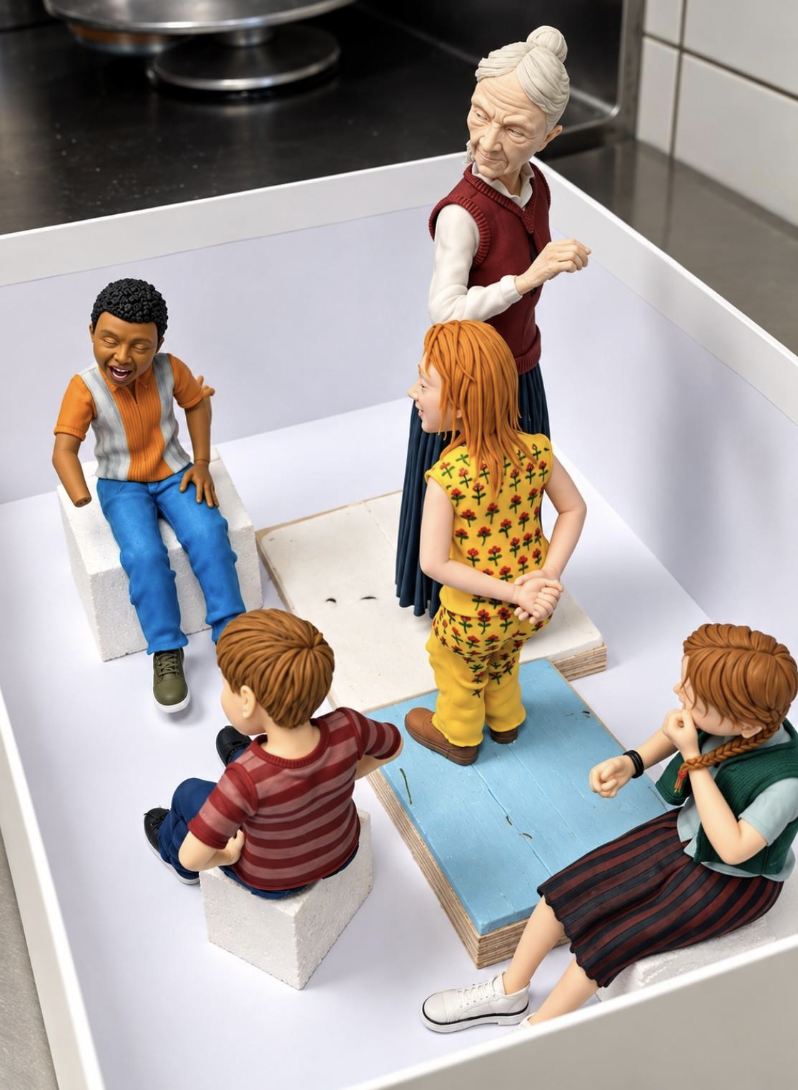
Move further through pastry and production becomes artistry: wedding cakes, special-event cakes, three-dimensional creations, sugar flowers, banquet desserts and bespoke moulds inspired by the Palm, seashells and the surrounding marine environment.
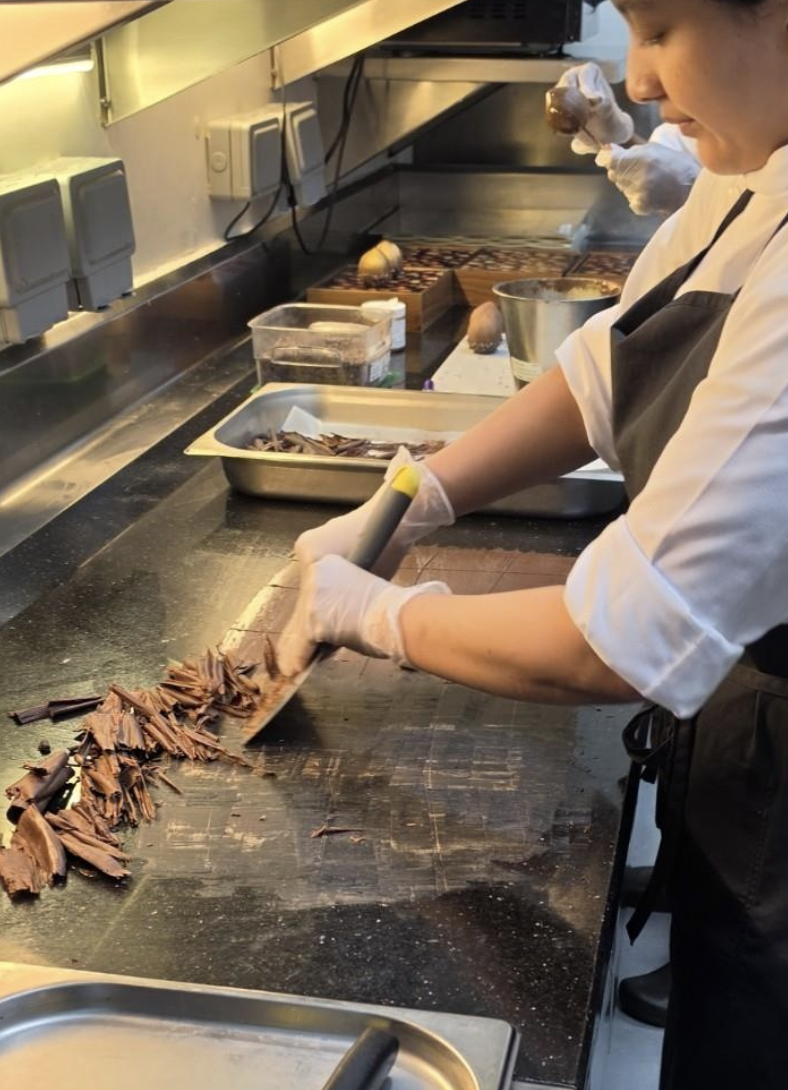
Then we reached my problem area: the chocolate room. Chocolate tablets, bonbons, children’s amenities, decorative pieces and sea-inspired creations filled the room. A sea-salt caramel milk chocolate appeared, followed by a raspberry-and-almond tart.
“You just have to say caramel to me and then I’m done.”
I meant it.
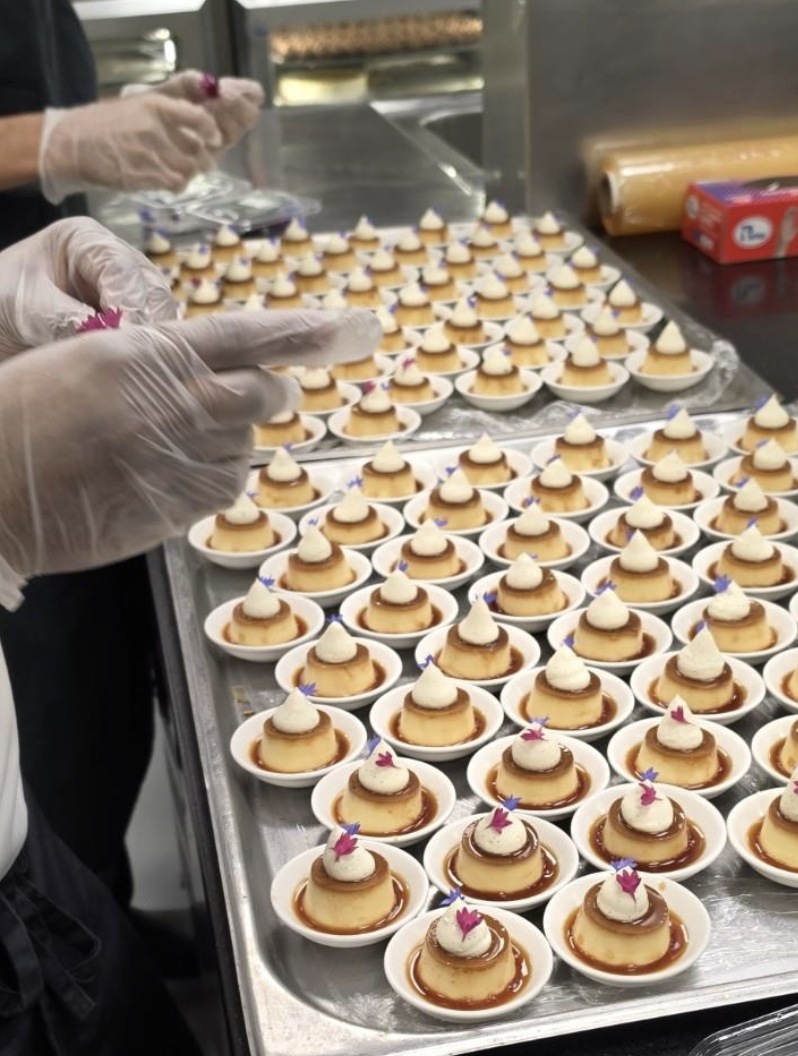
The chefs explained that they increasingly try to use local ingredients where possible, including products such as strawberries, raspberries and honey sourced in Dubai. Desserts are sprayed with chocolate, components are rapidly frozen at very low temperatures, custards are made and tarts are finished. Thousands of tiny details eventually emerge upstairs looking effortless.
FROM ONE CHOCOLATE TO 10,000 PEOPLE
Then somebody mentioned New Year’s Eve. The team described catering across the in-house and gala operation for approximately 10,000 people, including around 4,500 outside at the gala. We had just watched someone carefully finish an individual pastry. Now imagine reproducing that culture of precision while feeding a small town.
That is Atlantis: scale without allowing the guest to feel the machinery behind it.
THE PEOPLE BEHIND THE MACHINE
Another recurring theme became impossible to ignore. Many of the people we met have spent years, sometimes decades, in hospitality. Their careers have crossed brands and countries: Hyatt, Emaar and Address, Kempinski, Mandarin Oriental, Stockholm, Singapore, France, Thailand, the United States and Dubai.
One host described joining Atlantis The Royal for its pre-opening after years elsewhere in Dubai. Another chef spoke about an international career before Atlantis. Knowledge travels with these people, and eventually becomes institutional knowledge.
Luxury is not simply marble, caviar and expensive wine. Luxury is somebody anticipating what needs to happen next without the guest ever noticing.
iN-ROOM DINING AND THE HIDDEN CITY
We passed the in-room dining kitchen — the service area from which food travels to guest rooms throughout the property — before continuing through corridors that somehow returned us to the public lobby. “You walk around so many places, you’re back at the lobby. You don’t even know.” That disorientation says something about the sheer scale of the operation hidden behind the guest journey.
AND THEN WE WENT UNDERWATER
There was one final door. We walked through it and entered one of Atlantis The Palm’s most extraordinary signature residences. Upstairs was an expansive private living environment. Then we descended.
“Oh no.” Then: “Oh yes.” Then there was not much vocabulary left. “Wow.”
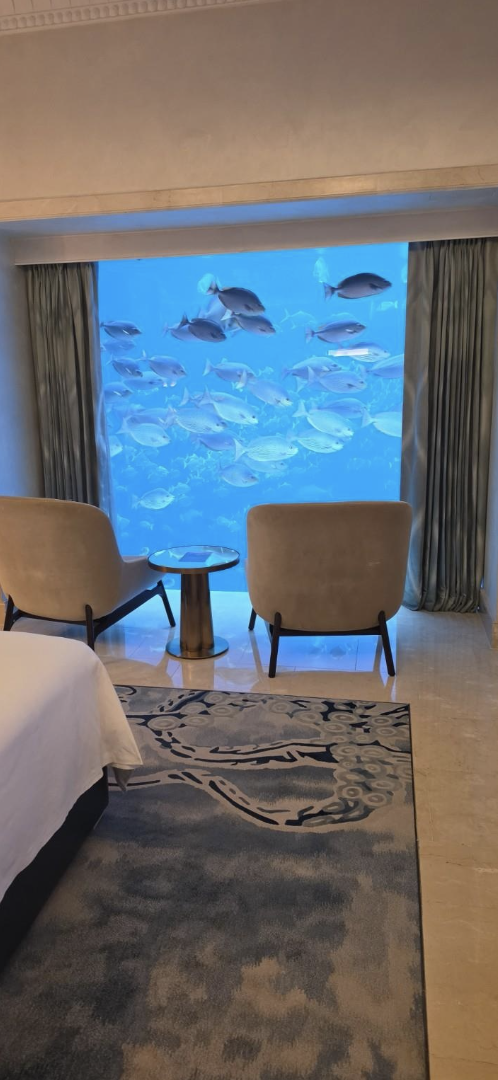
In front of the bedroom was what initially looked like the world’s most convincing cinema screen. Except it was not a screen. A stingray moved past. Then another fish. Then a shark.
The bedroom and bathroom look directly into the Ambassador Lagoon. You can lie in bed while rays glide past or take a bath while sharks disappear into the blue. At certain angles the view looks so perfect your brain insists it must be digital. Then something swims directly toward you.

65,000 MARINE ANIMALS BEYOND THE GLASS
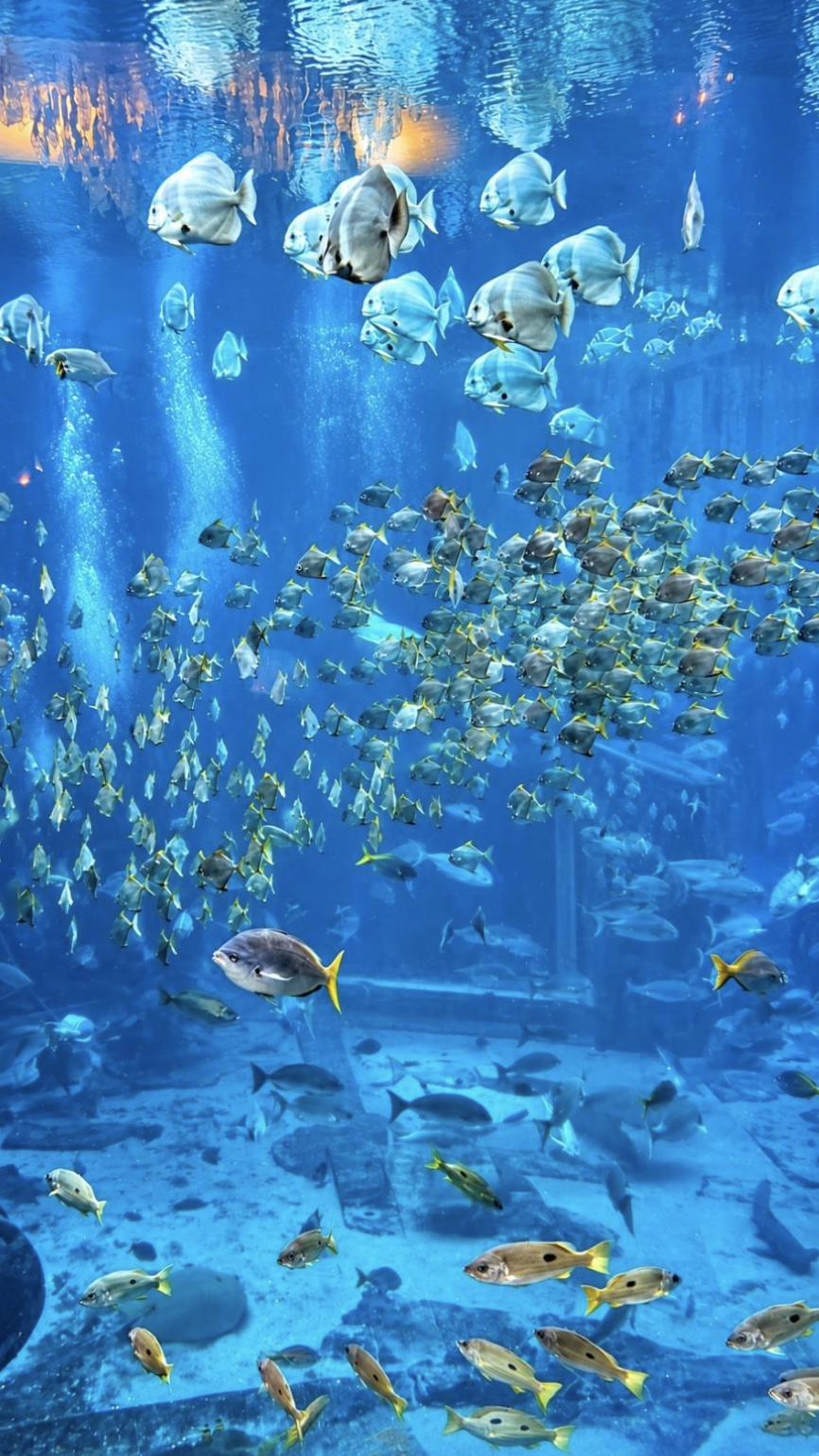
According to our hosts, the Ambassador Lagoon holds more than 65,000 marine animals and approximately 11 million litres of water. We were told it reaches roughly 10 metres in depth and that the viewing structure is engineered to withstand enormous water pressure.
The marine team also spoke about breeding work, veterinary care and conservation activity, including the release of certain marine animals back into natural environments. Seeing the fish hospital earlier that day gave us a real sense of just how much happens behind the scenes to care for Atlantis’ extraordinary marine world.
A ROOM THAT BECOMES AN EXPERIENCE
We were told there are only two of these underwater signature suites at Atlantis The Palm. The rate quoted during our visit was around US$19,000 per night, naturally subject to season and availability.
But the interesting part is not simply the price. It is what Atlantis can do with the space. Friends can gather upstairs for champagne and canapés. Private dining can be arranged. In-room dining can become tableside theatre, with chefs and trolleys transforming the residence into an intimate private restaurant.
At one point I decided the only thing missing was a mermaid. “I could do with a mermaid now.” Because really, what else do you say?
WONDER DOESN’T HAVE AN AGE LIMIT
We talked about how children react when they see the aquarium. Of course they are captivated. But standing there watching adults silently photographing stingrays through the bedroom window, something becomes obvious: adults are captivated too.
Perhaps that is one of Atlantis’s greatest tricks. Luxury usually asks us to behave like adults. Atlantis occasionally gives us permission not to. For a few minutes, you are eight years old again. Something enormous swims past your bedroom and you simply say: “Wow.”
IT’S NOT A HOTEL. IT’S AN EMOTION.
During the tour, one of our hosts addressed the perception that Atlantis is expensive. His response was not really about money. It was about experience. A room is not simply a room. A restaurant is not simply dinner. An aquarium is not simply something to photograph. The combination is the product.
“It’s not a hotel. It’s an emotion.”
It might sound like marketing until you have walked behind the walls. Then it begins to make sense. What the guest experiences as one seamless holiday is actually thousands of individual human actions happening simultaneously.
Somebody baked your croissant hours before you woke up. Somebody checked the water. Somebody cared for an animal. Somebody polished a corridor you will never consciously notice. Somebody developed your pairing for months. Somebody sourced the langoustine. Somebody tempered the chocolate. Somebody remembered how you take your coffee. And somebody put their hand over their heart when you arrived.
ATLANTIS AND DUBAI
Perhaps the final lesson was bigger than Atlantis itself. The team does not simply describe itself as selling hotel rooms. They talked about being a destination sales team.
That distinction matters. Atlantis and Dubai have grown together. Dubai has transformed from a short stopover destination into one of the world’s most ambitious tourism, hospitality, culinary and entertainment centres, and properties such as Atlantis have become part of that destination identity.
People do not necessarily visit Dubai and happen to stay at Atlantis. For some, they visit Dubai because they want to experience Atlantis.
THE CORPORATE AND MICE DIMENSION
Behind the leisure experience sits another commercial engine. During our discussions, the team explained that leisure groups are generally handled at smaller room counts, while larger groups and requests involving meetings move into the MICE environment. Even a smaller group can become MICE when meeting or event requirements are added.
The property has also handled buyouts, with the commercial calculation extending beyond room discounting to the utilisation of restaurants, event spaces, suites and the wider resort. The principle is straightforward: the experience is built around the total request, not merely a room rate.
BEHIND THE CURTAIN
When you arrive at Atlantis The Palm as a guest, you are not supposed to think about any of this. That is the point.
You are not supposed to wonder who baked the croissant. You are not supposed to think about the pastry kitchen operating through the night. You are not supposed to imagine veterinarians behind the aquarium. You are not supposed to picture the chef spending months developing a menu. You are not supposed to consider the thousands of people required to make an enormous resort feel personal.
You are simply supposed to experience it.
We had the privilege of seeing the other side. After hours behind the curtain, we finished somewhere almost impossibly quiet: underwater.
A stingray floated past the bedroom window. For a second it looked like a painting. Then it moved.
After all the kitchens, chefs, restaurants, chocolates, marine facilities, corridors, statistics, stories and extraordinary people we had encountered, there was not really anything clever left to say. I just watched it disappear into the blue.
Perhaps that is what they meant. Atlantis is not simply somewhere you stay. It is something you feel.
