


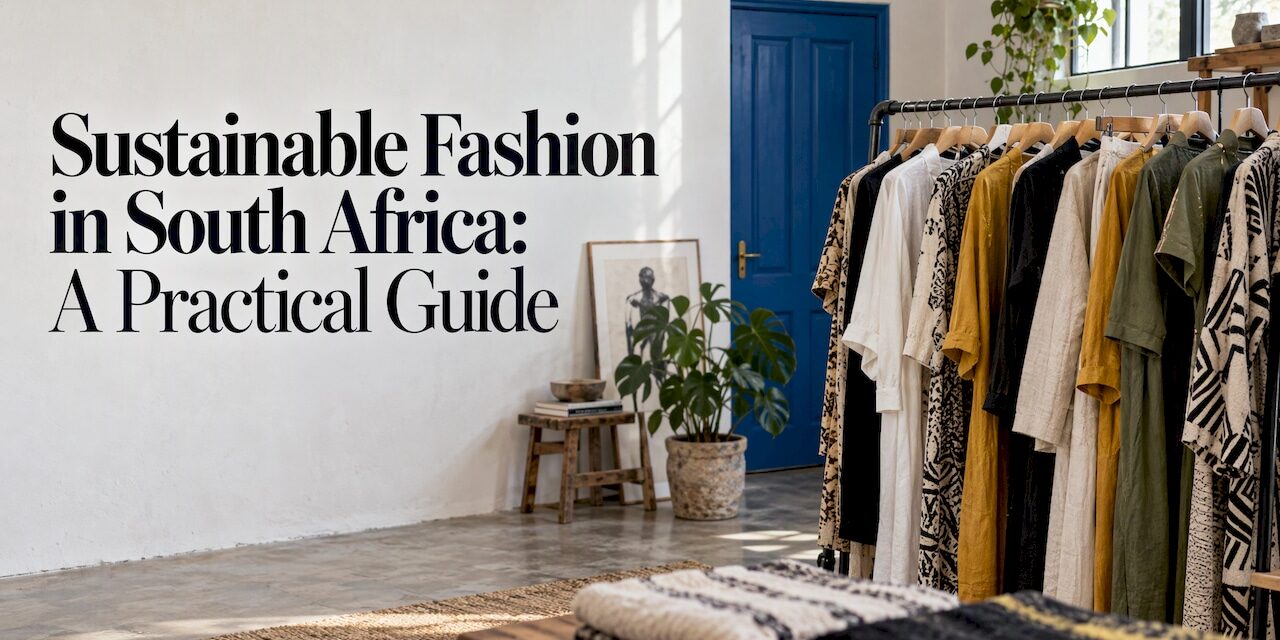
Sustainable fashion in South Africa means clothing made with less harm to people and the environment, from the fibre to the final stitch, and kept in use for as long as possible. In practice you can start today: buy fewer, better pieces, back local makers who are open about how they work, check claims against recognised certifications, and repair, resell or recycle rather than bin. This guide explains the terms, the local context, the designers worth knowing and a simple method for judging any label.
TL;DR
- Sustainable fashion looks at the whole production chain, ethical fashion at fair treatment of workers, and slow fashion at buying less and wearing things for longer.
- South Africa imports much of its clothing and sends large volumes of textile waste to landfill, so local, durable and circular options matter here.
- Local designers such as Sindiso Khumalo, Lunar and Viviers Studio publish details of how they make their clothes, which gives you something to check.
- Judge any eco claim by asking for evidence: the exact fibre percentages, the certification and who made the garment.
- Repairing, reselling and swapping are the easiest wins, and they cost little.
Table of Contents
- What sustainable, ethical and slow fashion actually mean
- Why it matters in South Africa specifically
- South African designers showing what sustainable practice looks like
- How to tell whether a label is genuinely eco-friendly and ethical
- Slow fashion in practice: buy less, wear longer
- What is being done at industry level
- Fashion with a purpose: charity shows and community events
- Our perspective
- Where to keep exploring
- A simple plan to start this month
- FAQ
- Sources
What sustainable, ethical and slow fashion actually mean
The three terms overlap, and shops often use them as if they were interchangeable. They are not.
Sustainable fashion is about the production process and its circularity from design to end of life. According to University of the Arts London, that covers materials, workers’ conditions, manufacturing, transport, packaging and waste disposal.
Ethical fashion is the human side. It rests on morally directed buying choices: fair pay, safe conditions and workers’ rights.
Slow fashion is the shopper’s habit. The same UAL piece describes it as choosing well, buying less, investing in quality, and practices such as repairing, sharing, swapping and recycling.
A quick way to hold them apart:
| Term | Main question | What you can do |
|---|---|---|
| Sustainable | What is the environmental footprint of this garment? | Look at fibres, dyes, transport and end-of-life options |
| Ethical | Who made it, and were they treated fairly? | Ask about the workshop, wages and conditions |
| Slow | Will I wear it for years? | Buy less, choose quality, repair and resell |
You do not need a perfect score on all three. A locally made, well-cut linen shirt that you wear for ten years can do more good than a certified organic top you wear twice.
Why it matters in South Africa specifically
The global arguments about fast fashion apply here, with a few local twists.
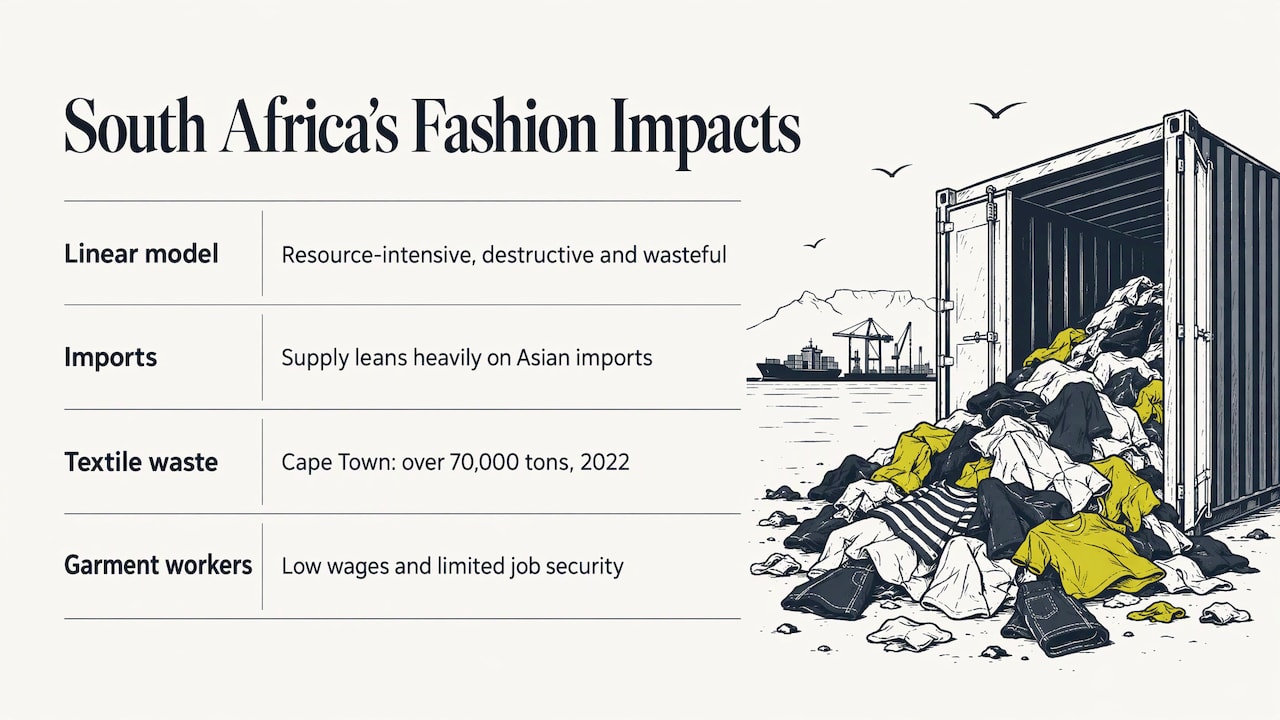
A linear model that wastes resources. GreenCape’s 2026 report on the circular economy for South African textiles describes the take, make and dispose model as resource-intensive, ecologically destructive and wasteful. It adds that circular approaches could divert landfill waste, create jobs and strengthen local value chains.
Heavy reliance on imports. The same report notes that South Africa’s clothing supply leans heavily on imports from a concentrated group of Asian countries. That creates supply-chain risks, and liabilities when those garments reach the end of their life here.
Waste at the bin. The Daily Maverick reports that Cape Town alone landfilled more than 70,000 tons of textile waste in 2022, in an article on how extended producer responsibility rules are shaping waste reform.
Pressure on local workers. Coverage of Fashion Revolution Day in South Africa points out that garment workers face low wages and limited job security, against a background of cheap imports, factory closures and job losses. Buying from local makers who pay and treat staff properly supports the people who are still working in the industry.
The takeaway for a shopper is simple. Where your clothes are made and how long they last both count, and in South Africa both can be influenced by choosing local, durable pieces.
South African designers showing what sustainable practice looks like
The most useful thing a brand can do is tell you how it works in specific terms. These local names have done so publicly.
Sindiso Khumalo
Khumalo works with predominantly natural fibres and prints and manufactures her designs in Cape Town. She has also said she is moving away from designing for separate seasons because she believes seasonal cycles create waste. The LVMH Prize profile adds that she works with NGOs and small workshops in South Africa and Burkina Faso on handwoven and hand-embroidered textiles, with a focus on social equality and female empowerment.
Lunar
Cape Town label Lunar, founded by Karen Ter Morshuizen and Dominique Gatland, is described by Zeitz MOCAA as using predominantly natural fabrics, including linen, hemp, silk, organic cotton, bamboo and wool. The museum also notes the label’s commitment to fair trade, sustainable practice and decent working conditions for employees.
Viviers Studio
In Johannesburg, Viviers Studio says on its own about page that its limited editions are made in the city from local handcrafted and reclaimed couture textiles, with scraps reused and recycled. The studio also encourages customers to inspect garments, ask questions and learn who made them. That invitation is a good model for how any brand should talk to you.
We keep a running list of local names in our guide to South African fashion brands worth knowing, and the KZN coast has its own story in our piece on fashion labels making an impact on the global stage. If you like design with a strong cultural point of view, our look at Afrofuturism fashion and South African designers is a good next stop.
How to tell whether a label is genuinely eco-friendly and ethical
Green language is cheap. A few habits will protect you from vague claims.
- Ask for the number. Scientific American’s beginner’s guide to ethical and sustainable fashion advises looking for evidence behind claims, questioning words such as “natural”, and checking the actual percentage of recycled material.
- Think about the whole life of the garment. The same guide suggests considering the impact of different production stages, how long the piece will last and which priorities matter to you, whether environmental, social or animal welfare. There may be no single ideal answer.
- Look for recognised standards. A 2023 South African textile and clothing sector guideline lists GOTS, Fairtrade, OEKO-TEX, SA8000, WRAP, bluesign and ZDHC as relevant systems. Between them they cover organic content, fair work, chemical safety, worker rights and environmental controls.
- Match the standard to the claim. An organic cotton label speaks to the fibre. A worker-rights scheme speaks to the factory. A brand that mentions one but is silent on the other has told you only half the story.
- Ask who made it. Local brands are often happy to say where the garment was cut and sewn, and by whom.
No single fibre or certificate solves every problem, so treat these as questions to ask rather than boxes to tick.
A quick checklist for the shop floor or product page
- What is the fibre blend, in percentages?
- Is there a named certification, and what does it cover?
- Where was it made, and can the brand describe the workshop?
- Is there a repair or alteration service?
- Will I still like this in three years?
Slow fashion in practice: buy less, wear longer
Slow fashion is the part of the picture you control completely, and it is the cheapest.
Buy for cost per wear. A well-made piece that you wear weekly for years beats a bargain you wear twice. If you want to understand what durability involves, this explanation of what garment longevity means covers buying less, choosing sturdy clothing and extending a garment’s life.
Build a core wardrobe. Choose colours that work together and cuts that suit you across seasons. Designers who step away from strict seasonal collections, as Khumalo describes, make this easier because their pieces are not tied to a trend cycle.
Care for what you own. Wash less often, wash cooler and air-dry where you can. Fix a loose button or a hem before it becomes a bigger job.
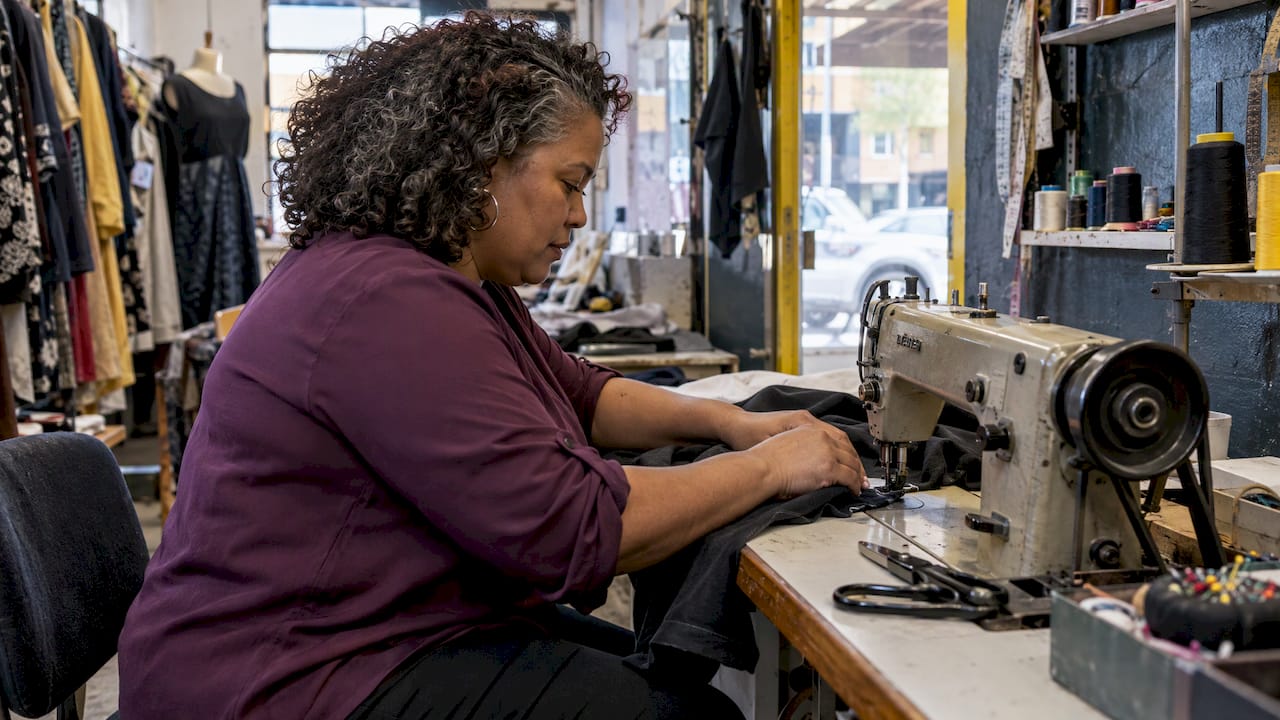
Repair before replacing. A good local tailor or seamstress can take in, let out, re-line and reinforce. Many South African neighbourhoods have one within a short drive, and the work is usually far cheaper than a new garment.
Swap and share. Clothing swaps with friends or colleagues cost nothing and refresh your wardrobe. Borrowing for a one-off event is an option too.
Resell rather than discard. Pre-owned fashion has moved from niche to mainstream in South Africa’s luxury market, which we covered in our report on the resale boom. Good pieces keep their value when they are looked after.
Pass on what you cannot use. If something is beyond repair or resale, textile recycling and donation are better than the bin. Ask your local municipality or charity shop what they accept, as drop-off options differ from place to place.
What is being done at industry level
Personal choices matter, but the industry has to change too. GreenCape is facilitating a proposed collaborative, industry-led circular textiles initiative for South Africa. The report says it could create local jobs, reduce import reliance and help divert textile waste from landfill.
It names four priorities:
- phasing out problematic chemicals
- redesigning how garments are designed and used
- improving collection and recycling
- using resources and renewable inputs effectively
The ideas are consistent with what individual shoppers can do: choose cleaner materials, pick pieces designed to last, and send worn clothes back into a loop instead of to landfill.
Fashion with a purpose: charity shows and community events
Fashion can also give back. Readers often ask about charity fashion shows and charitable fashion events in South Africa, and these are a fine way to meet designers, see work on a runway and support a cause in the same evening. We have covered events where style meets philanthropy, such as The Pink Society High Tea Fashion Show, and we follow the wider calendar through our coverage of FIASA Awards celebrating South Africa’s fashion pioneers and SA Fashion Week at Melrose Arch.
Ticket prices, dates and beneficiaries change every year, so check the organiser’s own page for the current details. When you attend, ask designers about their materials and who sewed the clothes. A runway is a good place to start that conversation.
Our perspective
We cover fashion in Johannesburg every week, and the pattern we see is clear: the most convincing sustainability stories are local, specific and told by the makers themselves.
When a designer can tell you where the cloth came from, who stitched it and why a piece is cut to last, you do not need a green badge to believe the effort. That is why we keep putting emerging South African talent in front of readers, through interviews, event coverage and brand features.
We also think sustainability should feel like style, not sacrifice. Johannesburg and Dubai are both cities where people dress to be seen, and our aim is to show that choosing a locally made, long-lasting piece, or a beautifully kept pre-owned one, is as stylish as anything on the global trend list.
If you take one thing from this guide, make it this: be curious. Ask questions, support makers who answer them, and wear what you buy.
Chad
Where to keep exploring
We cover local designers, resale, trends and events across Johannesburg and beyond. If you want to see how sustainable thinking sits alongside what is shaping wardrobes this year, start with our global fashion trends for 2026. For more South African names to follow, browse the stories on Joburgstyle, where we feature emerging designers, interviews and event coverage from Johannesburg, across South Africa and Dubai.
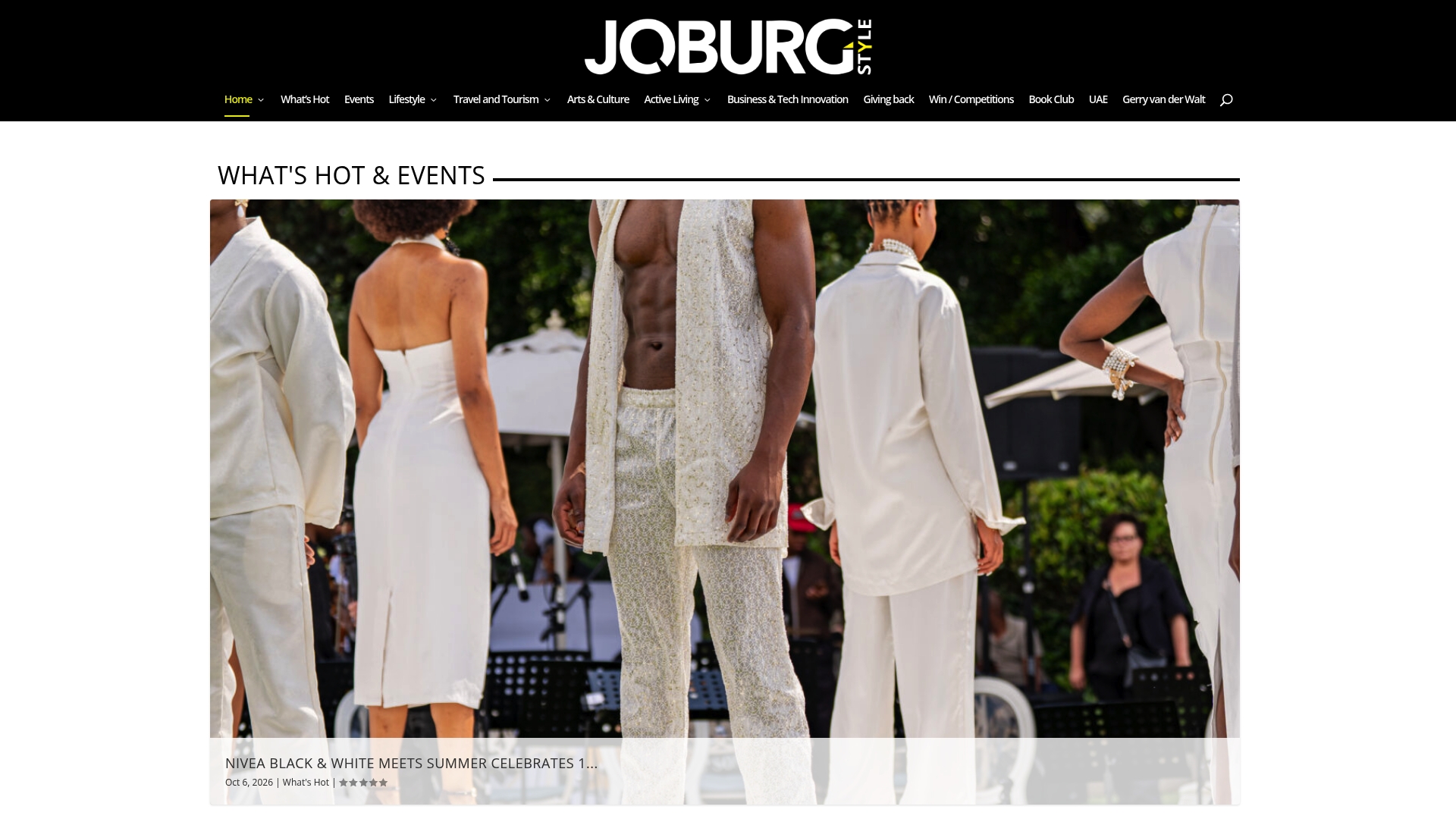
If you are a designer, brand or event organiser with a sustainability story to tell, we would like to hear it. Our features, sponsored content and event partnerships are built to put local talent in front of readers who care about where their clothes come from.
A simple plan to start this month
- Audit your wardrobe. Pull out everything you have not worn in a year. Decide what to repair, resell, swap or donate.
- Pick one local label. Choose a designer whose process you can read about, and buy one considered piece rather than several cheap ones.
- Find a tailor. Take two garments in for small repairs or alterations.
- Set a rule. Before any purchase, ask the three questions: what is it made of, who made it, and will I wear it thirty times?
- Share what you learn. Tell friends about the makers you find. Word of mouth is how small local brands grow.
FAQ
What is the difference between sustainable, ethical and slow fashion?
Sustainable fashion focuses on environmental impact across the production chain. Ethical fashion focuses on fair labour, safe conditions and workers’ rights. Slow fashion is about buying less, choosing quality and keeping clothes in use through repair, swapping and resale. Many South African designers work across all three.
Which South African designers are known for sustainable practices?
Sindiso Khumalo uses mostly natural fibres, makes in Cape Town and works with NGOs and small workshops on handwoven and embroidered textiles. Lunar is described by Zeitz MOCAA as using mainly natural fabrics, with a commitment to fair trade. Viviers Studio makes limited editions in Johannesburg from local handcrafted and reclaimed textiles, according to its own site.
How can I tell if clothing is really eco-friendly?
Ask for evidence: exact fibre percentages, the named certification and where the garment was made. Be wary of vague words such as “natural”. Standards such as GOTS, Fairtrade, OEKO-TEX and SA8000 cover different things, so check that the one cited matches the claim being made.
Is sustainable fashion more expensive?
A considered piece can cost more up front, but it often costs less per wear if you keep it for years. Repairing, swapping and buying pre-owned are lower-cost routes into slow fashion. Compare prices on the specific item and the brand’s own page rather than assuming.
Where can I find charity fashion shows in South Africa?
Follow event coverage and the organisers’ own pages, as dates and beneficiaries change each year. We report on fashion events that combine style with giving, so keep an eye on our site for the latest.
Sources
- Breaking down sustainability terms, University of the Arts London
- Circular economy for South Africa’s textiles industry, GreenCape
- Extended Producer Responsibility legislation in SA, Daily Maverick
- Fashion Revolution Day: why it matters in South Africa, Bona
- The pattern collector, Design Indaba
- Sindiso Khumalo, LVMH Prize
- Lunar by Karen Ter Morshuizen and Dominique Gatland, Zeitz MOCAA
- About us, Viviers Studio
- A beginner’s guide to ethical and sustainable fashion, Scientific American
- South African Textile and Clothing Sector Guideline 2023
- What does garment longevity mean?
