

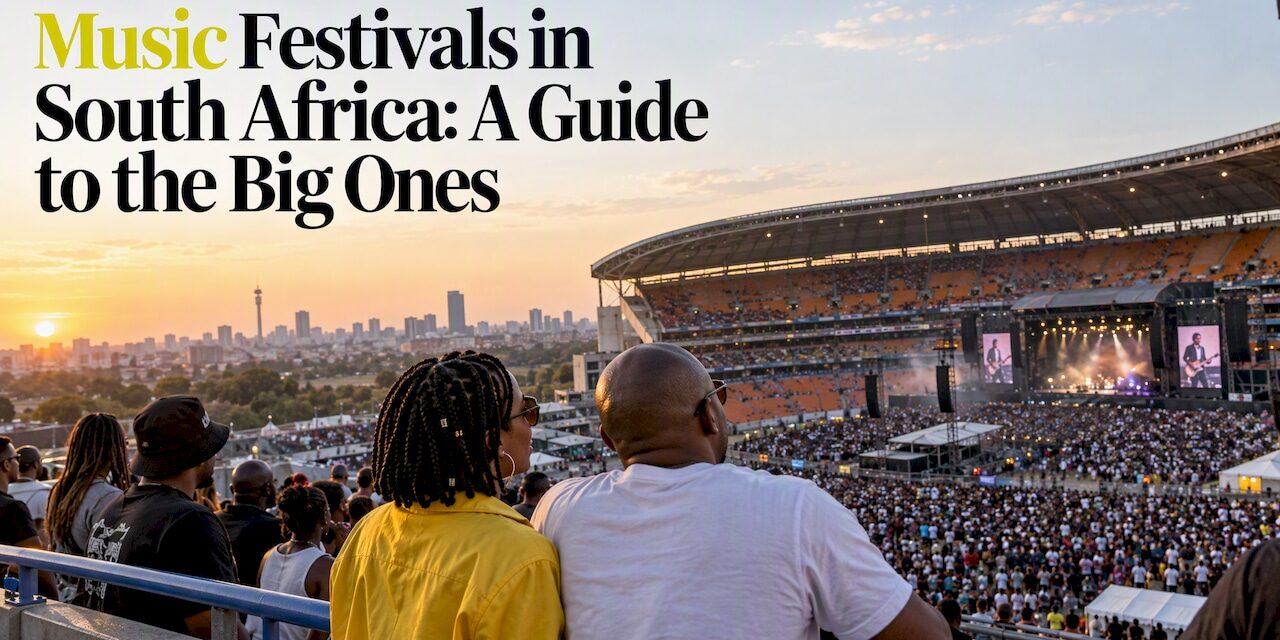
South Africa’s festival calendar runs all year, but the biggest names cluster in a few places: electronic and pop-heavy stadium shows in Johannesburg and Cape Town, camping festivals in the Western Cape and KwaZulu-Natal, and a long tail of smaller heritage, jazz and amapiano weekenders. Pick by the experience you want first (stadium, bush, desert or city rooftop), then check the organiser’s own page for this season’s dates, because line-ups and dates change every year.
This guide covers the festivals that define the scene, what each one feels like, what tickets have cost, and how to plan a trip around them. We write from Johannesburg, so the Gauteng detail is where we go deepest.
TL;DR
- Biggest crowds: stadium and expo-centre events, such as the Global Citizen Festival at FNB Stadium (over 70,000 people) and Ultra South Africa (over 40,000 at its debut).
- Best for camping: Mieliepop and Rocking the Daisies are the classic multi-day, sleep-on-site options; AfrikaBurn is a desert art community rather than a line-up festival.
- Budget: Ultra South Africa 2026 general access started from R995, VIP from R2,000 and VVIP from R4,500, so set aside travel and accommodation on top.
- Dates: most major festivals return in the same season each year, but always confirm on the official page before you book flights.
Table of Contents
- How to choose a festival in South Africa
- The largest festivals by crowd size
- Camping and destination festivals
- Music festivals in Johannesburg
- Tickets, budgets and timing
- What to pack and how to stay safe
- Our perspective: festivals are where Johannesburg style shows up
- Follow the festival season with Joburgstyle
- FAQ
- Sources
How to choose a festival in South Africa
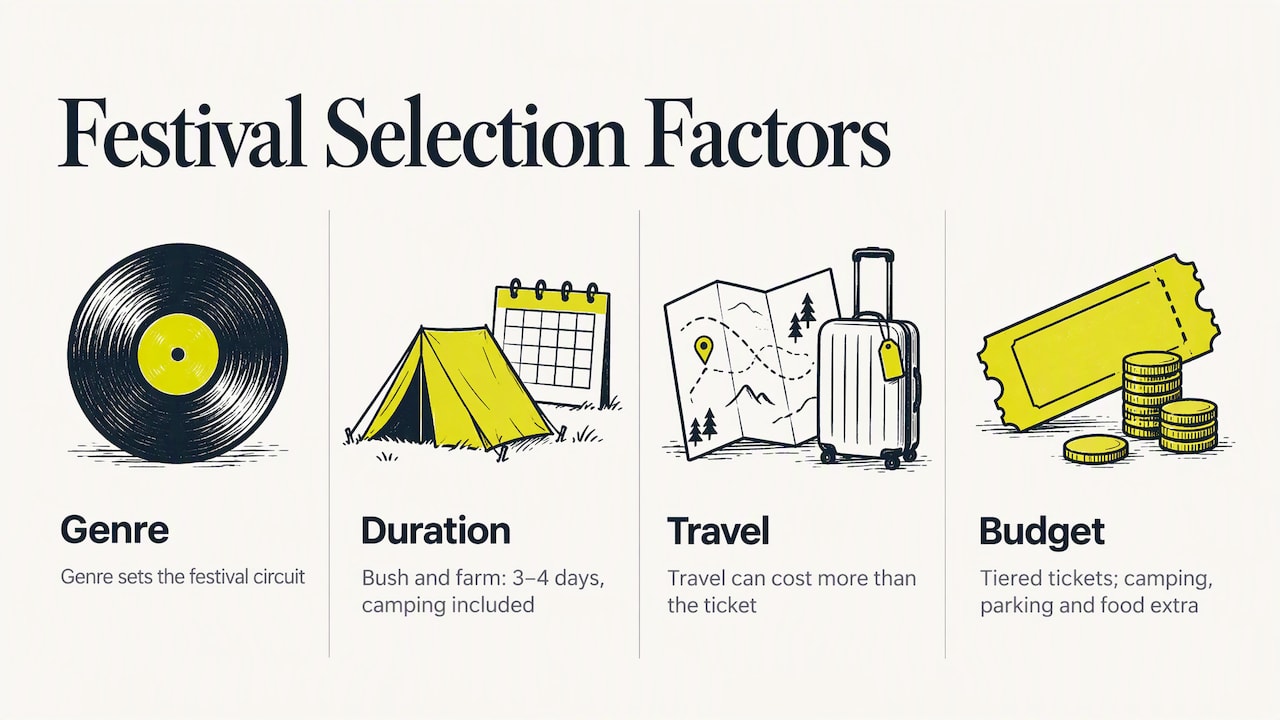
Four questions narrow the field quickly.
What do you want to hear? Electronic music, rock, jazz, amapiano, hip hop, Afrikaans pop and heritage acts each have their own circuit. A festival that suits a house fan will bore a jazz lover, so start with genre.
Day event or weekend? City festivals at expo centres and stadiums are one or two days and you go home to your own bed. Bush and farm festivals are three or four days, with camping as part of the deal.
Where are you based? Gauteng readers have the most one-night options. Cape Town and the Winelands carry most of the summer camping festivals. Flights, fuel and accommodation can cost more than the ticket.
What is your budget? Tiered tickets are normal. General access is the entry price, VIP adds better viewing and bars, and a top tier adds hospitality. Camping, parking and food are usually extra.
The largest festivals by crowd size
Size is a good starting point because it tells you what kind of day you are signing up for.
Global Citizen Festival: Mandela 100 (Johannesburg)
The landmark stadium event of recent years was the Global Citizen Festival: Mandela 100, held at FNB Stadium on 2 December 2018. It attracted over 70,000 attendees, and the organisers used civic action to earn tickets, aiming to draw attention to poverty, health and education. FNB Stadium has a capacity of 94,736, and government reporting before the show noted it had reached that capacity ahead of the event. It remains a useful benchmark for how big a South African show can get.
Ultra South Africa (Johannesburg and Cape Town)
Ultra South Africa launched in 2014 in Cape Town and Johannesburg. It sold out and welcomed over 40,000 festival-goers at the time, billed as the continent’s largest music festival to date. The 2026 edition ran on 25 April at the Expo Centre at Nasrec in Johannesburg and 26 April at The Ostrich in Cape Town. According to 5FM, general access tickets started from R995, VIP from R2,000 and VVIP (Johannesburg only) from R4,500.
The pattern is useful for planning: Ultra has tended to land in the autumn shoulder of the year, with a Johannesburg date and a Cape Town date on consecutive days. We covered the festival’s line-up announcement with Martin Garrix, Armin van Buuren and KSHMR if you want to see how a typical announcement lands.
Rock and pop stadium tours
Calabash South Africa 2026, headlined by Muse, was scheduled for 7 February at FNB Stadium in Johannesburg and 11 February at DHL Stadium in Cape Town. Milk + Cookies, which brings R&B and hip hop acts to both cities each January, had its 2026 edition on 3 January in Cape Town and 10 January in Johannesburg, headlined by Majid Jordan and Gunna. Both show a clear rhythm: the big international stadium festivals tend to cluster in the summer months, from December to February.
Camping and destination festivals
If you want the weekend away rather than the single night, these are the festivals to look at.
Mieliepop
Mieliepop is a three-day outdoor festival. It is set among lakes, swimming pools, caves and green lawns, which makes it feel more like a holiday camp with a stage than a stadium show. Bring a swimming costume and plan to stay put.
AfrikaBurn
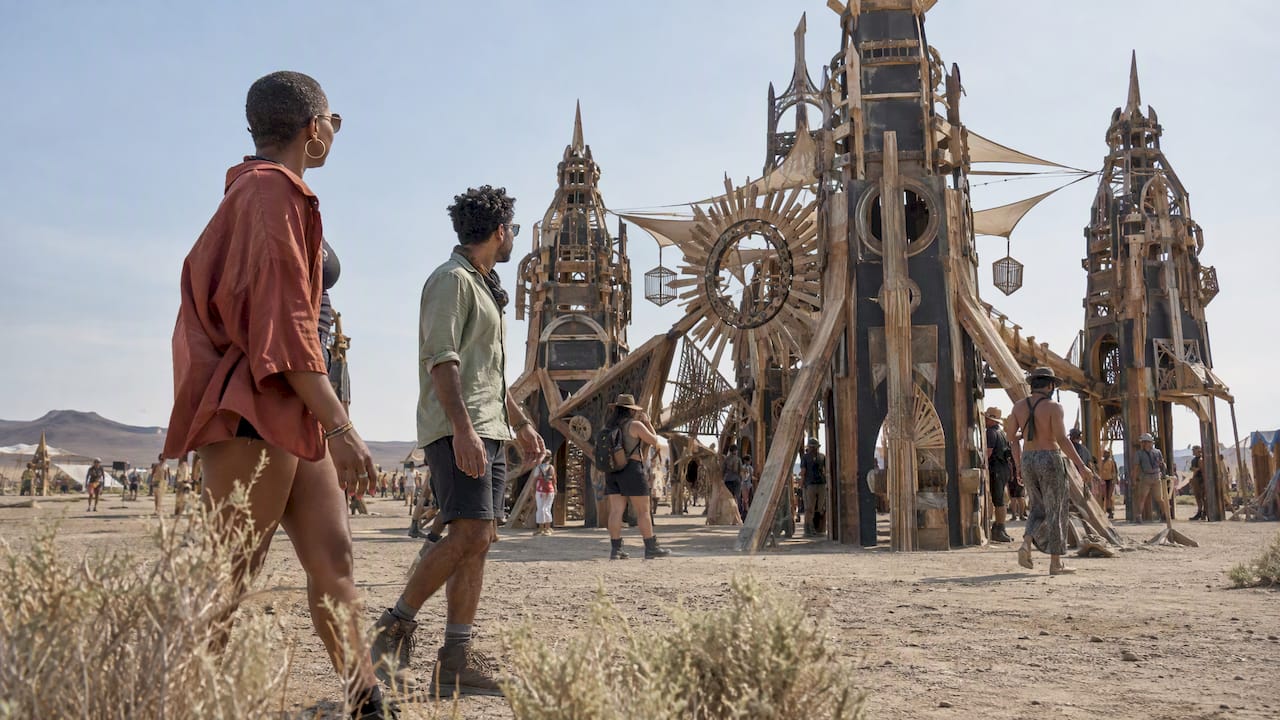
AfrikaBurn happens in the desert and is built on participation. Attendees create themed art installations, sometimes with musical performances. It is not a headliner festival, so treat it as a community art event with music in it. Expect to bring your own water, shade and food, and to think about how you leave no trace.
Rocking the Daisies
Rocking the Daisies is a three-day, multi-stage camping festival held in early October at Cloof Wine Estate near Darling, roughly 90 minutes from Cape Town, according to a Cape Town events guide. It mixes global headliners with a deep local line-up, plus art and wellness spaces. If you live in Gauteng, factor in a flight to Cape Town and a hire car.
Jazz, heritage and regional festivals
South Africa also has strong jazz and heritage programmes, including large events in Cape Town and Johannesburg, plus Afrikaans arts festivals in smaller towns. These vary a lot in size and ticketing, so use the organiser’s own page for the current programme rather than a year-old listing.
Music festivals in Johannesburg
Johannesburg is the easiest city to build a festival habit in, because there is something on most months. The pattern we see across the year:
| Season | What usually happens in and around Johannesburg |
|---|---|
| Summer (December to February) | International stadium tours at FNB Stadium, plus R&B and hip hop festivals in January |
| Autumn (March to May) | Big electronic weekends at Nasrec, plus smaller day festivals |
| Winter (June to August) | Indoor and rock-leaning events, jazz evenings, cosy club shows |
| Spring (September to November) | Outdoor day-and-night festivals with house, amapiano and hip hop on multiple stages, plus Heritage Month events |
For the electronic side, fabric London’s January 2027 visit to South Africa is the next marquee announcement we are following. Smaller launch events matter too: SOULPLAY’s inaugural Johannesburg edition is a good example of a new festival finding its audience in the city, and TEMS’s first South African tour date at The Dome, NASREC shows how a single headline show can feel like a festival.
For a historic comparison, our piece on Whitney Houston’s concert for a new South Africa in Durban shows how long large-scale live music has been part of the country’s story.
Tickets, budgets and timing
Festival tickets in South Africa are normally released in waves, with cheaper early tiers selling first. The Ultra pricing above is a good model: general access, VIP and a top tier for the biggest spenders. Where we do not have a published current price, we do not quote one, so check the organiser’s ticket page.
A realistic budget has five parts:
- Ticket tier. Choose general access unless a better view or bar access is the point of the trip.
- Transport. Johannesburg events are easiest by e-hailing or a lift club. Cape Town and Winelands events usually need a car.
- Accommodation. Book early for multi-day festivals; nearby guesthouses fill when the line-up is announced.
- Food and drink. Plan on buying on site and carrying water.
- Extras. Parking, camping fees and merchandise.
Three habits protect your money: buy only from the organiser’s listed ticketing page, keep your confirmation until the event, and avoid paying for resale tickets on social media from people you do not know.
What to pack and how to stay safe
South African weather swings between seasons and between regions. Summer festivals are hot and can bring afternoon storms in Gauteng; winter nights on the Highveld are cold. Sun protection matters at open-air events, and we have written about how the summer sun affects your scalp and hair if you are spending a whole day outside.
Pack the basics:
- A hat, sunscreen and a refillable bottle
- A light rain jacket in summer, a warm layer in winter
- Closed, comfortable shoes you can stand in for eight hours; a pair like the Gel-Kinetic Fluent sneaker suits the purpose
- Ear protection if you plan to be near the speakers
- A power bank, because phones are your ticket and your map
Agree a meeting point with friends before you go, because mobile networks can struggle in a crowd.
If you are interested in how music is chosen and delivered at live events, event DJ trends give a useful look at the planning side of the sound you hear on the night.
Our perspective: festivals are where Johannesburg style shows up
We cover fashion, art and culture for a living, and festivals are where all three meet. A festival crowd is the most honest street-style runway there is: workwear mixed with denim, Afrofuturist silhouettes, bucket hats and bold prints, all made to survive heat, dust and a long day on your feet. If you want to understand where South African style is heading, stand in a festival queue and look around.
That is why we cover festivals the way we do. We pay attention to the line-up, but also to the people building the event: local promoters, emerging designers, food vendors and artists. Our work with events from Johannesburg to Dubai rests on one belief: local talent deserves the same coverage as the international headliner, and the best festivals give both a stage.
Our advice is simple. Pick one big festival a year for the spectacle, then add a few smaller, local events. The big ones give you the memory; the small ones give you the community. And if you are dressing for the day, look at our guides to global fashion trends and Afrofuturism fashion for ideas that work in a crowd.
— Chad
Follow the festival season with Joburgstyle
We publish line-up announcements, event coverage and what-to-wear ideas for South African festivals, so you hear about the show before the tickets run out. Start with our guide to what is shaping wardrobes now, or browse the latest from the Joburgstyle homepage.
If you are an organiser, venue or brand with a festival to share, our team covers events across Johannesburg, South Africa and Dubai. Get in touch through the site.
FAQ
What is the largest music festival in South Africa?
By published figures, the Global Citizen Festival: Mandela 100 at FNB Stadium drew over 70,000 people in December 2018. Ultra South Africa reported over 40,000 at its 2014 debut. Crowd sizes change every year, so check the organiser for current figures.
What music festivals happen in Johannesburg?
Johannesburg hosts stadium tours at FNB Stadium, electronic festivals at the Expo Centre at Nasrec, and outdoor day festivals in spring. Ultra South Africa uses Nasrec, and Calabash 2026 used FNB Stadium. The organisers’ own pages have the current dates.
How much do South African festival tickets cost?
It depends on the festival and tier. For Ultra South Africa 2026, general access started from R995, VIP from R2,000 and VVIP from R4,500. Camping, parking and travel are usually extra.
Which South African festivals are best for camping?
Mieliepop offers a three-day outdoor setting with lakes, pools and lawns. Rocking the Daisies is a camping festival in early October near Darling. AfrikaBurn is a desert event built around participation and art.
Sources
- A guide to music festivals in South Africa, Music In Africa
- Global Citizen Mandela 100 Concert Case Study, Mushroom
- Greenlight for Global Citizen Festival, SAnews
- Ultra South Africa makes history, Dancing Astronaut
- Muse to headline Calabash South Africa 2026, Nova News
- Majid Jordan returns for Milk + Cookies 2026, Urban Street Culture
- Ultra South Africa 2026, 5FM
- Rocking the Daisies 2026 festival calendar
