


Pilanesberg is the easiest real Big Five safari a Johannesburg resident can do: about two hours on tar, no malaria tablets, and a park you can drive yourself in an ordinary car. Leave early, pay at the gate, keep to the 40 km/h limit and spend the day on the water-edge loops, and you can see more in one long day than many visitors see in a weekend elsewhere. This guide covers the route, the gates, the fees, the rules, the best season and a day plan, written for Gauteng readers who want a good outing rather than a logistics headache.
TL;DR
- Pilanesberg is roughly two hours from Johannesburg’s northern suburbs, on surfaced roads all the way, and is a comfortable day trip or an easy weekend.
- It is malaria-free and holds lion, leopard, elephant, buffalo and both rhino species, so it suits families and first-time safari-goers.
- Self-drive works well: stay in your vehicle, keep to 40 km/h and aim to be through the gate soon after it opens.
- Entry is charged per person and per vehicle, and tariffs have risen sharply in the last two years, so check the latest tariff page before you go.
- Winter (April to September) is the classic season for sightings; summer is greener, with more birds and thicker bush.
Table of Contents
- Why Pilanesberg suits a Johannesburg weekend
- Getting there from Johannesburg
- Gate times and when to arrive
- What it costs to get in
- Self-drive: the rules that matter
- Self-drive or a guided drive?
- Best time to go
- A day plan that works
- What to pack
- Making it a longer escape
- Our perspective
- More from Joburgstyle
- FAQ
- Sources
Why Pilanesberg suits a Johannesburg weekend
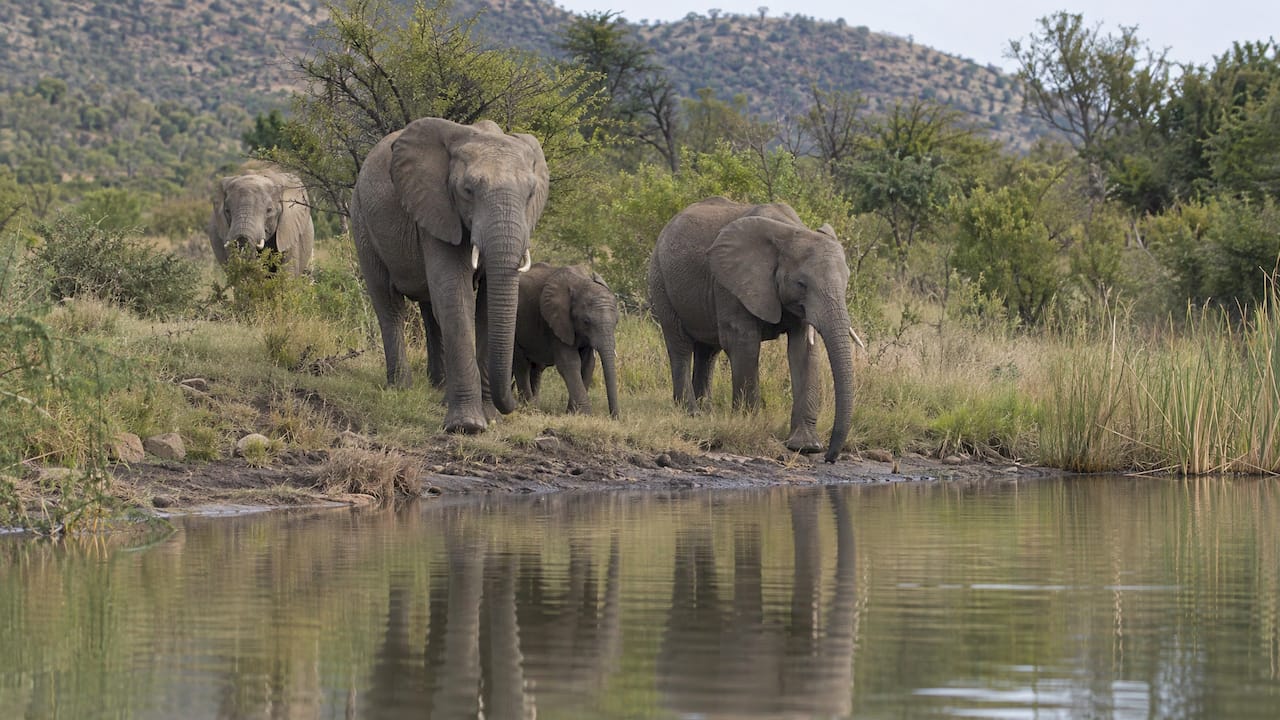
Most South Africans who want a Big Five experience think first of Kruger, which is a long drive or a flight away. Pilanesberg is the opposite proposition: close, compact and forgiving. The Pilanesberg Wildlife Trust describes the park as home to lion, leopard, black and white rhino, elephant and buffalo, alongside cheetah, sable, giraffe, zebra, hippo, crocodile and more than 300 bird species. It sits in the crater of a long-extinct volcano formed by eruptions some 1,300 million years ago, which is why the landscape is a ring of hills around a central valley and the Mankwe Dam.
The park is also malaria-free, and the North West Parks and Tourism Board places it in the Bojanala Region of the North West Province, next to Sun City. For parents with small children, pregnant travellers or anyone who would rather not take anti-malarial medication, that single fact removes the biggest planning question of a bushveld trip.
If you are still deciding between the two destinations, our Kruger vs Pilanesberg comparison goes through distance, cost and what you are likely to see in each.
Getting there from Johannesburg
There are two sensible roads. One runs north on the N1, then west on the N4 and onto the R556, which brings you up the eastern side of the park to the Bakgatla and Manyane gates. The other is the R510 from the south, which arrives at the Bakubung gate. A Johannesburg trip planner puts the drive at roughly two hours from the northern suburbs and closer to two and a half from the south of the city, in normal traffic.
A few practical points:
- Fuel up before you leave the highway. You will not want to spend game-viewing time hunting for a petrol station.
- Pick your gate by where you are sleeping. Gate-side lodges save you the early-morning approach drive.
- Download the park map offline. Signal inside the crater is patchy, and the junction numbers on the road signs are easier to follow with a map in hand.
- Plan to leave the city before 05:00 for a day trip. You beat the northbound commuter traffic and reach the gate when animals are most active.
Gate times and when to arrive
The park is open daily, but gate hours follow the seasons. As a rule, gates open at around sunrise and close between about 18:00 and 19:00, with earlier opening in summer and later in winter. Entry is usually not allowed in the last hour before closing, and you need to be at your exit gate before it shuts. Confirm the current hours with the park before you set out, as they are adjusted from time to time.
The first ninety minutes after opening are the most productive. Cats are still moving, elephants are heading to water and the light is soft. By midday, many animals have moved into shade, which is the time to eat at a picnic site or visit a hide.
What it costs to get in
Pilanesberg charges separately for each person and for the vehicle. The park’s tariffs were raised sharply: a 2025 report described South African adult entry doubling from R80 to R160, foreign visitors going from R110 to R680, and vehicle entry rising from R40 to R160, with the park’s acting chief executive calling it part of a sustainability and repositioning plan.
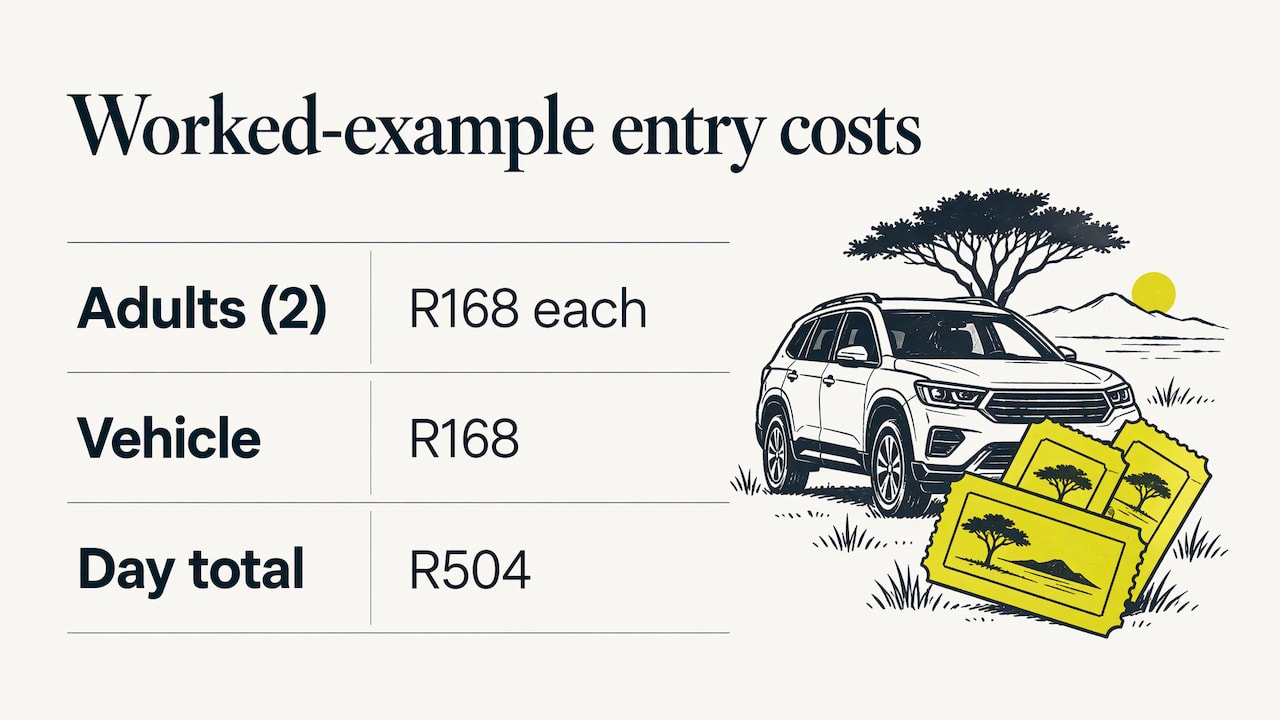
Tariffs have moved again since. One 2026 guide lists the tariffs effective from 1 December 2025 as R168 per South African adult and R168 for a standard light vehicle, and warns that older guides can understate the cost.
A worked example
Two South African adults in one car, using those listed figures, pay R168 each plus R168 for the vehicle: R504 for the day before fuel, food or any lodge charges. Add children and the per-person part changes, since child and pensioner rates differ. The takeaway is simple: budget for the vehicle fee as well as the people, and treat any number you read online, including this one, as a guide until you have checked the park’s current tariff.
Self-drive: the rules that matter
Self-driving is the main way people visit, and the rules are short. The park’s own brochure says visitors must remain in their vehicles unless they are in a designated area, must not put any part of their body out of windows or sunroofs, and must keep vehicle doors closed at all times. The speed limit inside the park is 40 km/h.
Those rules are not bureaucracy. A rhino or elephant that has become used to a vehicle will still react to a person stepping out or a hand on a window ledge, and the whole park is tuned to keep animals relaxed around cars. Keep your engine off at a sighting, keep your voice low and give animals the right of way on the road, even if it means waiting ten minutes.
Road conditions and the right car
The tarred network is open to ordinary sedans, but surfaces in places are worn, with broken edges and potholes on bends, so a slow hand matters more than a high clearance. Gravel loops are generally fine in dry weather. A higher vehicle gives you a better view over the verges, but it is not essential.
How to find animals without a guide
Self-drive sightings come from patience and a few habits:
- Start at water. The Mankwe Dam and the smaller dams and waterholes are where elephant, buffalo, zebra and hippo gather, especially in the dry months.
- Look for parked cars. A cluster of vehicles with engines off usually means a predator or a rhino. Pull in slowly and ask quietly what is there.
- Drive less, look more. Moving at 20 to 30 km/h and stopping often beats covering distance.
- Use the hides. They give you a safe place to get out, watch and take photographs, and they fill the quiet midday window.
- Return to productive spots. The same stretch of road can be empty at 07:00 and full of life at 16:00.
Self-drive or a guided drive?
Self-drive gives you freedom, the best price and your own pace. A guided drive in an open vehicle puts an experienced tracker-guide in charge of spotting and explains behaviour and birdlife, and standard scheduled drives run for about three hours. Many visitors combine the two: a self-drive day, plus one guided sunrise or sunset drive booked through their lodge. If you have never been on safari, a guided drive on the first morning teaches you how to read the bush, and you carry that into your own driving afterwards.
For a closer-to-home comparison of the same decision, our piece on guided or self-drive at Lion & Safari Park shows how the choice plays out in a smaller reserve.
Best time to go
The park board describes a dry season in the winter months, April to September, and a wet season in summer, October to March. For sightings, the dry season is the more dependable one: vegetation thins out, animals concentrate at water and you can see further into the bush. Winter mornings are cold, so dress in layers.
Summer is not a write-off. The park is green, there are young animals and the birdlife is excellent. The trade-off is thicker bush and animals that are harder to spot, along with afternoon heat and storms. Early starts matter even more in the hot months, when the animals shelter from midday.
| Season | Months | What to expect |
|---|---|---|
| Dry (winter) | April to September | Thinner bush, animals at water, cold mornings |
| Wet (summer) | October to March | Green landscape, more birds, thicker vegetation, heat |
A day plan that works
Here is a straightforward itinerary for a day trip from Johannesburg:
- 05:00 Leave the city, with snacks, water and a full tank.
- 07:00 to 10:00 Through the gate and straight to water. Drive the loops around the Mankwe Dam, stopping at the first hide you reach.
- 10:00 to 13:00 Work the quieter gravel roads, pausing for a picnic site break at midday.
- 13:00 to 15:30 Visit hides and waterholes while the heat peaks, or leave the park for lunch at a gate-side lodge.
- 15:30 to 17:00 Back out on the loops for the afternoon animal movement. Allow time to reach your exit gate before it closes.
If the drive and the early start feel like too much for one day, an overnight stay at a lodge near a gate turns the same trip into two half-days of game viewing without the motorway at either end.
What to pack
Neutral clothing, a hat, sunscreen, binoculars, a charged camera and plenty of water cover most of what you need. In winter, add a warm jacket and gloves for the early morning. Our safari packing list covers what to wear and bring, including the small items people forget.
Making it a longer escape
Pilanesberg sits next to Sun City, which gives the trip a second side: pools, restaurants and entertainment for the non-safari hours or for travellers who want a mixed holiday. If you are collecting ideas for the next few months, our list of weekend getaways from Johannesburg puts Pilanesberg alongside eight other escapes within three hours.
For a bigger trip, the Garden Route itinerary maps a seven-day road trip, and the Johannesburg to Victoria Falls guide compares flying and safari options for the next level up.
Our perspective
Johannesburg is a city of people who love to get out and see things, and Pilanesberg is the one wild place that fits into a normal week. We write about it as part of the city’s lifestyle, not as a faraway expedition.
What we like most is how it widens who gets to go. No malaria worries, no flights and a road you can drive in the family car mean a first safari can be a child’s birthday, a couple’s anniversary or a long-awaited day off.
Our work is to point readers to places, people and events worth their time, from Johannesburg’s studios and restaurants to its nearest bushveld. We cover travel the same way we cover fashion and culture: with a local eye, an interest in experiences that bring a community together and a practical sense of how to do it well.
Go early, drive slowly and let the park set the pace.
Chad
More from Joburgstyle
We cover Johannesburg’s lifestyle, culture, travel and fine dining, and the reserve outings, getaways and city guides in this article are part of that. Browse the latest on the Joburgstyle homepage for fresh travel ideas, event coverage and designer features, and use our guides to plan your next outing before you set out.

FAQ
Can you see the Big Five in Pilanesberg?
Yes. The park is home to lion, leopard, black and white rhino, elephant and buffalo, according to the Pilanesberg Wildlife Trust. Sightings are never guaranteed, but early starts, water-edge routes and patience improve your chances a great deal.
Is Pilanesberg safe for a self-drive?
Yes, provided you follow the park rules. Stay in your vehicle outside designated areas, keep body parts inside, keep doors closed and stay under 40 km/h, as the park board’s brochure sets out. Give elephants and rhinos plenty of space.
How long does it take to drive from Johannesburg to Pilanesberg?
About two hours from the northern suburbs, and closer to two and a half from the south, on surfaced roads, according to a Johannesburg trip planner. Add time for traffic and for the queue at the gate on busy weekends.
How much is the Pilanesberg entrance fee?
You pay per person and per vehicle. One 2026 guide lists R168 per South African adult and R168 per light vehicle from 1 December 2025. Children, pensioners, SADC and international visitors pay different rates, so check the park’s current tariff before you travel.
When is the best time to visit Pilanesberg?
The dry winter months, April to September, are usually the best for sightings because animals gather at water and the bush is thinner. The summer months, October to March, are greener and better for birds, though animals can be harder to spot.
Sources
- About Pilanesberg, Pilanesberg Wildlife Trust
- North West Parks and Tourism Board Pilanesberg brochure
- Will Pilanesberg’s new tariffs price out the very tourists it needs most?
- Pilanesberg National Park: Malaria Risk, Fees and Safari Guide
- Pilanesberg from Johannesburg, 2026 trip planner
